

Custom embroidery apparel.
Every stitch counts.
Flat, 3D puff, appliqué and chenille on hoodies, sweatshirts and tees. We cut and sew the garments; our partner handles the embroidery.
Discuss your projectFrom your artwork to a stitched garment.
UNIT-100 makes embroidered hoodies, sweatshirts, tees and pants for clothing brands. We cut and sew the garment in Zhongshan, and a partner factory does the embroidery. Flat, 3D puff, appliqué and chenille are the usual types, and we can make basically any other style you find online: send us a photo.
Each color of a style needs 100 pieces. A sample takes about 10 days with one embroidery, or 12–13 with a print as well. Large photos and color gradients usually come out better as a print.
- Embroidery
- at a partner factory; we cut and sew the garment in Zhongshan
- Types
- flat, 3D puff, appliqué, chenille and basically any other you find online
- Sample
- about 10 days with one embroidery
- Before bulk
- a pre-production sample in the bulk fabric, on every order
Types and sample time as of October 2026.
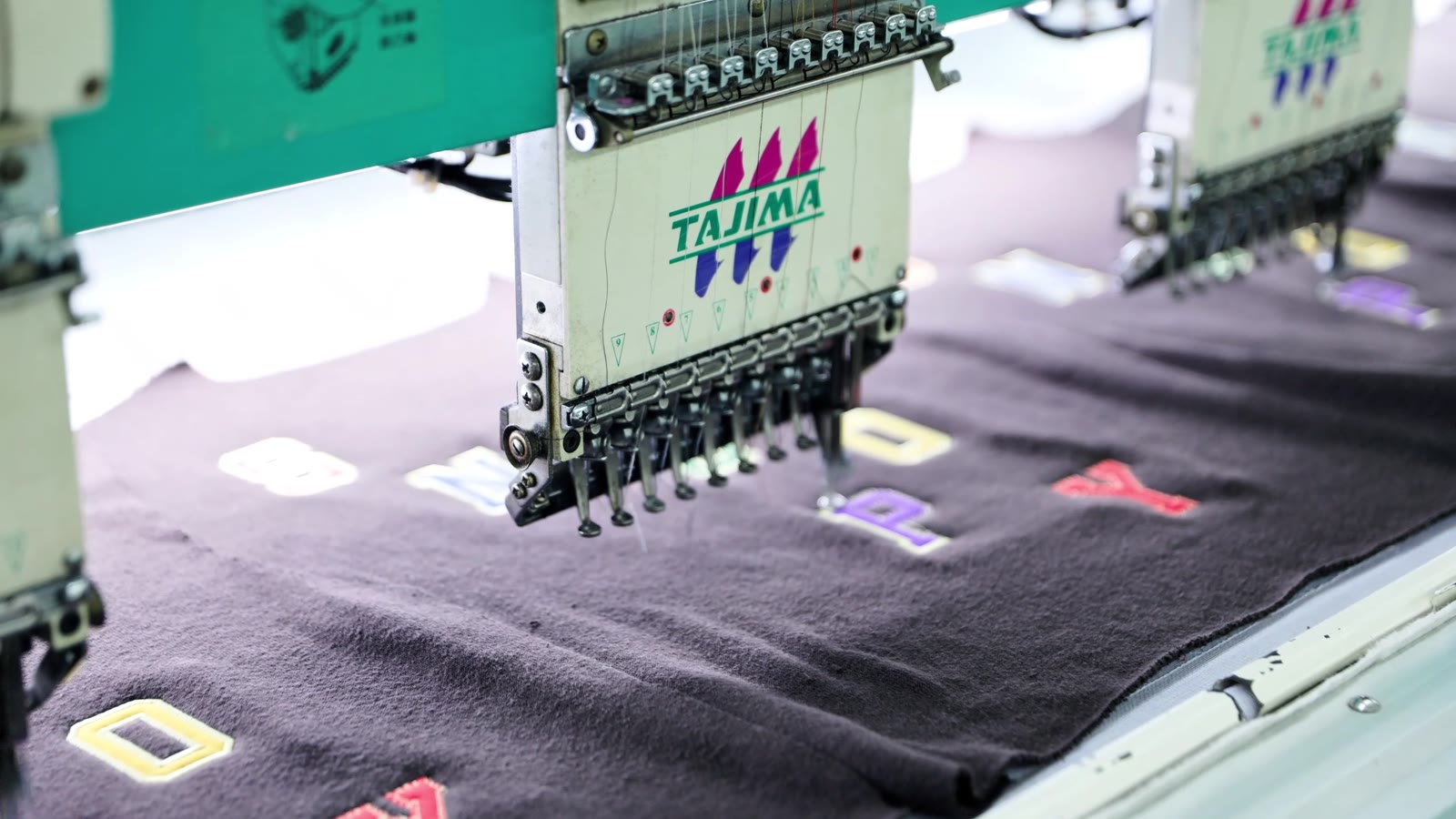
Thread, texture and detail.
A closer look at the stitching process shown in the factory film.
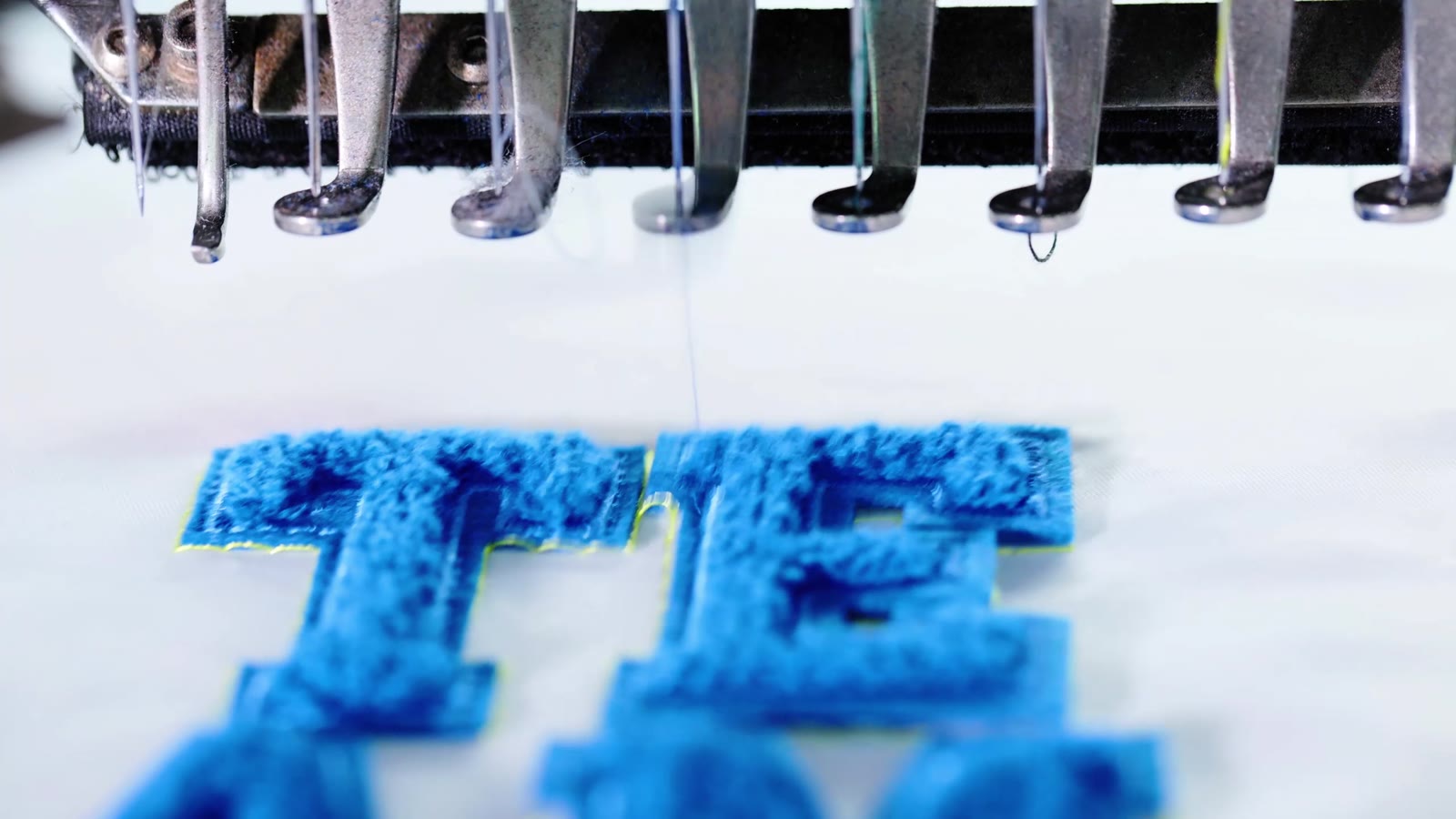
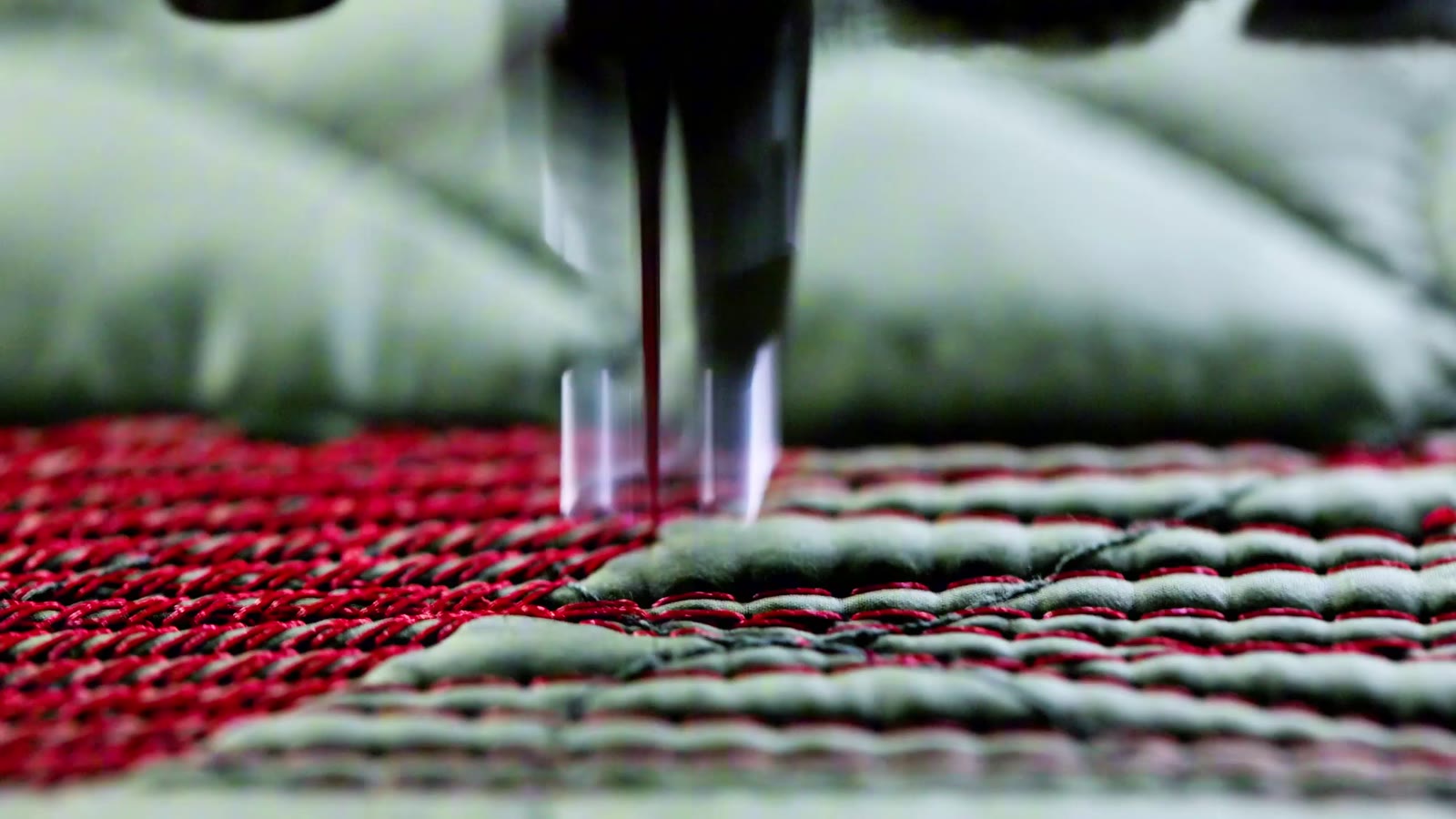
Embroidered styles we have made
Real styles from our catalog: line-drawn flowers in raised thread on sweat shorts, outline lettering and stitched-on patches on a washed tee, and our name, UNIT-100, as a dense fill on a tee. Pick one as a starting point, or send your own design.
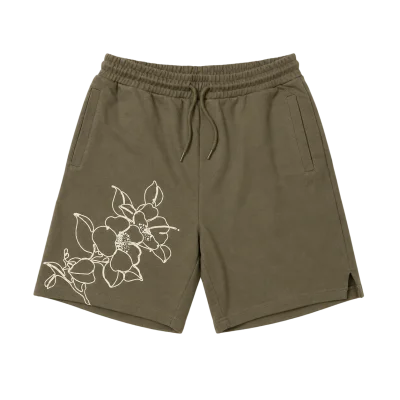 ZH-0302 420 GSM · 56% cotton, 44% polyester Relaxed fit · embroidery
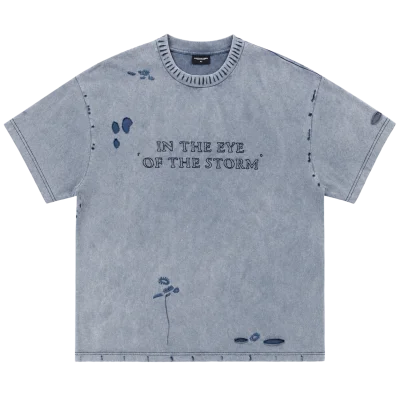 ZH-0461 300 GSM · 100% cotton Boxy fit · embroidery, washed
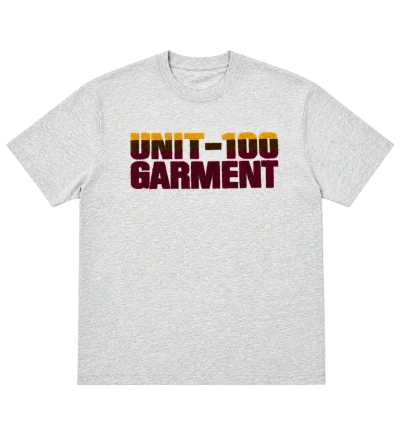 ZH-039 260 GSM · 65% cotton, 30% polyester, 5% spandex Oversized fit · embroidery
Which embroidery suits a hoodie: flat, 3D puff, appliqué or chenille?
Flat embroidery, for most hoodie logos and text: it is the most common type, smooth and clear. Pick 3D puff when bold, simple letters should rise off the fleece. Appliqué covers a big area with a second fabric. Chenille gives the fuzzy letters and numbers of a varsity jacket.
| Type | How it looks | Best for | Limits |
|---|---|---|---|
| Flat | Smooth, clear stitching that lies flat on the fabric | Chest logos, text and simple designs on hoodies, sweatshirts and tees | A large filled area turns stiff; very small text blurs |
| 3D puff | Foam under dense satin stitches lifts the design off the fabric | Big letters, thick lines and simple logos on hoodies and sweatshirts | Not for small text, sharp detail or thin tees; the foam can show at the corners |
| Appliqué | A second fabric cut to the design's shape, with only its edge embroidered | Big letters, numbers and large logos, with far fewer stitches than a full fill | The patch and the garment must shrink alike, or it puckers after washing |
| Chenille | Looped yarn with a soft, fuzzy pile | Varsity-style letters, numbers and larger designs on hoodies and sweatshirts | Little fine detail; the loops can snag; not for thin tees |
What goes wrong with embroidery?
The mistake new brands make most is a design that is too big and too dense. We have also had small 3D puff text come out blurred.
- Too big, too dense
- Bigger and denser is not better: a dense design can break. We start from your budget, show you how the design will really come out, and suggest which parts to switch to a print.
- Small 3D puff text
- We check whether the digitizing, the stitch file the machine follows, was fine enough for letters that small. It is caught at the sample stage and rarely reaches bulk.
Cut, sewn and printed in Zhongshan
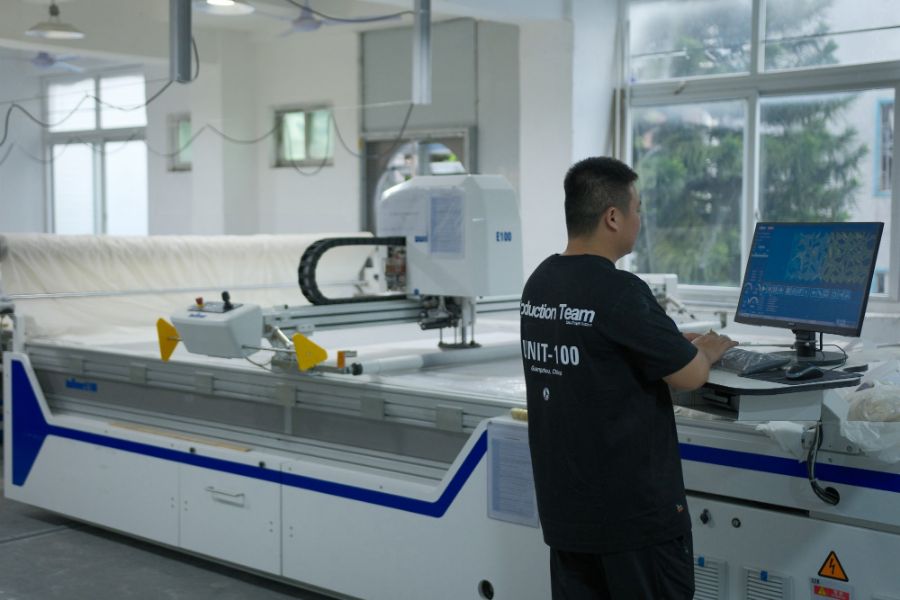
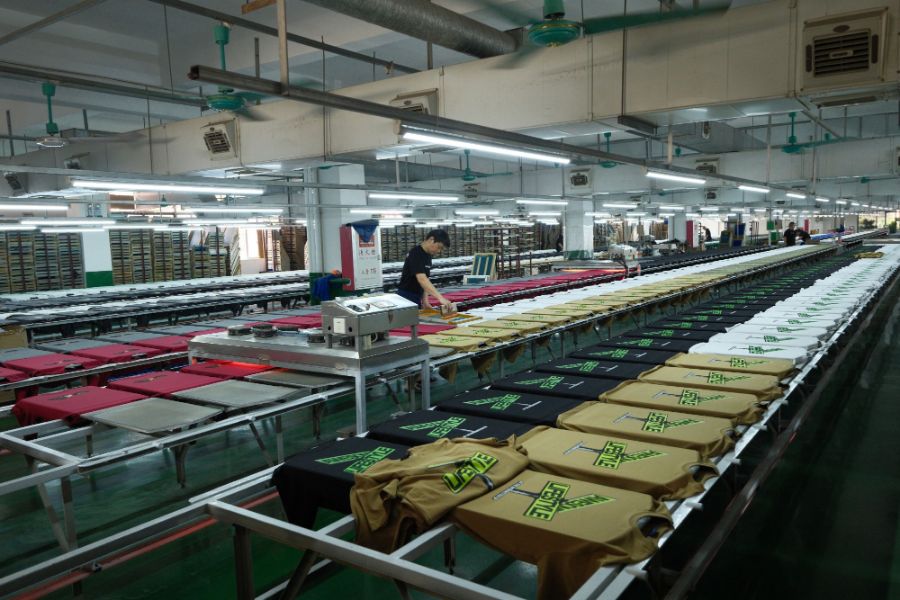
We cut, sew and pack in our own factory in Shaxi Town, Zhongshan, and print in our own print shop in Henglan Town, Zhongshan: 70+ people work in the garment factory and 40+ in the print shop. Washing, garment dyeing, embroidery and sublimation printing are done at partner factories, and so is part of the sewing when our own lines are full.
Our sample room has two pattern makers. From a photo or a garment, a pattern takes about 3 days, and our pattern makers grade the sizes too. Before every bulk run we make a pre-production sample, and our QC team checks before production starts, during it and at the end.
UNIT-100 has made clothes since 2001, when our owner's father founded the company. We make about 2 million garments a year; a typical order is 300 to 400 pieces, and about 38% of our customers order again. The factory figures on this page come from Kenneth, our owner, who is the second generation of the family and has worked in the business for 8 years. Meet him, Yunus, quality director at our factory, and Eric, our design director, on our About page.
How an embroidered order works
An embroidered sample takes about 10 days from your design; once you sign it off and pay the deposit, bulk runs for 7–20 working days before the order ships.
Over the past year, 90% of our orders shipped within 2–3 days of the date we promised, early or late.
Send a photo or a tech pack
We reply with a price and the questions we need answered.
Sample
About 3–7 days plain, about 10 with one print or embroidery, 12–13 with both, and 14–18 days or more with a wash.
Approve and pay the deposit
You check the fit, the stitching and where the embroidery sits on the sample. Then a 30–50% deposit starts bulk.
Bulk
7–20 working days after you approve the sample. Before shipping, every batch gets an AQL 2.5 inspection: random pieces checked against the agreed tolerances. A piece outside them is reworked if it can be. If not, it is remade, or you are compensated.
Ship
Before you pay the balance, we send photos or a video of your goods. To the US it takes about 7 days by air, about $400 for 100 tees, or about 20 days by sea.
You can pay by bank transfer or PayPal, or order through Alibaba or Made-in-China. You are welcome to send your own inspector. Sizes can be mixed inside each 100. Fabric is cut in whole rolls, so for some fabrics the quote may suggest a larger run per color to use a full roll. Fewer than 100 pieces? Our stock blanks start at 50 per style, with colors and sizes mixed.
FAQ
Artwork, stitch type and order questions, answered from the way we work.
How much does embroidery cost?
We quote each design from your artwork and its size. Most of the price is the stitch count: the bigger the design and the more densely it is filled, the more stitches it takes. The type matters too. 3D puff needs foam and a stitch file of its own. Chenille runs on its own machine. Appliqué adds a patch fabric that has to be cut and placed.
What is embroidery digitizing?
Turning your artwork into the file an embroidery machine stitches from: which stitch goes where, in which direction and how densely. Good digitizing keeps small letters sharp and stops a dense area from pulling the fabric in. A 3D puff design needs a file made for it: you can't take a flat design's file and just add foam.
What is the best hoodie for embroidery?
A mid- to heavyweight one. Our hoodie fabrics run from 250 to 1000 GSM, which means grams per square meter of fabric. Thin fabric puckers around embroidery, most of all under a large, dense design. Behind the stitches, a knit like fleece gets a cut-away backing: a firm layer that stays in and keeps the fabric from puckering. On loopback fleece, also called French terry, the embroidery goes on the smooth outer face. On brushed fleece or polar fleece, a thin film that dissolves in water goes on top while the design is stitched, so the thread doesn't sink into the pile.
Embroidery on garments you send us is possible too, with more limits. A design that is too big or too dense can break.
Should a polo logo be embroidered or printed?
Embroidered, in most cases. Most polos we sew are piqué, a knit with a fine raised texture. Most of them are embroidered. Plastisol, a screen print ink, takes unevenly on that texture. A print there looks out of place. So we suggest a small embroidered logo, which gives a raised look. Company uniform polo orders usually start at 300 pieces.
What is the minimum order for embroidery?
100 pieces of each style in each color, whichever type of embroidery you choose. You can split each 100 across sizes. A typical order is 300–400 pieces.
Can you do custom chenille embroidery?
Yes. Chenille is the thick, looped stitch on varsity jacket letters. It suits big letters, numbers and larger designs. Its edge is usually finished with a line of flat stitching. Send us the design with its size in centimeters or inches: chenille shows little fine detail, so the small parts of a design may need to change.
Make your design tangible.
Send us your artwork, placement and garment reference. We will review the stitch size, fabric and sample with you.
Discuss your embroidery projectSend us your design
Send a photo, a sketch or a tech pack. We reply within 24 hours.


 Find Us in Guangzhou
Rooms 511–512, Block A, Wantong International Square, 135 Huanshi West Road, Liwan District, Guangzhou, China
Quick Links
Services

Founded in 2001, UNIT-100 is a cut-and-sew garment factory in Zhongshan, with its office in Guangzhou, making T-shirts, hoodies, sweatshirts and pants for clothing brands.