

Printing on Custom Clothing: Screen Print, DTF and DTG
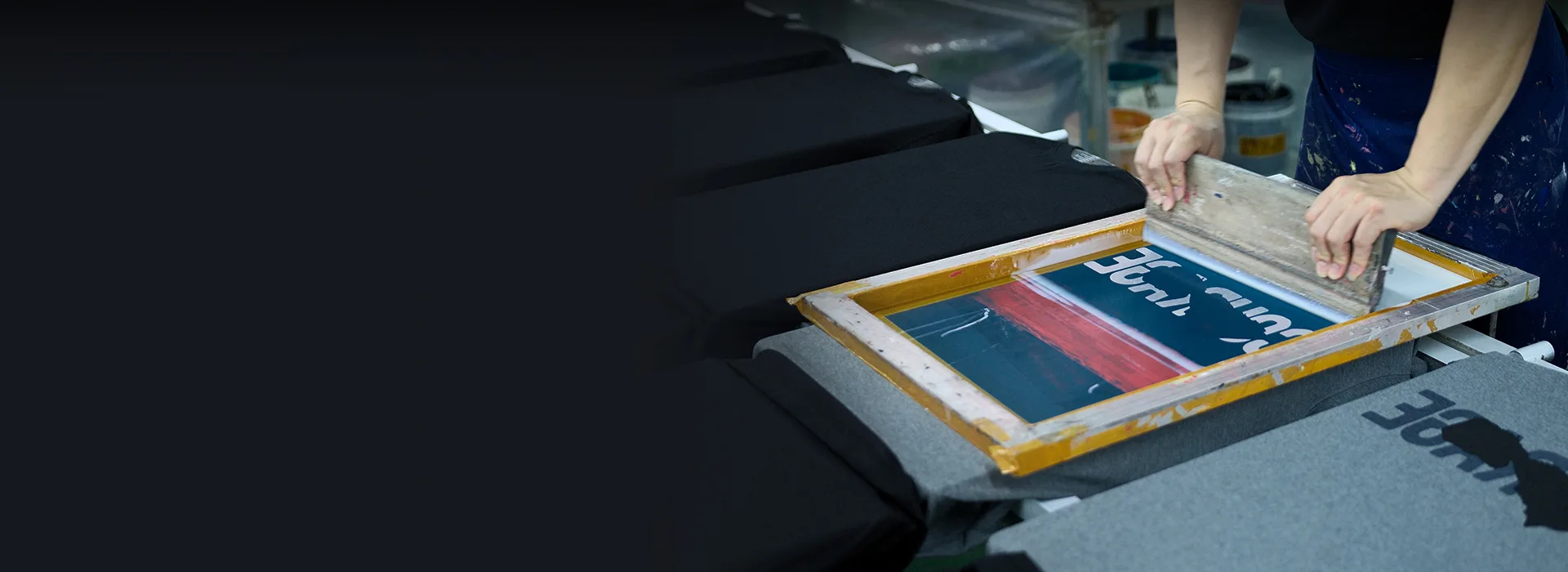
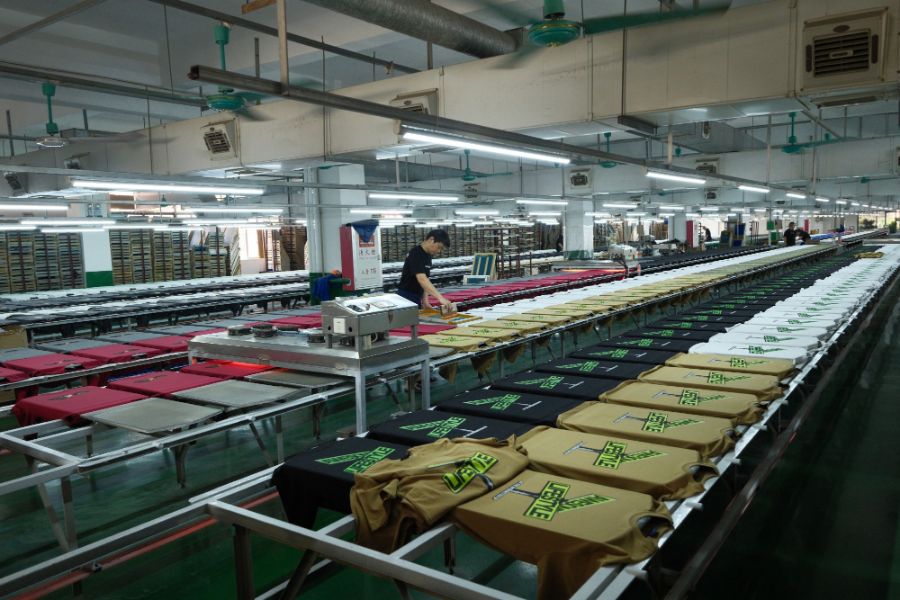
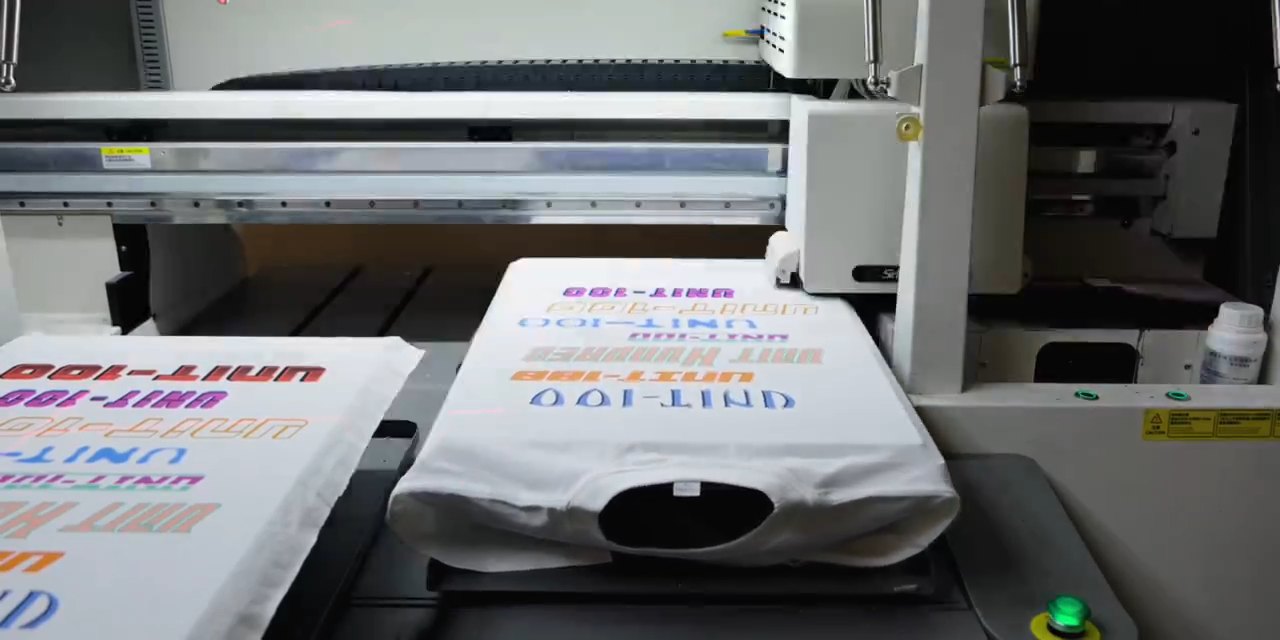
UNIT-100 sews custom clothing and prints it in its own print shop in Henglan Town, Zhongshan, China. The shop does mainly screen print and DTG (direct to garment), plus DTF (direct to film) and raised prints such as puff, high-density and silicone. Polyester is printed by sublimation at a partner factory.
Ask for a quoteGet the blank price at 100 pieces in a tech pack
Full custom starts at 100 pieces per style and per color. A sample with one print takes about 10 days. Our screen printing page tells how we made the screens for an order with 20 different prints.
- DTG
- 10 printers that print about 2,000 pieces a day
- Screens
- kept 6 months so a reorder reuses them
- Wash test
- 30 washes on each new batch of screen ink
- Sample
- about 10 days with one print
Figures as of October 2026.
Styles we have printed
Two oversized hoodies and two sweatshirts from our catalog, with a screen print on each. Start from one of them, or send your own.
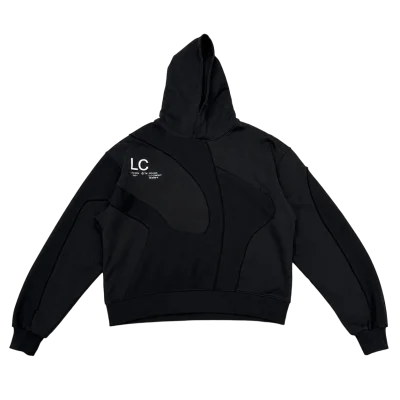 INT-0628 475 GSM · 100% cotton Oversized fit · screen print
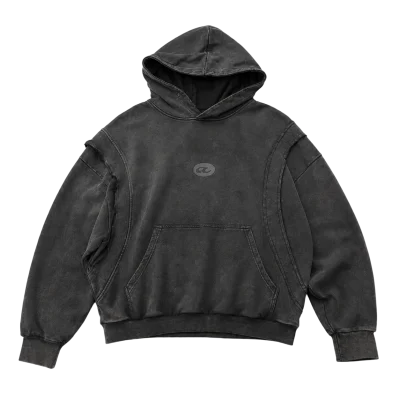 ZH-0335 425 GSM · 100% cotton Oversized fit · screen print
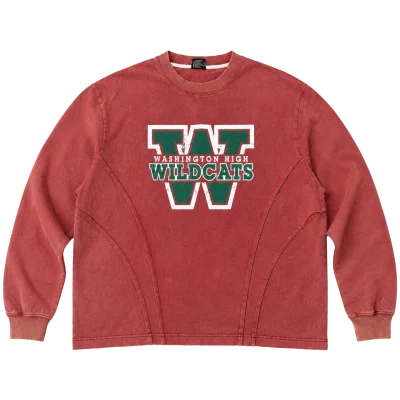 ZH-0164 260 GSM · 100% cotton Oversized fit · screen print
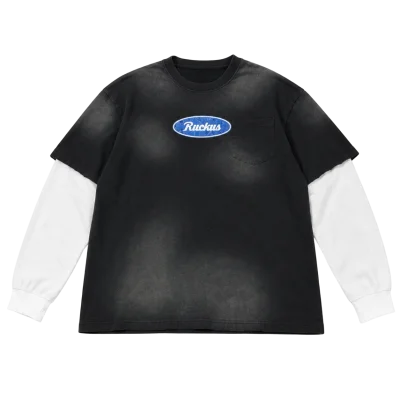 INT-0586 305 GSM · 100% cotton Oversized fit · screen print
Which print method should I choose for 100 pieces?
With the smallest budget, choose DTF: it needs no screens, so a small run costs less. Where your buyers tumble-dry their clothes, we don't recommend DTF: a hot dryer can crack it, fine lines first. Above about 10 colors, choose DTG: screen print needs a screen for every color. For the best feel on the skin, choose screen print.
| Method | Best for | Colors | How it feels | Fabrics | Watch out |
|---|---|---|---|---|---|
| Screen print | The same design on many pieces; solid, bright colors | One screen per color, so its cost grows with each color | Water-based ink feels lightest; plastisol sits on top | Cotton and cotton-poly | On a piqué polo, plastisol takes unevenly; we suggest embroidery |
| DTF (direct to film) | The smallest budget: with no screens, a small run costs less; any garment color | Full color, no screens | A thin film; large solid areas feel heavier | Cotton and cotton-poly | A hot tumble dryer may crack it |
| DTG (direct to garment) | Photos, gradients, more than about 10 colors | Full color, no screens | Soft: the ink goes into the fibers | Works best on cotton and high-cotton blends | A large print on a dark tee needs a sample first |
| Sublimation, at a partner factory | Polyester, such as sports jerseys | Dark colors on white or light fabric | Nothing on top: the ink is heat-pressed into the fabric | Polyester | No white print on dark polyester |
What can go wrong with a print?
White edges on DTF, a cracked high-density print and a DTF print that peeled: our own print shop has had all three.
- White edges on DTF
- The white ink and the glue powder sometimes leave a white rim around a design. We check each transfer before pressing it, and throw out the bad ones.
- A cracked high-density print
- A raised print cracks when the dryer runs at the wrong temperature, or when the printer pulls the squeegee with the wrong pressure. We throw out the whole cut panel.
- A DTF print peeling off
- It is a heat problem: the transfer did not get enough heat or time on the press. Our press is set to 150 °C (302 °F) for 12 seconds. When a print peels, we check the workshop camera to see whether the worker kept to it.
Cut, sewn and printed in Zhongshan
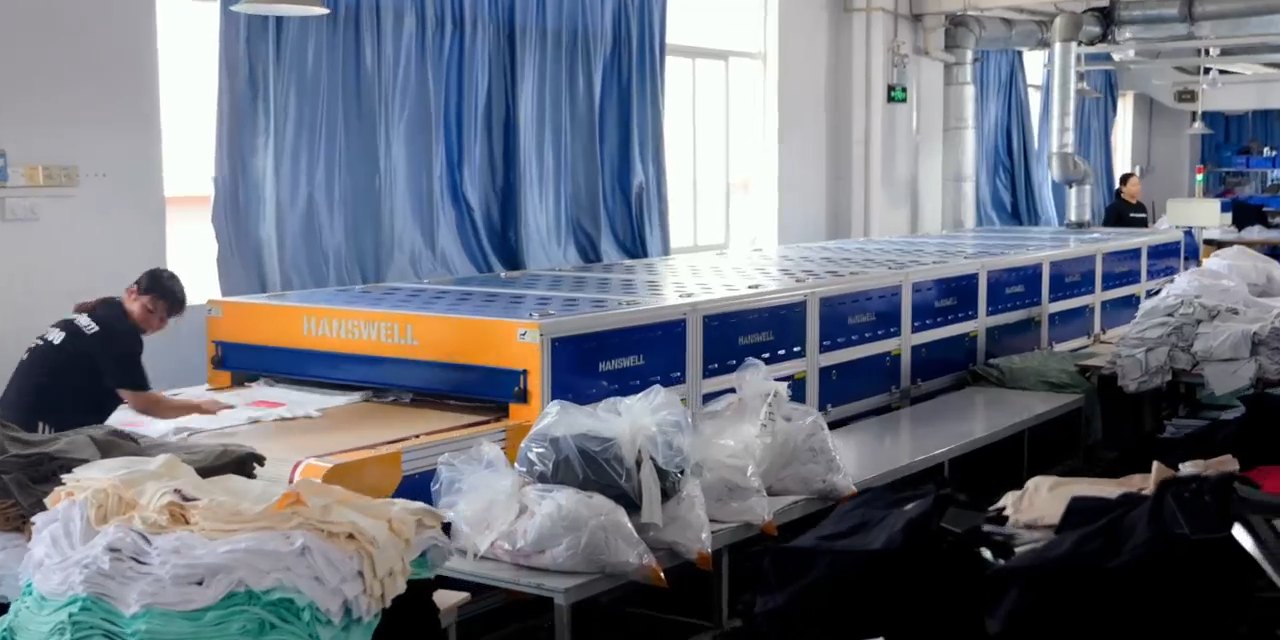
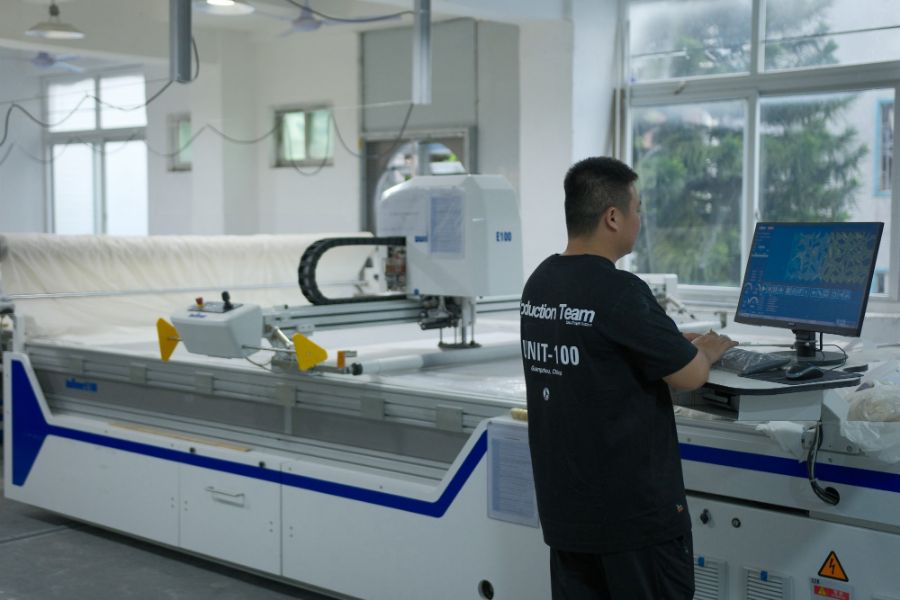
We cut, sew and pack in our own factory in Shaxi Town, Zhongshan, and print in our own print shop in Henglan Town, Zhongshan: 70+ people work in the garment factory and 40+ in the print shop. Washing, garment dyeing, embroidery and sublimation printing are done at partner factories, and so is part of the sewing when our own lines are full.
Our sample room has two pattern makers. From a photo or a garment, a pattern takes about 3 days, and our pattern makers grade the sizes too. Before every bulk run we make a pre-production sample, and our QC team checks before production starts, during it and at the end.
UNIT-100 has made clothes since 2001, when our owner's father founded the company. We make about 2 million garments a year; a typical order is 300 to 400 pieces, and about 38% of our customers order again. The factory figures on this page come from Kenneth, our owner, who is the second generation of the family and has worked in the business for 8 years. Meet him, Yunus, quality director at our factory, and Eric, our design director, on our About page.
How a printed order works
You send the design, we print a sample in about 10 days, you approve it with a 30–50% deposit, bulk runs 7–20 working days, and we ship.
Over the past year, 90% of our orders shipped within 2–3 days of the date we promised, early or late.
Send a photo or a tech pack
We reply with a price and the questions we need answered.
Sample
About 3–7 days plain, about 10 with one print or embroidery, 12–13 with both, and 14–18 days or more with a wash.
Approve and pay the deposit
You check the fit, weight and print on the sample, then pay a 30–50% deposit to start bulk.
Bulk
7–20 working days after you approve the sample. Before shipping, every batch gets an AQL 2.5 inspection: random pieces checked against the agreed tolerances. A piece outside them is reworked if it can be. If not, it is remade, or you are compensated.
Ship
Before you pay the balance, we send photos or a video of your goods. To the US it takes about 7 days by air, about $400 for 100 tees, or about 20 days by sea.
You can pay by bank transfer or PayPal, or order through Alibaba or Made-in-China. You are welcome to send your own inspector. Sizes can be mixed inside each 100. Fabric is cut in whole rolls, so for some fabrics the quote may suggest a larger run per color to use a full roll. Fewer than 100 pieces? Our stock blanks start at 50 per style, with colors and sizes mixed.
FAQ
Does DTF cost more than screen printing?
Usually not, on a small run or a design with many colors: DTF needs no screens. Screen print needs a screen for every color, plus one more for a white base layer when the garment is dark, so its cost grows with each color. Send us the artwork and the garment color, and we'll tell you which method costs less for it.
How long does a print last?
Our screen print ink is tested to 30 washes. Each month, a swatch printed with a new batch of ink goes through those washes, then a test machine rubs it, wet and dry. The ink passes only if the print shows no cracks, breaks or wear. Our screen printing page says how the test runs. Curing, the heat that sets the ink, matters too: a wrong temperature shows up as peeling or cracking.
Can you print on polyester?
Yes, by sublimation at a partner factory, in dark colors on white or light polyester. The ink is heat-pressed into the fabric. How well the color holds depends on the transfer paper the design is printed on first. We don't print white on dark polyester: the fabric's dye would bleed into the white, a fault called dye migration. Send us the fabric details and we'll tell you what works on it.
Can I send my own garments to print on?
Yes, ship them to us and we print them. Before you do, tell us the fabric they are made of.
What artwork file do you need?
A vector file (AI, PDF or SVG) for screen print, and a high-resolution PNG with a transparent background for DTF or DTG. Tell us the print size in centimeters or inches and the Pantone colors if they must match.
Can I mix printing and embroidery on one garment?
Yes. A common mix is a screen print on the back and a small embroidery on the chest. We print it in our own shop. The embroidery is stitched at a partner factory. Print plus embroidery adds a few days to the sample: about 12–13 days in total.
Send us your design
Send a photo, a sketch or a tech pack. We reply within 24 hours.
START A CONVERSATION Find Us in Guangzhou