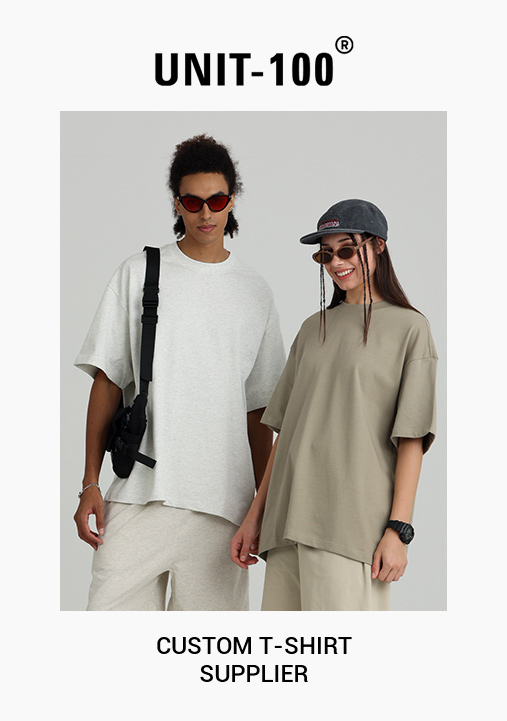


Custom Pima Cotton T-Shirt Manufacturer
Pima and Supima cotton tees, cut and sewn in Zhongshan.
UNIT-100 is a factory in Zhongshan that cuts and sews Pima cotton T-shirts for clothing brands. Pima is a cotton with extra-long fibers, which spin into a finer, smoother yarn than ordinary cotton. Custom orders start at 100 pieces for each style and each color.
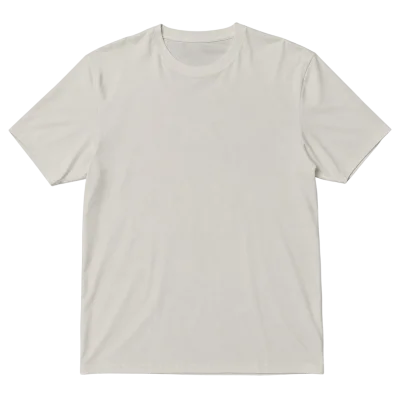
Supima fabric is available too, and your tees can carry official Supima hangtags. The Pima tee in our catalog, GL9200, is 195 GSM: 80% Pima cotton, 13% spandex and 7% silk.
- Minimum
- 100 pieces per style and color, sizes mixed
- Sample
- 3–7 days plain, about 10 with a print
- Bulk
- 7–20 working days after sample approval
- Price
- Ask us quoted by the Pima fabric
For a ballpark: at 100 pieces, a plain tee in our 235 GSM cotton is $6.70–$8.80 each before printing (T-shirt prices, October 31, 2026). Pima fabric costs more, so we quote each Pima tee by its fabric. Our shipping quotes include duties and taxes.
Pima T-shirts from our catalog
Our one Pima tee in the catalog, a regular fit. Made as shown or with your changes: send us its code.
What is the difference between Pima and Supima cotton?
Supima is a trademark for 100% US-grown Pima cotton, licensed along the whole supply chain from the mill to the brand. "Pima" on its own is not a trademark, so a label that says Pima does not tell you where the cotton grew or that anyone checked it.
| Pima | An extra-long-staple cotton, grown mainly in the US Southwest and in Peru. The long fibers make a smooth yarn with fewer loose fiber ends. |
|---|---|
| Supima | US-grown Pima only, sold under license. Supima fabric comes from a licensed mill, and garments made from it can carry the official Supima hangtag. |
| On your label | Say "Pima cotton" for Pima fabric. Use the Supima name and hangtag only on tees cut from Supima fabric. Supima licenses each company that uses its name, so tell us at the start if you want the hangtag, and we check what the licensed mill and Supima need from your brand. |
| Blends | Pima is often blended for stretch or sheen, as in GL9200 with spandex and silk. Your label lists each fiber by its share. |
Cut, sewn and printed in Zhongshan
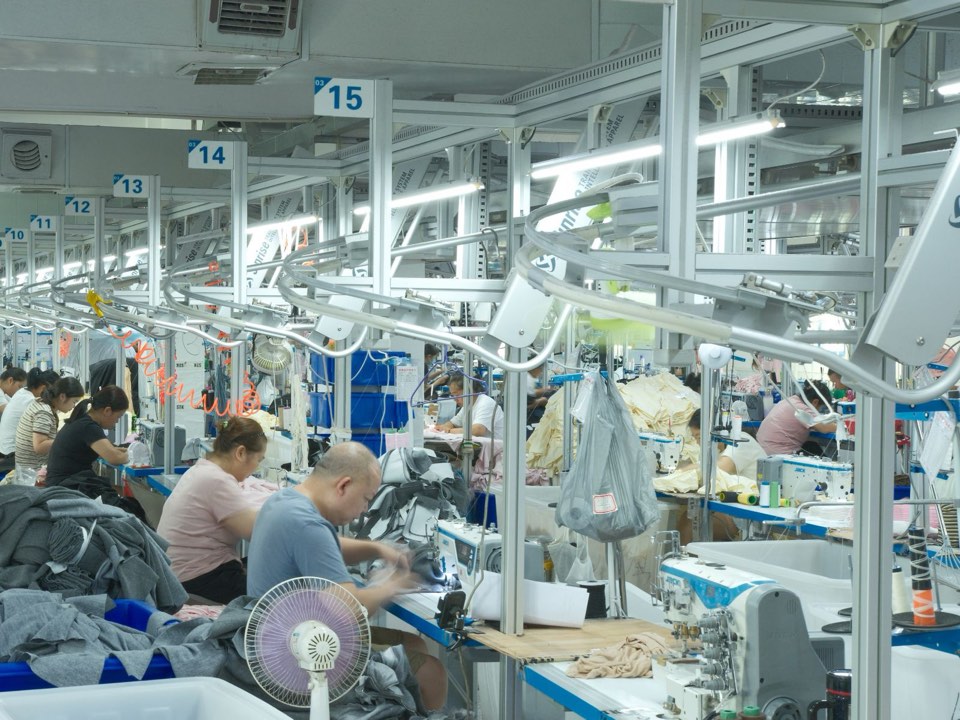
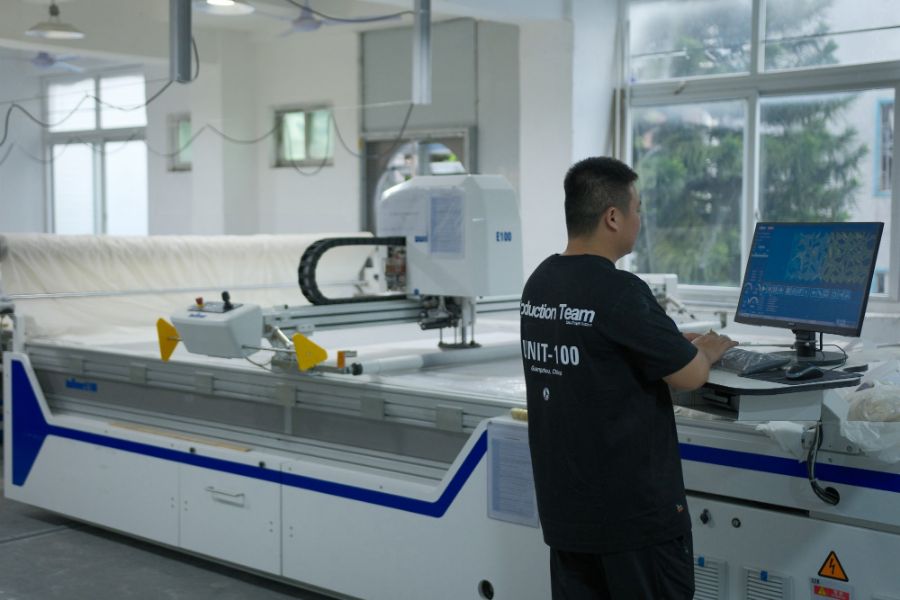
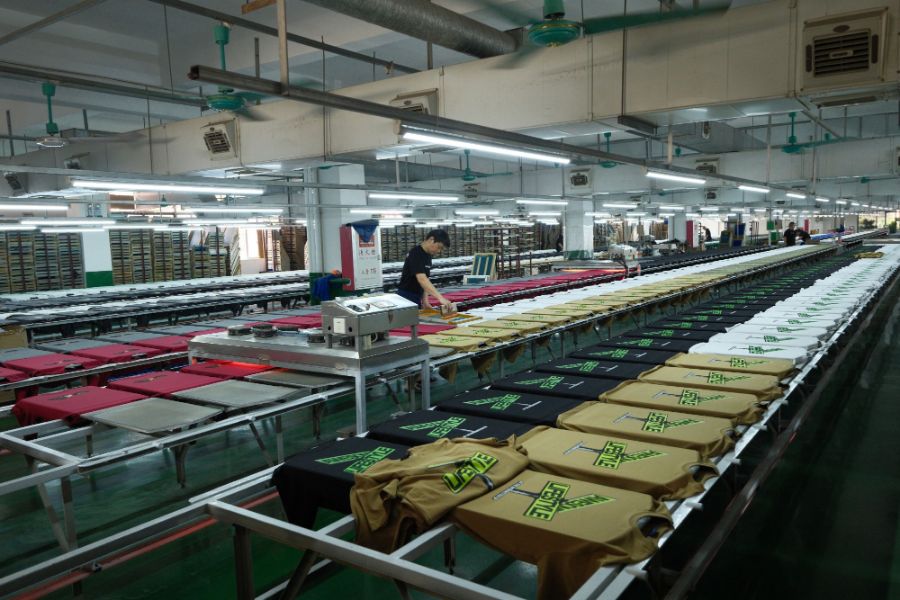
We cut, sew and pack in our own factory in Shaxi Town, Zhongshan, and print in our own print shop in Henglan Town, Zhongshan: 70+ people work in the garment factory and 40+ in the print shop. Washing, garment dyeing, embroidery and sublimation printing are done at partner factories, and so is part of the sewing when our own lines are full.
Our sample room has two pattern makers. From a photo or a garment, a pattern takes about 3 days, and our pattern makers grade the sizes too. Before every bulk run we make a pre-production sample, and our QC team checks before production starts, during it and at the end.
UNIT-100 has made clothes since 2001, when our owner's father founded the company. We make about 2 million garments a year; a typical order is 300 to 400 pieces, and about 38% of our customers order again. The factory figures on this page come from Kenneth, our owner, who is the second generation of the family and has worked in the business for 8 years. Meet him, Yunus, quality director at our factory, and Eric, our design director, on our About page.
Is Pima cotton worth it for a T-shirt?
Pima is worth it when your tee sells on how it feels. The long fibers give a smoother, softer jersey that pills less than ordinary cotton, and it costs more. Under a large screen print or a heavy wash, most of that smoothness is covered up, so Pima pays off most on a plain tee or one with a small print or embroidery.
How do I know my T-shirt is really Pima or Supima?
We ask the fabric mill for the certificate of the yarn your fabric was knitted from, Pima or Supima. Without that certificate we have no proof to give you, so ask for it before we buy your fabric.
One US customer wanted proof down to the lot of yarn their fabric came from, and shrinkage within 2%. The mill's fabric shrank 5%, so we washed the fabric before cutting and brought the tees within about 1%.
Where is Pima cotton grown?
Most Pima cotton is grown in the US Southwest (Arizona, California, New Mexico and Texas) and in Peru. Supima is the name for US-grown Pima only. Tell us if your label or your customers need a named origin, and we choose the fabric to match.
Can you print or embroider on a Pima T-shirt?
Yes. We print Pima tees by screen print, DTG or DTF in our own print shop, and embroidery is done at a partner factory. DTF does not suit a tee that goes in a hot tumble dryer. Keep the print thin: a thick print covers the soft hand you are paying for.
Does a Pima T-shirt shrink?
Like other cotton, it can. Our fabrics shrink 0 to 5%, depending on the fabric, and getting it down to about 3% takes a pre-shrunk or washed fabric. If your size chart is tight, tell us before we buy the fabric.
How an order works
Over the past year, 90% of our orders shipped within 2–3 days of the date we promised, early or late.
Send a photo or a tech pack
We reply within 24 hours with a price and the questions we need answered.
Sample
About 3–7 days plain, about 10 with one print or embroidery, 12–13 with both, and 14–18 days or more with a wash.
Approve and pay the deposit
You check the fit, weight and print on the sample, then pay a 30–50% deposit to start bulk.
Bulk
7–20 working days after you approve the sample. Every batch gets an AQL 2.5 inspection, a random sample checked against the agreed tolerances; pieces outside them are reworked, remade or compensated.
Ship
Before you pay the balance, we send photos or a video of your goods. To the US it takes about 7 days by air, about $400 for 100 tees, or about 20 days by sea.
You can pay by bank transfer or PayPal, or order through Alibaba or Made-in-China. You are welcome to send your own inspector. Each color needs its own 100 pieces, so two colors of one style make 200, with sizes mixed inside each 100. Fabric is cut in whole rolls, so for some fabrics the quote may suggest a larger run per color to use a full roll.
Send us your design
Send a photo, a sketch or a tech pack. We reply within 24 hours.



 Find Us in Guangzhou
Rooms 5/F-11 and 5/F-12, Block A, Wantong International Square, 135 Huanshi West Road, Liwan District, Guangzhou, China
Quick Links
Services

Founded in 2001, UNIT-100 is a cut-and-sew garment factory in Zhongshan, with its office in Guangzhou, making T-shirts, hoodies, sweatshirts and pants for clothing brands.