


Blog
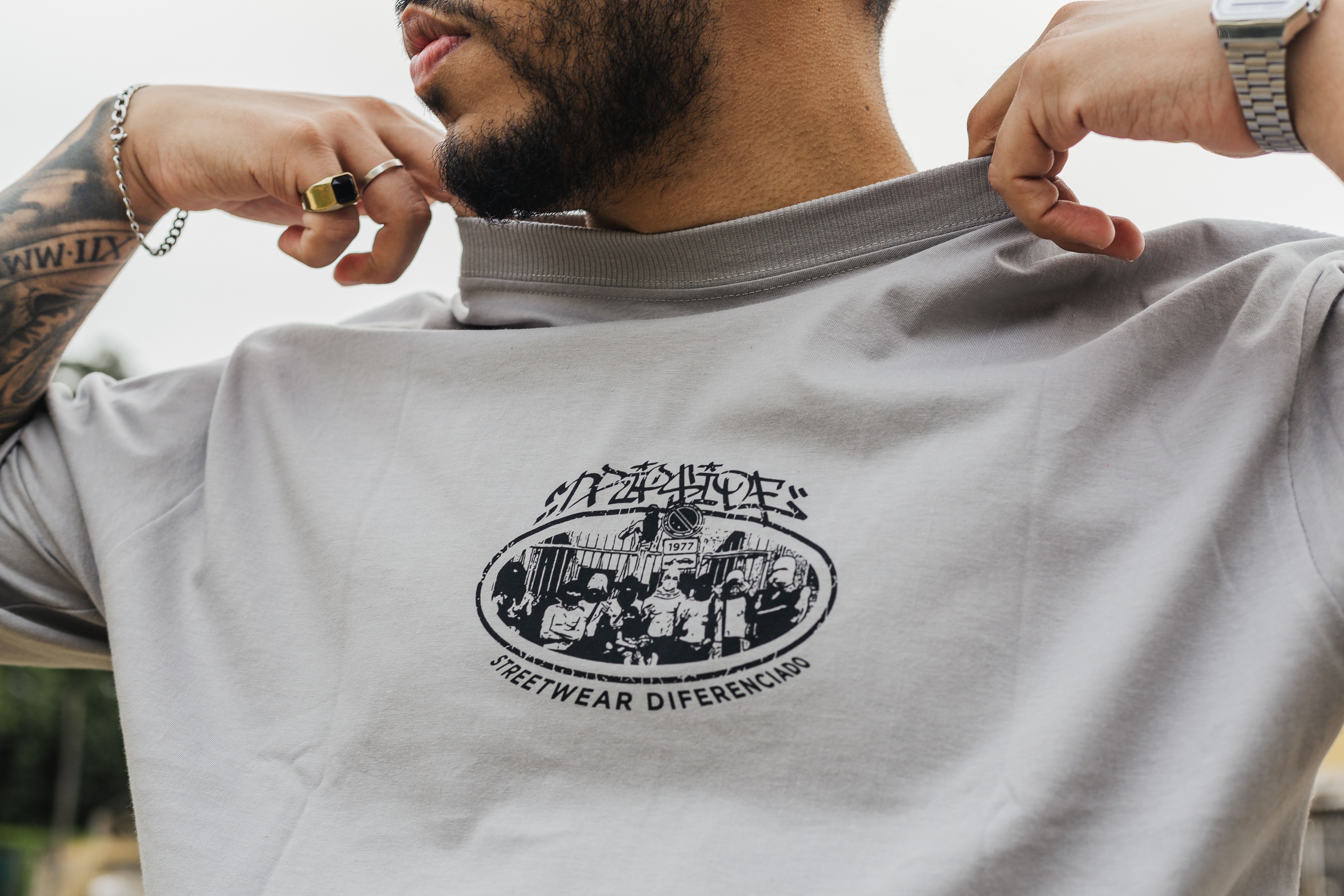
Compare 10 streetwear clothing manufacturers in China, including MOQ, fabric options, and certifications, to find the right OEM partner for your brand.
2026
09
15
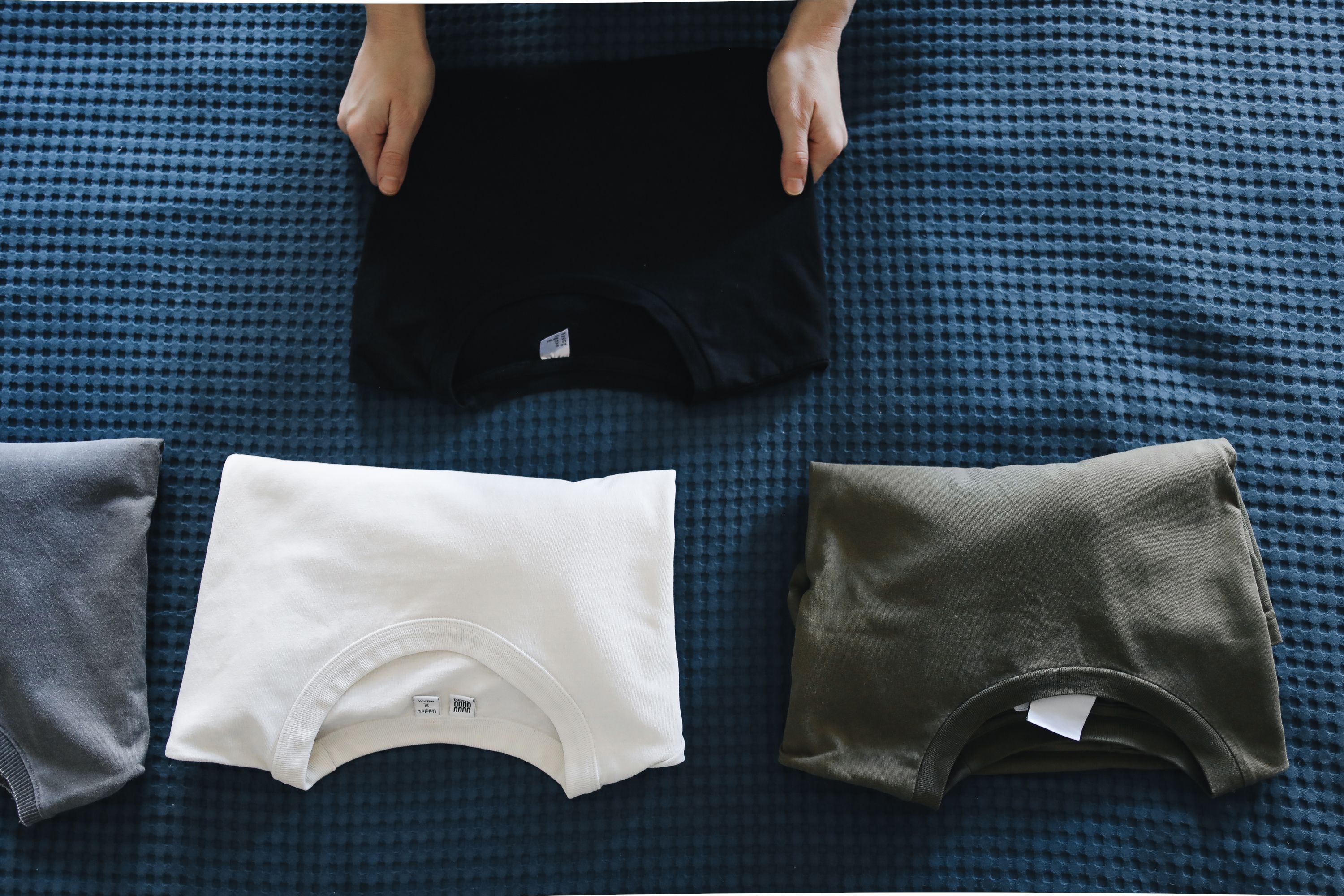
Need a heavyweight T-shirt manufacturer? Get 180-240 GSM cotton tees, low MOQ, fast samples, and direct factory pricing. Request your quote today.
2026
09
13
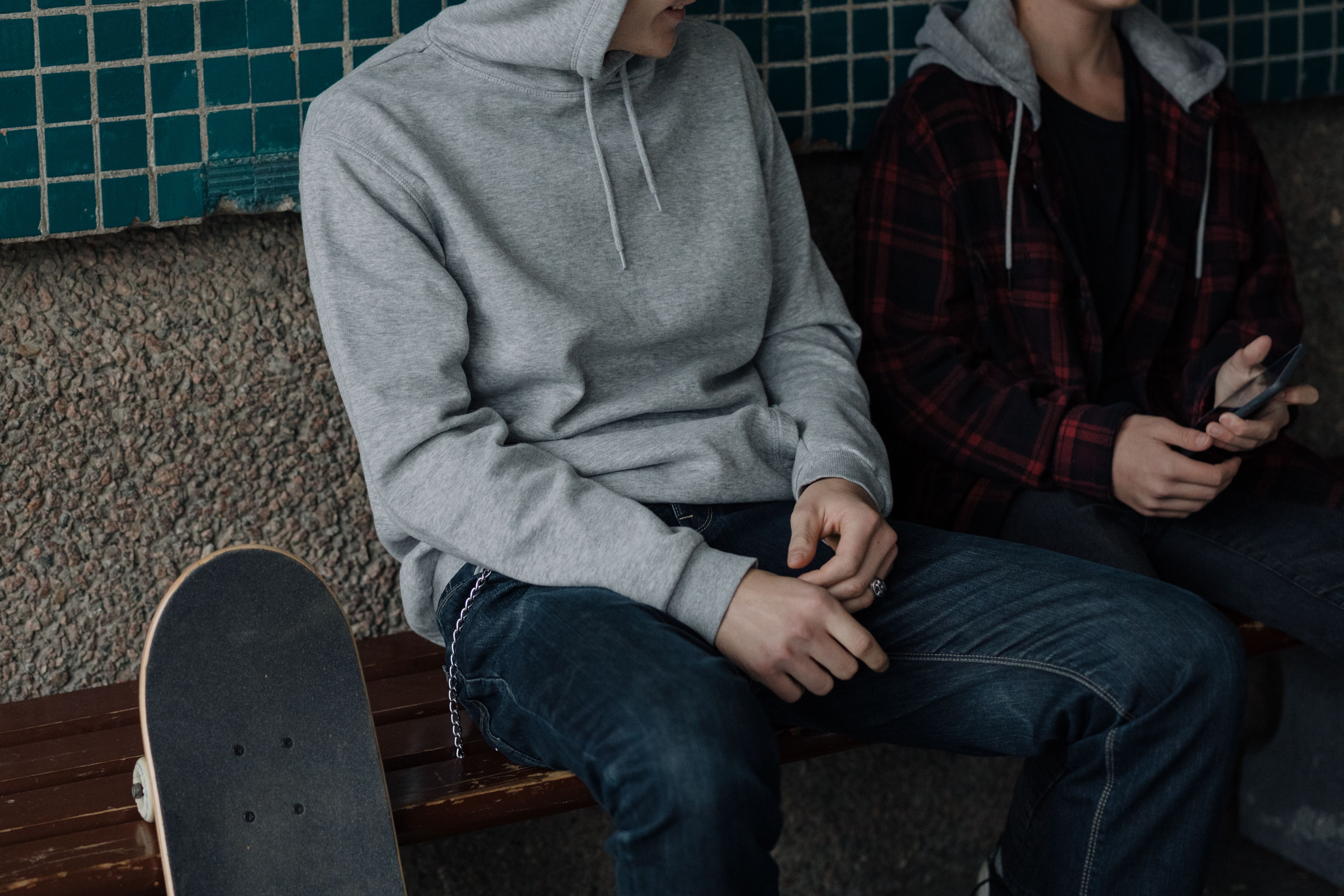
Looking for a trusted custom hoodie manufacturer in China? UNIT-100 offers full production, fast turnaround, and quality control. Start your project today.
2026
09
10
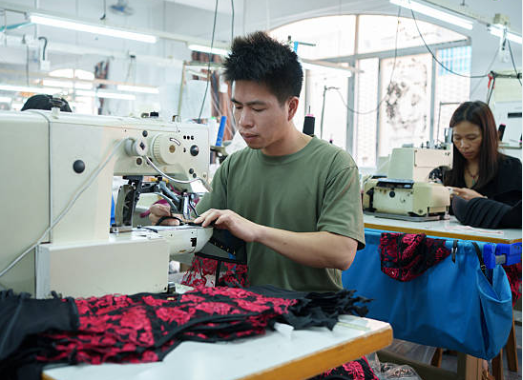
Want to make clothes in China but don't know where to start? Learn how to find a custom clothing manufacturer you can trust.
2026
09
09

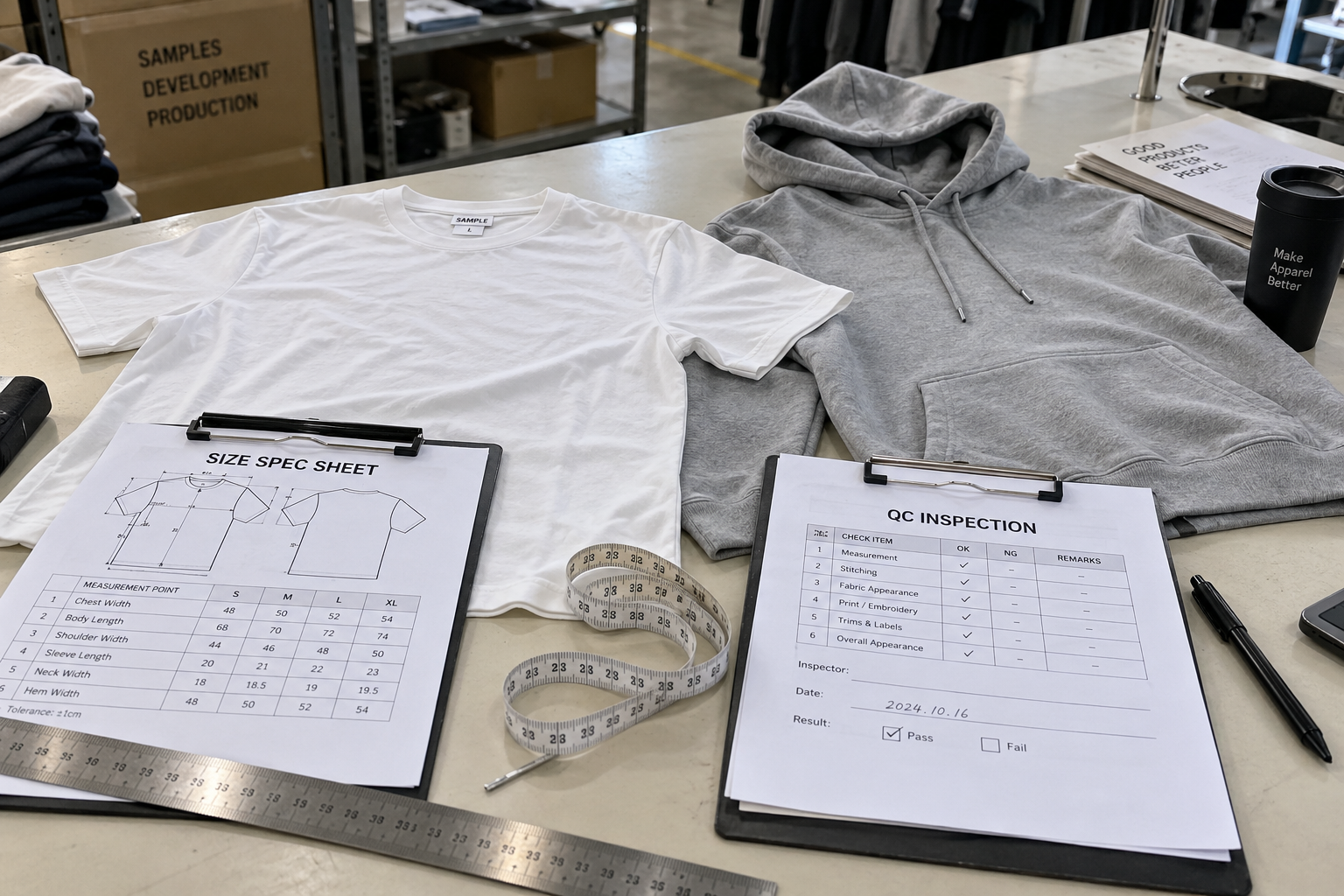
A T-shirt or hoodie can look good in photos but still fit wrong. This guide explains how brands should prepare size specs, measurements, tolerance, shrinkage notes, and sample approval before production.
2026
09
07
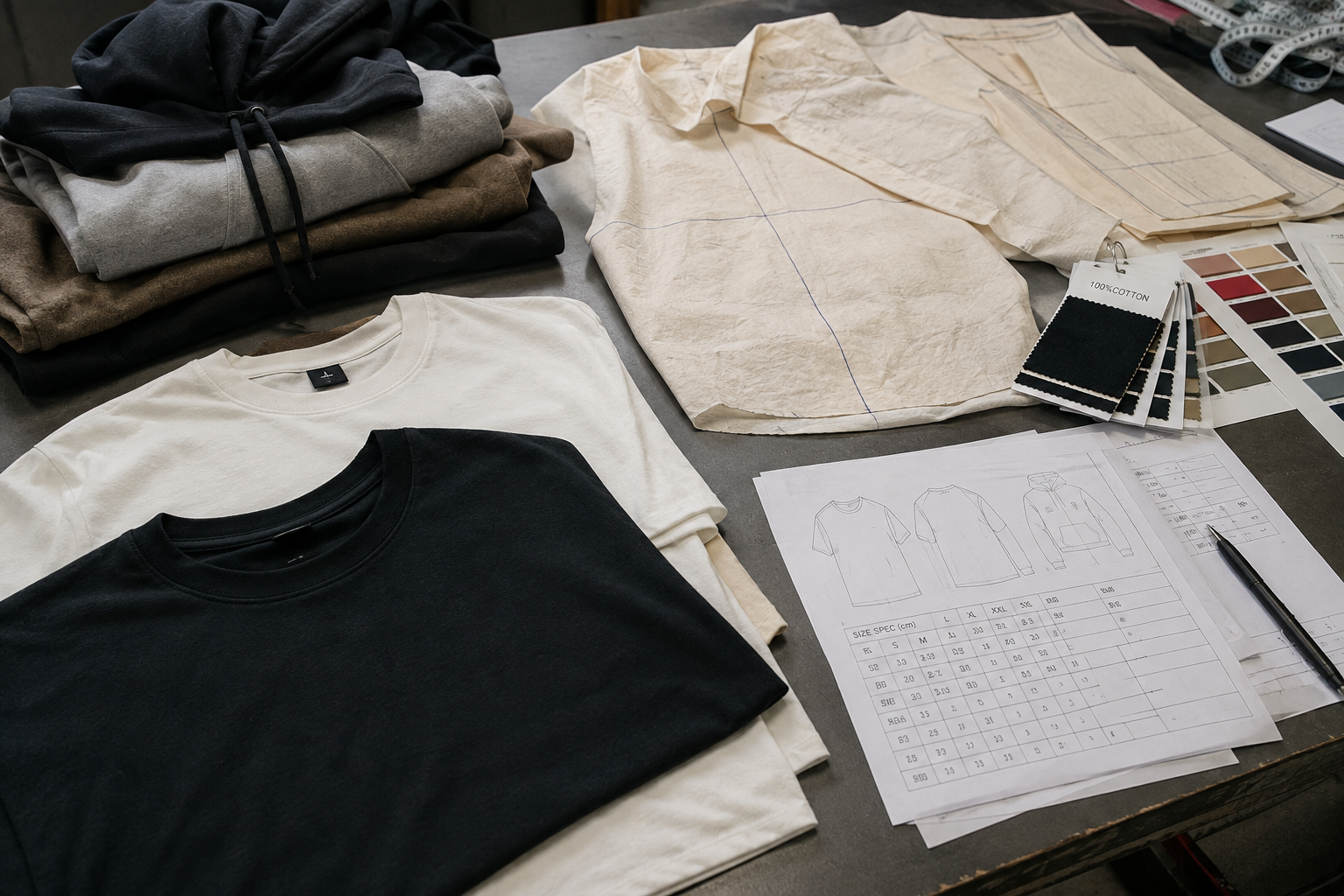
Some brands should start with stock blanks, while others need full cut-and-sew from the beginning. This guide explains how to choose based on MOQ, cost, fit, fabric, timeline, QC, and reorders.
2026
08
31

A heavier hoodie or T-shirt can feel more premium, but it can also change shipping cost and final margin. This guide explains how GSM, packing, carton size, and landed cost affect custom apparel pricing.
2026
08
23

Artwork files can delay sampling if size, placement, color, or file format is unclear. Learn what brands should prepare for screen printing, DTF, embroidery, puff print, samples, and bulk QC.
2026
08
10
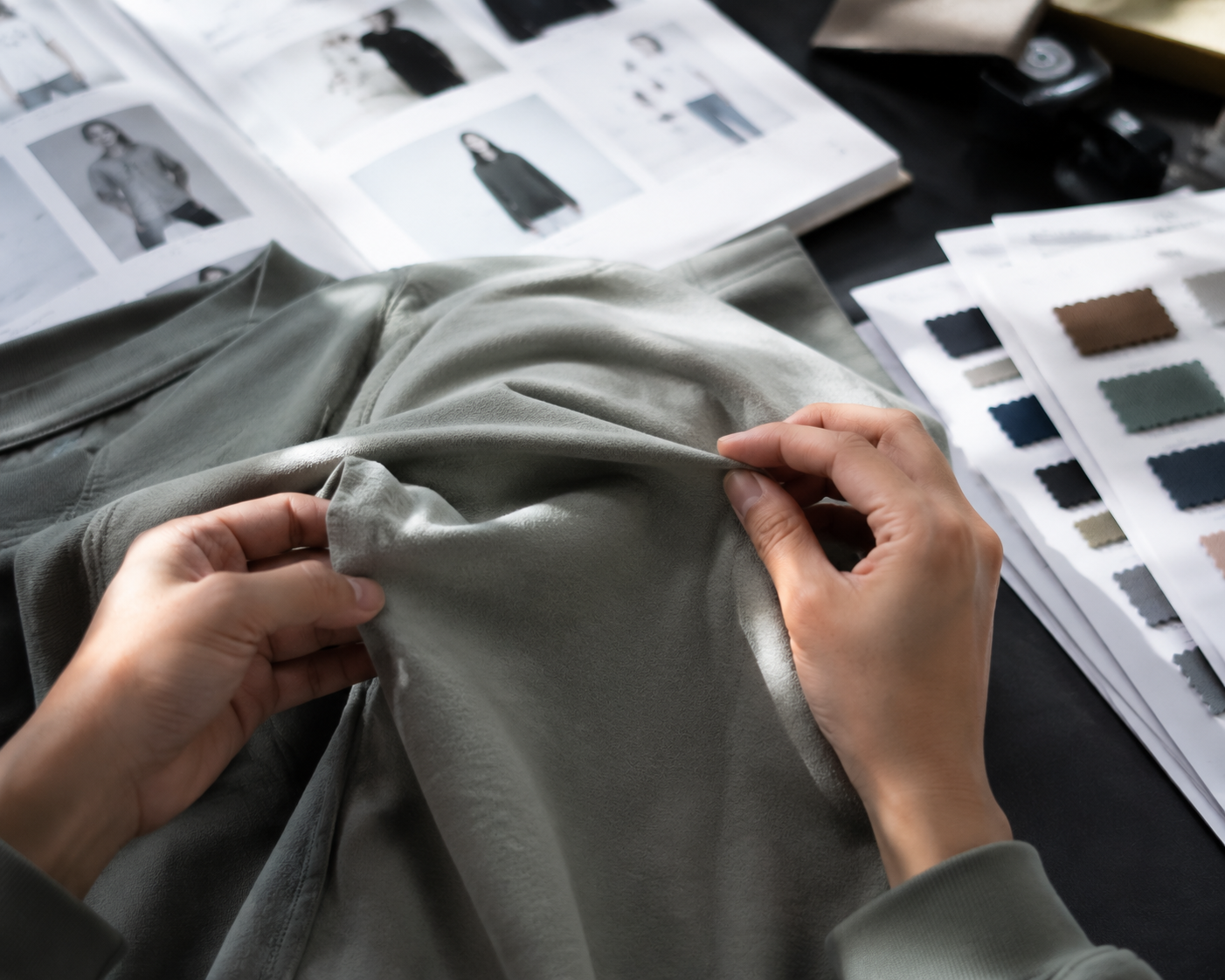
Fabric hand feel affects how custom T-shirts and hoodies look, fit, wash, print, and feel to customers. Learn how GSM, yarn, knit structure, finishing, brushing, shrinkage, and QC shape final quality.
2026
08
10
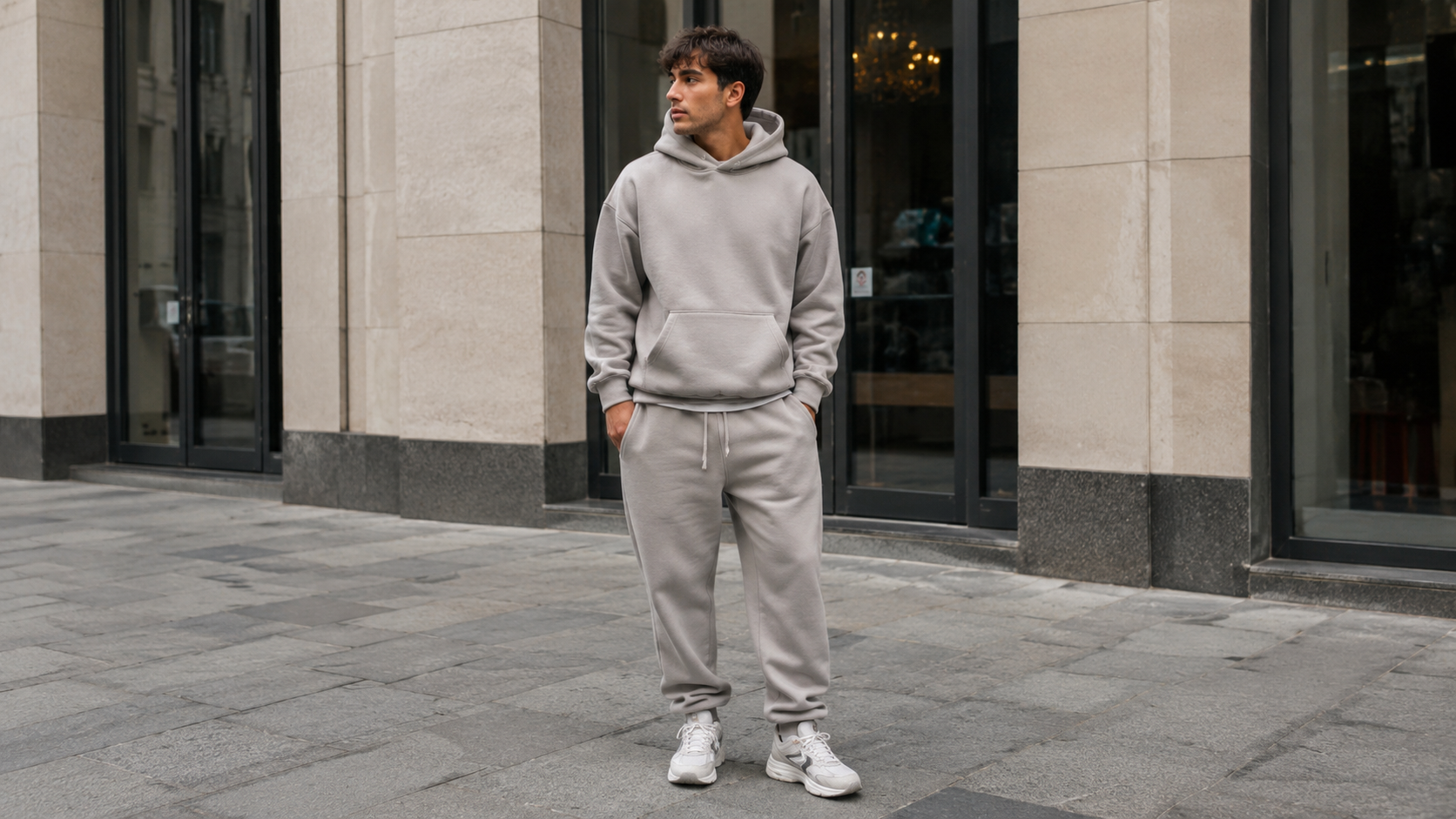
A practical guide to building matching hoodie and sweatpants sets with better fabric GSM balance, color control, fit consistency, washing stability, QC checks, and smoother bulk production.
2026
08
10
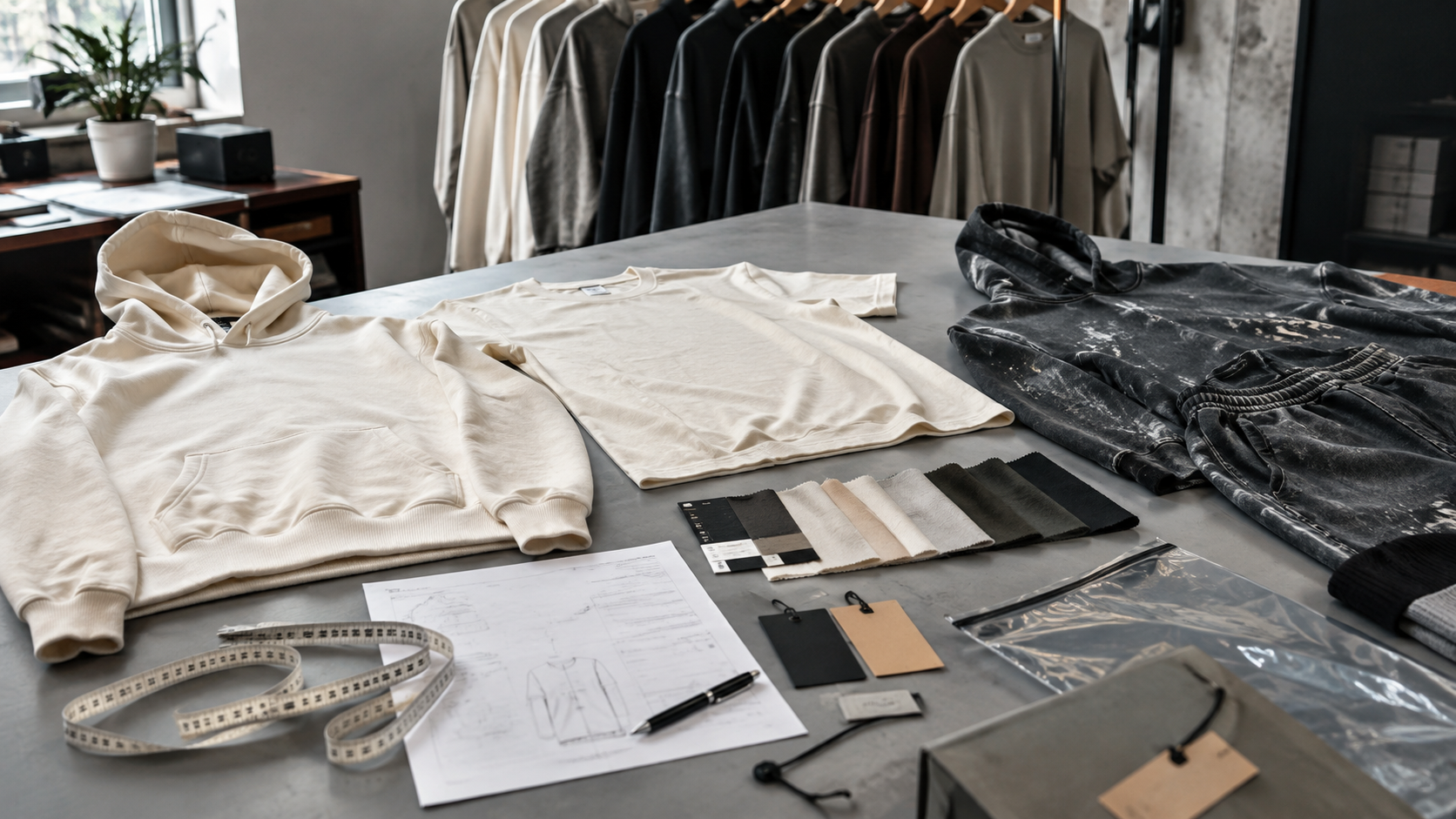
Private label streetwear can start with blank samples, then grow into custom fabric, fit, printing, embroidery, washing, labels, packaging, QC, and full custom drops.
2026
07
30
Recommended for You
Need a heavyweight T-shirt manufacturer? Get 180-240 GSM cotton tees, low MOQ, fast samples, and direct factory pricing. Request your quote today.
Looking for a trusted custom hoodie manufacturer in China? UNIT-100 offers full production, fast turnaround, and quality control. Start your project today.
Want to make clothes in China but don't know where to start? Learn how to find a custom clothing manufacturer you can trust.
A T-shirt or hoodie can look good in photos but still fit wrong. This guide explains how brands should prepare size specs, measurements, tolerance, shrinkage notes, and sample approval before production.
Some brands should start with stock blanks, while others need full cut-and-sew from the beginning. This guide explains how to choose based on MOQ, cost, fit, fabric, timeline, QC, and reorders.
 You Can Find Us Here
 Room 5/F-11,Block A Wantong International Square Liwan District,Guangzhou.
Quick Links
Services
Contact Us

Founded in 2001, UNIT-100 is a custom clothing manufacturer, specializing in high-quality T-shirts, hoodies, and other knitwear.
Copyright © 2026 UNIT-100 · Privacy policy |Sitemap