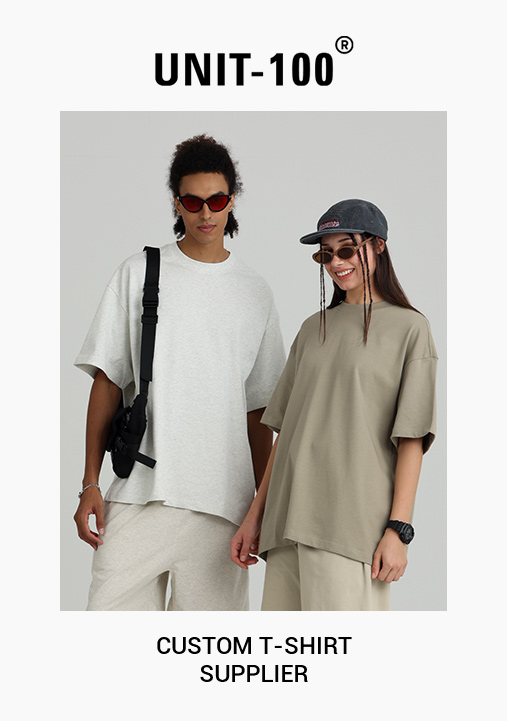


A matching hoodie and sweatpants set looks simple from the outside. The customer sees one outfit, one color, one brand mood, and one clean product photo. But for a factory, a matching set has more risk than a single hoodie or a single pair of sweatpants.
The hoodie and pants must match in fabric, color, GSM, hand feel, shrinkage, washing effect, trims, fit proportion, labels, and packing. If one part changes, the whole set can look wrong. A hoodie that feels premium with pants that feel lighter will not feel like a real set. A washed black hoodie and a slightly warmer black sweatpant can make the product look like two separate items.
This is why matching set development should be treated as one product system, not two separate garments. The safest way is to approve the hoodie and sweatpants together before bulk production starts.
Quick Answer
To build a matching hoodie and sweatpants set without fit or color problems, brands should approve the set as one complete product system. The hoodie and pants should be checked together for fabric GSM, color, dye lot, hand feel, shrinkage, wash effect, rib, drawcord, print, embroidery, size spec, labels, packing, and final QC.
A practical matching set approval should include at least 10 checkpoints: fabric batch, GSM, color standard, hoodie fit, sweatpants fit, rib and drawcord color, shrinkage, wash shade range, decoration placement, and set packing method.
For matching sets, brands should track at least 12 production data points: hoodie GSM, sweatpants GSM, rib GSM, fabric batch, dye lot, lab dip, bulk fabric swatch, hoodie shrinkage, pants shrinkage, trim color, size spec tolerance, and set packing method.
Why Matching Sets Fail in Production
Most matching set problems start because the hoodie and sweatpants are treated separately. The hoodie sample is approved first. The pants are developed later. The fabric is ordered at a different time. The rib comes from another batch. The drawcord color is chosen after sewing. The wash effect is checked separately.
That is how small mismatches appear. The hoodie looks slightly darker. The sweatpants feel softer. The rib on the cuffs looks warmer than the waistband. The hoodie shrinks more than the pants. The top looks oversized, but the pants look too slim. None of these problems may seem large alone, but together they make the set feel unfinished.
For brands, the customer usually does not care which part caused the problem. They only see that the set does not look balanced.
Factory Note: A matching set should be approved together: hoodie, sweatpants, rib, drawcord, labels, wash effect, and packing. Separate approval creates more risk.
Matching Set Data Brands Should Track
A matching hoodie and sweatpants set should not be approved only by appearance. The brand and factory should track fabric, color, shrinkage, fit, trims, decoration, packing, and reorder data together. This makes the set easier to control during bulk production and easier to repeat in future reorders.
| Control Area | Data to Track | Why It Matters |
|---|---|---|
| Hoodie Body GSM | Example: 360–500 GSM depending on season and brand position | Controls hoodie structure, warmth, drape, and premium feel. |
| Sweatpants Body GSM | Should be same or visually compatible with hoodie fabric | If pants feel much lighter than the hoodie, the set can feel mismatched. |
| Rib GSM / Rib Recovery | Cuff, hem, waistband, ankle cuff | Rib that is too weak can make the hoodie or pants lose shape after wearing. |
| Fabric Batch | Same fabric batch or approved compatible batch | Different batches can create shade, hand-feel, and shrinkage differences. |
| Dye Lot | Record dye lot or bulk fabric lot when available | Useful for explaining and controlling color difference across reorders. |
| Lab Dip | Approved color swatch before bulk dyeing | Helps the dyeing mill repeat the intended shade. |
| Bulk Fabric Swatch | Cut and save fabric from actual bulk fabric | Shows the real fabric used in production, not only the pre-production target. |
| Hoodie Shrinkage | Body length, chest, sleeve, cuff, hem before and after wash | If the hoodie shrinks more than the pants, the set proportion changes. |
| Sweatpants Shrinkage | Waist, hip, inseam, outseam, thigh, leg opening before and after wash | Pants shrinkage is very visible because length and leg shape change quickly. |
| Shade Range | Light / standard / dark approval for washed sets | Acid wash, pigment dye, and garment dye cannot be judged by one perfect sample. |
| Trim Color | Rib, drawcord, zipper tape, eyelet, thread, labels | Small trim color differences can make the set look inconsistent. |
| Decoration Reference | Print strike-off, embroidery sample, patch sample | Logo size, placement, color, and texture should feel balanced across top and bottom. |
| Measurement Tolerance | Set tolerance by measurement point, not only by size name | Prevents disputes during final QC and helps control fit consistency. |
| Set Packing Method | Separate packing, set packing, size sticker, barcode, carton ratio | Prevents warehouse and customer delivery mistakes. |
| Reorder File | Approved set sample, swatches, trims, wash standard, QC notes | Makes the next production run easier to repeat. |
For a matching set, one approved hoodie sample is not enough. The full set should be checked together, especially if the brand plans to sell the pieces as one outfit or shoot them together for e-commerce.
Factory Note: The strongest matching set standard is a physical reference package: approved hoodie, approved sweatpants, fabric swatches, rib swatch, drawcord reference, wash range, decoration sample, size chart, packing standard, and QC notes.
Fabric and GSM Compatibility
Hoodies and sweatpants do not always need to use exactly the same fabric, but they need to feel compatible. If the hoodie body is heavy brushed fleece and the pants are lighter French terry, the set may feel unbalanced unless that contrast is intentional.
For many streetwear sets, the brand may want the same fabric family across both pieces. The hoodie body, sweatpants body, rib cuff, waistband, and pocket fabric should be reviewed together.
| Fabric Point | What to Confirm |
|---|---|
| Hoodie Body Fabric | GSM, composition, hand feel, brushing, stretch, shrinkage. |
| Sweatpants Body Fabric | GSM, composition, drape, surface texture, shrinkage. |
| Rib Fabric | Cuff, hem, waistband, recovery, color, thickness. |
| Pocket Fabric | Weight, lining, stretch, color compatibility. |
| Fabric Direction | Cutting direction and surface consistency. |
For many casual and streetwear sets, brands may compare hoodie and sweatpants fabrics in the same fabric family first, such as fleece-to-fleece or French terry-to-French terry. If the hoodie uses a heavier GSM than the sweatpants, the difference should be intentional and approved as a full outfit, not checked separately.
Factory Note: Do not approve the hoodie fabric alone. Put the hoodie fabric, pants fabric, rib, and drawcord together before deciding.
Color Matching and Dye Lot Control
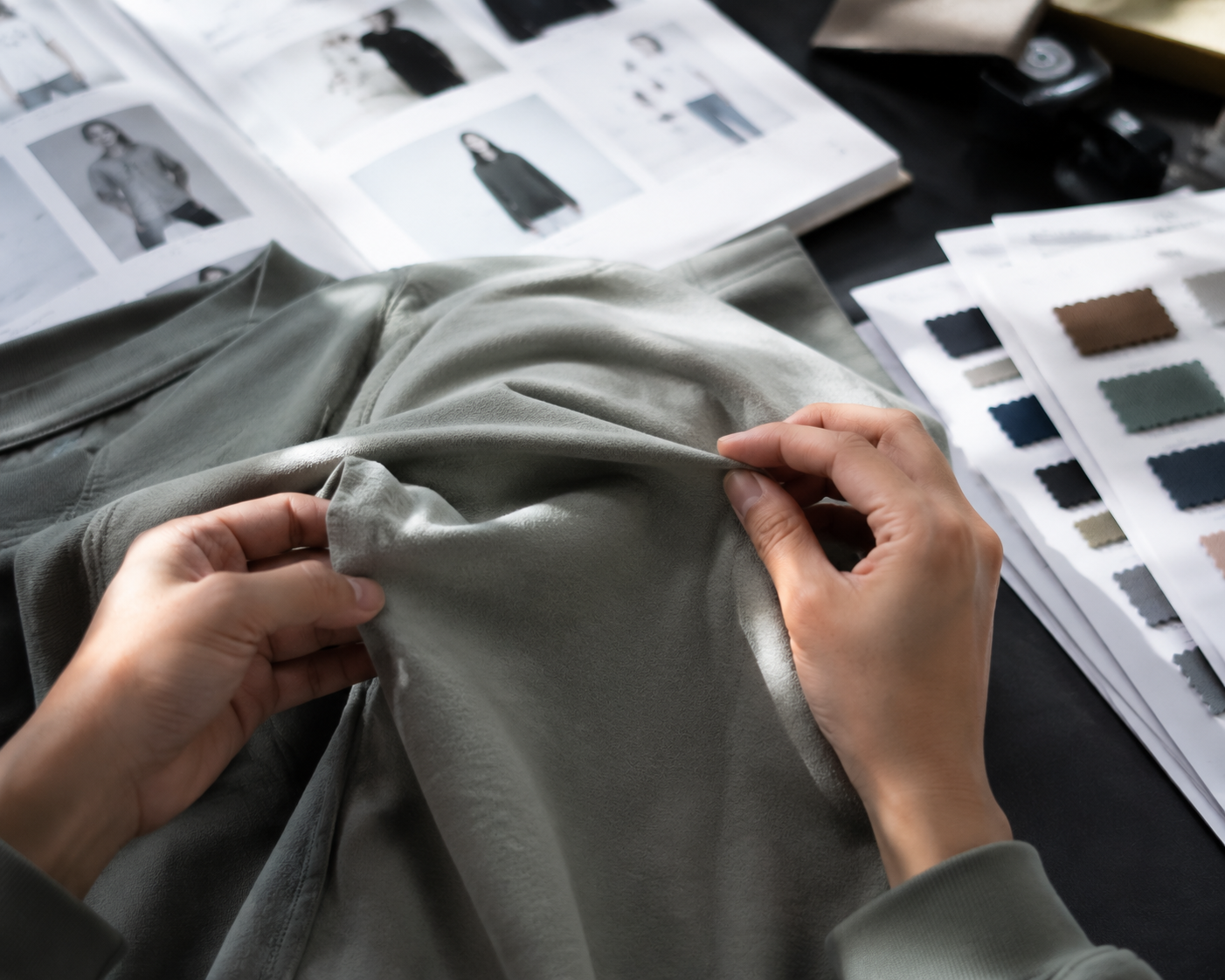
Color is the most visible risk in matching sets. A black hoodie and black sweatpants can still look different if they come from different dye lots, different fabric batches, or different washing conditions.
Even neutral colors can shift. Black may look warm or cool. Grey may look blue or yellow. Cream may look too white on one piece and too yellow on another. Washed colors can vary even more.
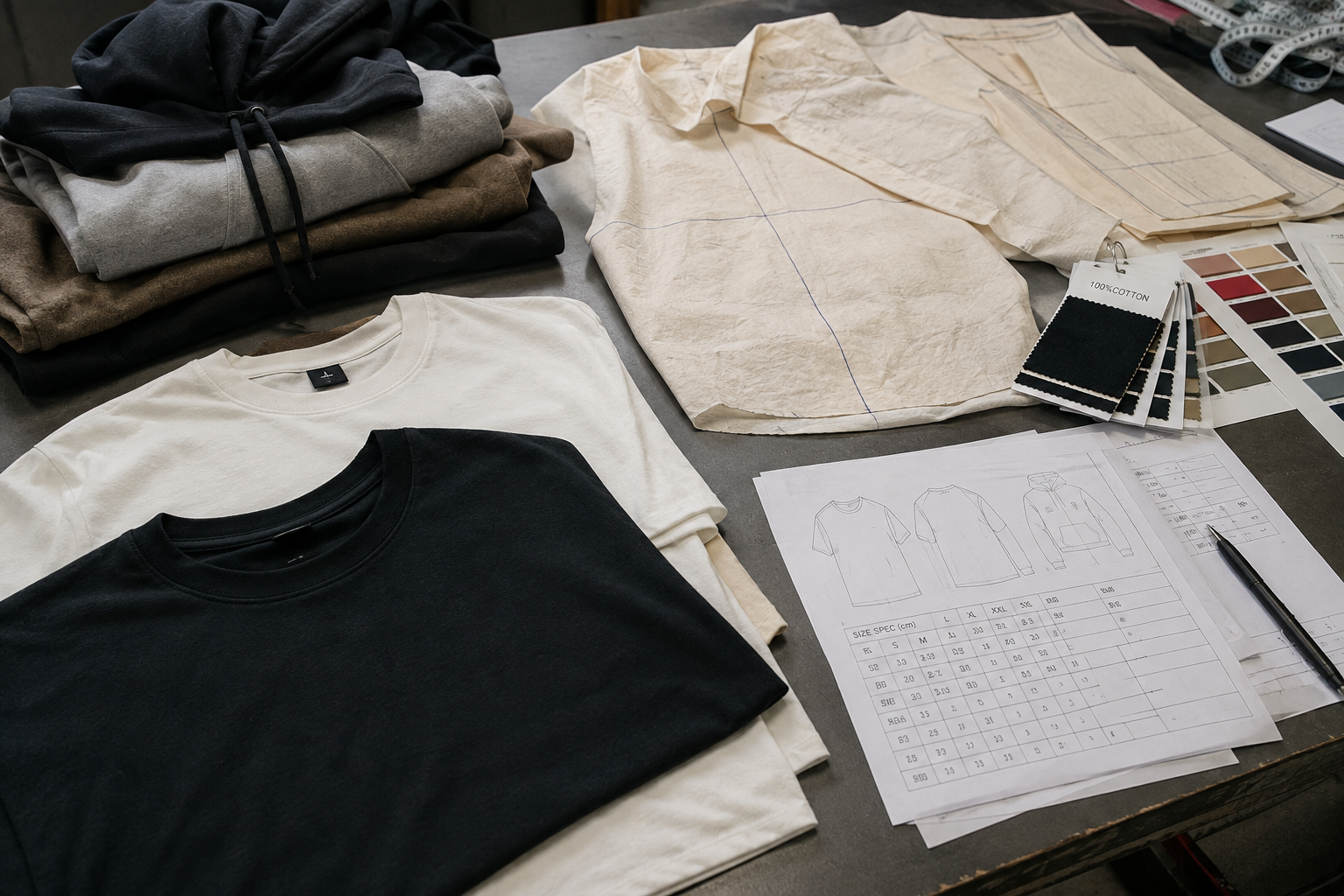
The safest method is to approve a physical color reference: lab dip, bulk fabric swatch, or an approved set sample. For reorders, the factory should compare the new batch against the original approved set, not only against a product photo.
| Color Control Point | What to Keep | Why It Helps |
|---|---|---|
| Lab Dip | Approved dyed swatch before bulk dyeing | Helps repeat the intended color target. |
| Bulk Fabric Swatch | Swatch from actual bulk fabric roll | Shows the real production fabric, not only the target. |
| Dye Lot Record | Dye lot or fabric batch information | Helps explain and control reorder color differences. |
| Rib and Trim Swatch | Rib, drawcord, zipper tape, thread color | Prevents the set from looking mismatched in small details. |
| Approved Set Sample | One complete hoodie and sweatpants set | Acts as the most useful physical standard for reorders. |
Factory Note: “Same black” is not a production standard. The standard should be a physical swatch or approved sample.
Hoodie and Sweatpants Fit Balance
A matching set can fail even when the color is correct. The top and bottom still need to match in fit direction.
If the hoodie is oversized and boxy, but the sweatpants are too slim, the set may look unbalanced. If the hoodie is cropped but the pants rise is too low, the proportion may feel wrong. If the hoodie is very heavy but the pants drape too softly, the outfit can feel inconsistent.
| Fit Direction | Hoodie Check | Sweatpants Check |
|---|---|---|
| Relaxed Set | Comfortable body width, natural shoulder, regular length. | Relaxed hip and thigh, clean taper, comfortable waist. |
| Oversized Streetwear Set | Wider chest, dropped shoulder, structured hood, wider sleeve. | Roomier thigh, wider leg, balanced inseam and rise. |
| Boxy Hoodie Set | Shorter body, wider chest, stronger shoulder line. | Higher rise, controlled leg opening, clean waist shape. |
| Washed Vintage Set | Softened body, stable rib, after-wash shape. | After-wash waist, inseam, leg opening, shade range. |
Hoodie Details That Affect the Set
The hoodie usually becomes the visual anchor of the set. Its fabric, hood shape, cuff, waistband, pocket, drawcord, and print placement influence how the whole set feels.
A weak hood can make the set feel cheap. A loose cuff can make the sleeve look tired. A waistband that pulls too tightly can change the hoodie proportion. Even the drawcord color can make the hoodie feel different from the pants.
Before bulk production, the hoodie should be checked as part of the set. Place it next to the pants and check whether the proportions, color, fabric, and trims feel consistent.
Sweatpants Details That Affect the Set
Sweatpants are often more difficult than brands expect. The waist must feel comfortable. The hip and thigh need enough room. The leg shape must match the hoodie style. The cuff or leg opening needs to support the intended silhouette.
For streetwear, sweatpants can be tapered, relaxed, wide-leg, stacked, open-hem, cuffed, or cargo-inspired. Each option changes the balance of the full set.
| Sweatpants Area | What to Check |
|---|---|
| Waistband | Height, elastic strength, drawcord, comfort, recovery. |
| Rise | Front rise, back rise, sitting comfort, set proportion. |
| Hip and Thigh | Room, drape, comfort, oversized or tapered direction. |
| Inseam / Outseam | Length, stacking, shrinkage, size grading. |
| Leg Opening | Cuffed, open-hem, wide-leg, tapered, or relaxed finish. |
| Pockets | Placement, size, lining, stitching, comfort. |
Rib, Drawcord, Zipper, and Trim Matching
Small trims can break the set if they do not match. The hoodie cuff, hoodie hem, sweatpants waistband, sweatpants cuff, drawcord, zipper tape, eyelets, thread, and labels should be reviewed together.
A rib that is slightly different from the body fabric may be acceptable if it is intended. But if the hoodie rib looks warm black and the pants waistband looks cool black, the set can look inconsistent.
| Trim Area | Data to Check | Risk if Ignored |
|---|---|---|
| Hoodie Cuff / Hem Rib | Color, GSM, recovery, width | Weak rib can make the hoodie look loose after wear. |
| Sweatpants Waistband | Elastic strength, rib recovery, height | Pants may feel uncomfortable or lose shape. |
| Drawcord | Color, length, material, tip finish | Drawcord may look disconnected from the set color. |
| Zipper / Eyelet | Color, finish, durability | Hardware may clash with the garment style. |
| Thread Color | Topstitch thread, embroidery thread | Stitching may look inconsistent across top and bottom. |
Factory Note: Trims should not be approved one by one in isolation. Put all trims beside the hoodie and pants fabric before bulk production.
Washing, Shrinkage, and Shade Range
Washing can make a matching set look more premium, but it also adds risk. Acid wash, pigment dye, garment dye, enzyme wash, and vintage wash can create shade variation across the hoodie and pants.
The bigger problem is that the hoodie and sweatpants may not shrink the same way. The hoodie body, sleeves, rib, pants waist, inseam, and leg opening can all change after washing.
AATCC TM135 is used to determine dimensional changes of fabrics after home laundering, and ISO 6330 specifies domestic washing and drying procedures for textile testing. These references help explain why wash conditions should be defined when checking shrinkage and set consistency.
| After-Wash Check | Why It Matters |
|---|---|
| Hoodie body length | Changes top proportion after washing. |
| Hoodie sleeve length | Affects comfort and visual balance. |
| Hoodie hem and cuff | Rib recovery changes the set look. |
| Sweatpants waist | Affects comfort and size return risk. |
| Sweatpants inseam | Length shrinkage is very visible on pants. |
| Leg opening / cuff | Changes stacking, taper, and silhouette. |
| Shade range | Checks whether top and bottom still look like a set. |
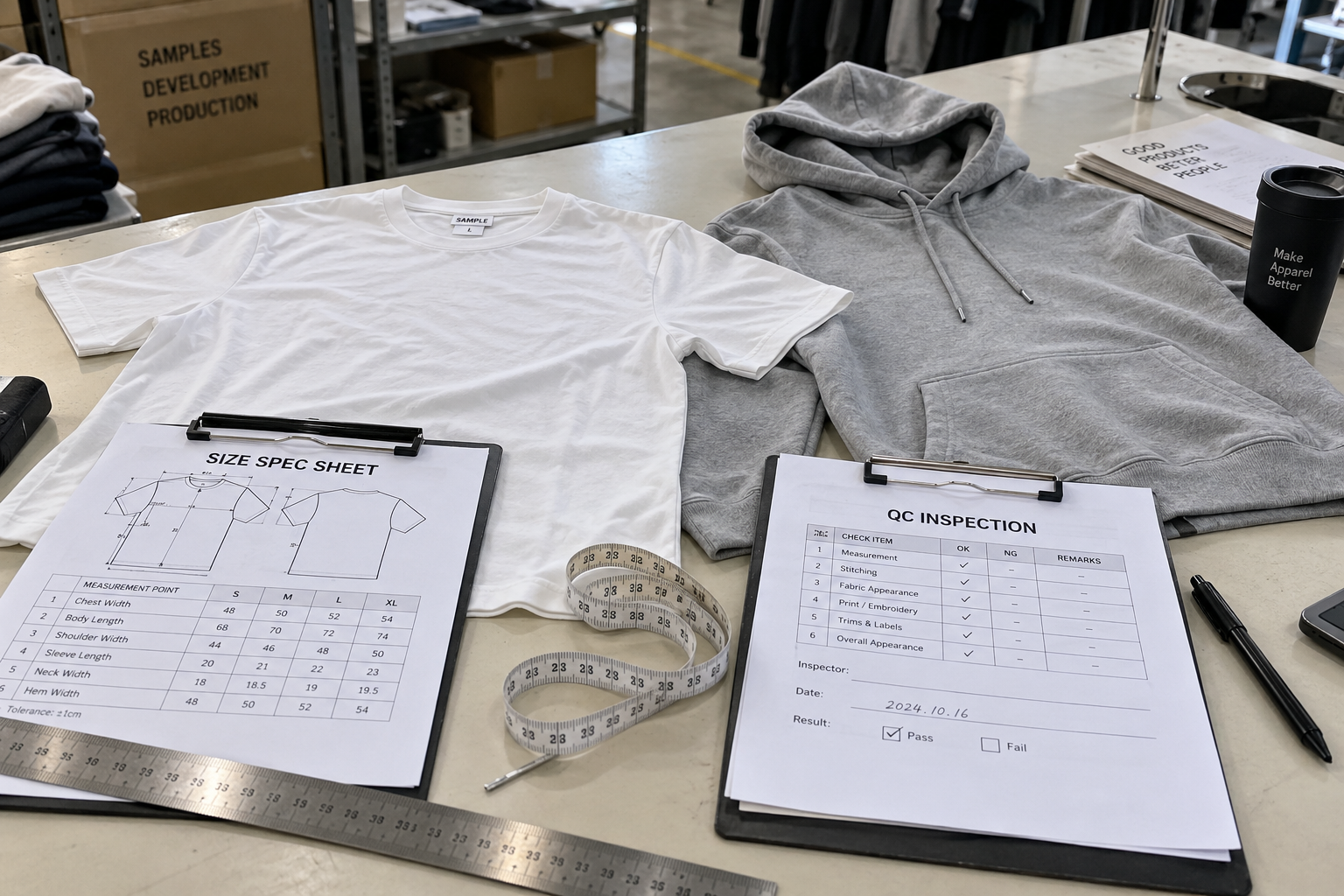
Size Specs and QC for Matching Sets
A matching set needs two size specs: one for the hoodie and one for the sweatpants. But it also needs a set-level review. A size M hoodie should visually and physically match the size M pants.
For example, a hoodie may be designed oversized, while the pants are relaxed but not too wide. That is acceptable if it is planned. The problem happens when the two pieces are graded separately and the set proportion changes across sizes.
| Hoodie Measurement | Sweatpants Measurement |
|---|---|
| Body length | Outseam / inseam |
| Chest width | Waist relaxed and stretched |
| Shoulder width | Hip width |
| Sleeve length | Thigh width |
| Hood height and width | Rise and knee width |
| Cuff and hem width | Leg opening or cuff width |
| QC Point | Hoodie Data | Sweatpants Data |
|---|---|---|
| Main Length | Body length before wash / after wash | Outseam and inseam before wash / after wash |
| Main Width | Chest width, shoulder width, hem width | Waist relaxed, waist stretched, hip width |
| Sleeve / Leg Balance | Sleeve length, cuff opening | Thigh, knee, leg opening, cuff opening |
| Rib Recovery | Cuff and hem recovery | Waistband and ankle cuff recovery |
| After-Wash Shape | Hood shape, sleeve twist, hem shape | Waist shape, inseam shrinkage, leg twist |
| Color Check | Body fabric, rib, drawcord, print or embroidery | Body fabric, waistband, cuff, drawcord, print or embroidery |
| Packing Check | Hoodie folded size and label | Pants folded size and label |
AQL inspection can help define acceptable defect levels in a sampled batch, but brands should still approve the full set standard before bulk production starts.
Set Packing and Reorder Control
Matching sets can be packed in different ways. Some brands sell hoodie and sweatpants separately. Some sell them as one set. Some need each piece in separate poly bags, then combined into a master set bag. Some need size stickers, barcode stickers, hang tags, and carton marks by set size.
These details should be confirmed before bulk packing. If the brand changes the packing method after goods are finished, the factory may need to reopen cartons and repack the order.
| Packing Method | Best For | What to Confirm |
|---|---|---|
| Separate Piece Packing | Brands selling hoodie and pants separately | Individual SKU, size sticker, barcode, poly bag. |
| Set Packing | Brands selling hoodie and pants as one outfit | Same size pairing, set barcode, set poly bag, hang tag. |
| Mixed Carton | Small batch or multi-size shipment | Clear carton mark and packing list. |
| Solid Size Carton | Warehouse or retail receiving | Size, color, set quantity, carton number. |
| Reorder Packing Standard | Repeat production | Fold method, bag size, sticker placement, carton ratio. |
For future reorders, keep the approved hoodie sample, sweatpants sample, fabric swatch, rib swatch, drawcord reference, wash standard, print or embroidery reference, size chart, packing method, and QC notes.
UNIT-100 can help review fabric, GSM, color, fit, shrinkage, washing, trims, labels, packing, QC, and reorder standards for custom hoodie and sweatpants sets.
Talk to UNIT-100Brand Checklist Before Bulk Production
Before approving a matching hoodie and sweatpants set, brands should check the full product together. Do not approve the hoodie and pants as separate items unless they are meant to be sold separately.
- Confirm whether the hoodie and sweatpants use the same or compatible fabric.
- Approve fabric GSM and hand feel for both pieces.
- Check lab dip, bulk fabric swatch, or physical color standard.
- Review hoodie and sweatpants together under the same light.
- Confirm hoodie fit: body length, chest, shoulder, sleeve, hood, cuff, hem.
- Confirm pants fit: waist, hip, rise, inseam, thigh, knee, leg opening.
- Check rib, drawcord, zipper, eyelet, thread, and label colors together.
- Approve print, embroidery, patch, or logo placement across the set.
- Wash the full set sample and compare after-wash measurements.
- For washed sets, approve light / standard / dark shade range.
- Confirm packing method: separate pieces or set packing.
- Keep approved samples, swatches, wash standard, trim reference, and QC notes for reorders.
Best Practice: A matching set should be approved as one outfit. The top and bottom should look, feel, and fit like they belong together.
Frequently Asked Questions
Why does my hoodie and sweatpants set not match exactly?
The set may not match because the hoodie and pants use different fabric batches, dye lots, washing conditions, rib colors, drawcord colors, or approval standards. Physical swatches and full-set approval can reduce this risk.
Should matching sets use the same GSM?
Not always, but the GSM should feel compatible. A hoodie may use a slightly different structure from the pants, but the hand feel, weight, drape, and color should still support the same set direction.
Are washed matching sets harder to produce?
Yes. Acid wash, pigment dye, garment dye, enzyme wash, and vintage wash create natural shade variation. Washed sets should be approved by shade range and after-wash measurements.
What is the biggest mistake when developing a hoodie and sweatpants set?
The biggest mistake is approving the hoodie and sweatpants separately without checking fabric, color, trims, fit proportion, wash effect, and packing together as one complete set.
How can I make matching set reorders more consistent?
Keep the approved hoodie sample, sweatpants sample, fabric swatch, rib swatch, drawcord reference, lab dip, wash standard, print or embroidery reference, size chart, packing standard, and QC notes from the first order.
Sources and References
Conclusion
A matching hoodie and sweatpants set is not just two garments in the same color. It is a complete product system. The fabric, GSM, shade, fit, rib, drawcord, washing, decoration, labels, packing, and QC all need to work together.
The safest way to develop a set is to approve the hoodie and pants together before bulk production. Check the color under the same light. Wash the full set sample. Measure both pieces. Review trims together. Confirm packing. Save the approved references for reorders.
If your brand is developing custom hoodie and sweatpants sets, tracksuits, washed sets, or private label streetwear, UNIT-100 can help review fabric, GSM, fit, color, shrinkage, washing, trims, labels, QC, packing, and reorder planning before production starts.
Related Articles
A matching set should look and feel like one product.
Talk with UNIT-100 about custom hoodie and sweatpants sets, fabric GSM, fit balance, color matching, washing, trims, labels, packing, QC, and repeat production.
Develop Your Matching Set


 You Can Find Us Here