

Shrinkage is one of those problems brands usually care about only after something has gone wrong. The sample looked good. The fit was approved. The bulk order was packed. Then someone washes the T-shirt, and the body length is not the same anymore.
It sounds like a small issue, but in real production it can change the whole product. A boxy tee becomes too short. An oversized hoodie feels tighter at the cuff. A washed sweatshirt loses the relaxed shape the brand approved in the sample room.
At the factory level, shrinkage is not a mystery. It can be tested, measured, and controlled. But it has to be discussed before bulk cutting starts. If nobody checks the after-wash size until the goods are finished, it is already too late.
Quick Answer
Custom T-shirts and hoodies shrink because fabric, yarn, knit structure, finishing, washing temperature, drying method, and garment construction all affect the final measurement after washing. The safest way to control shrinkage is to test the fabric or garment sample before bulk production, compare before-wash and after-wash measurements, and set a clear tolerance range.
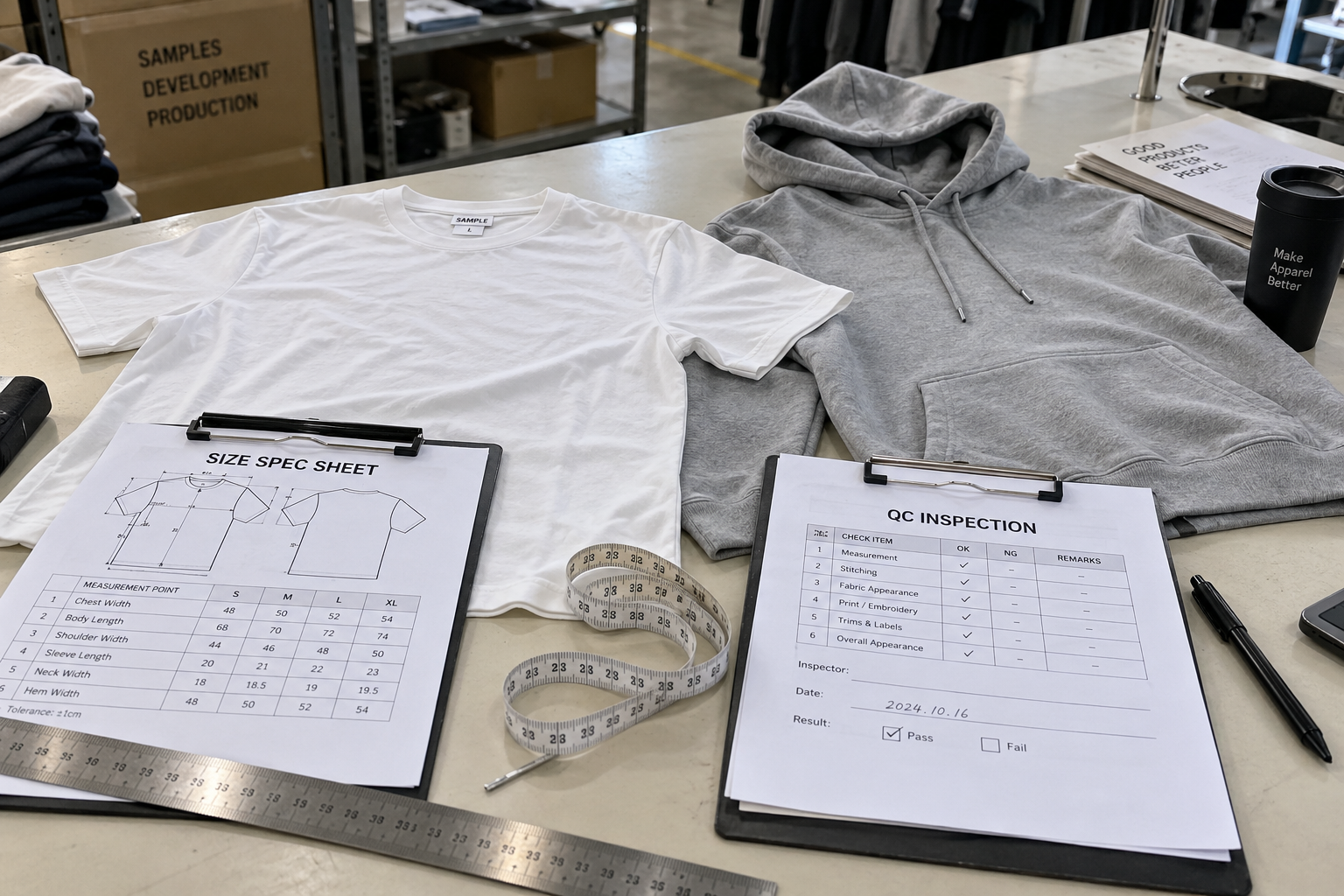
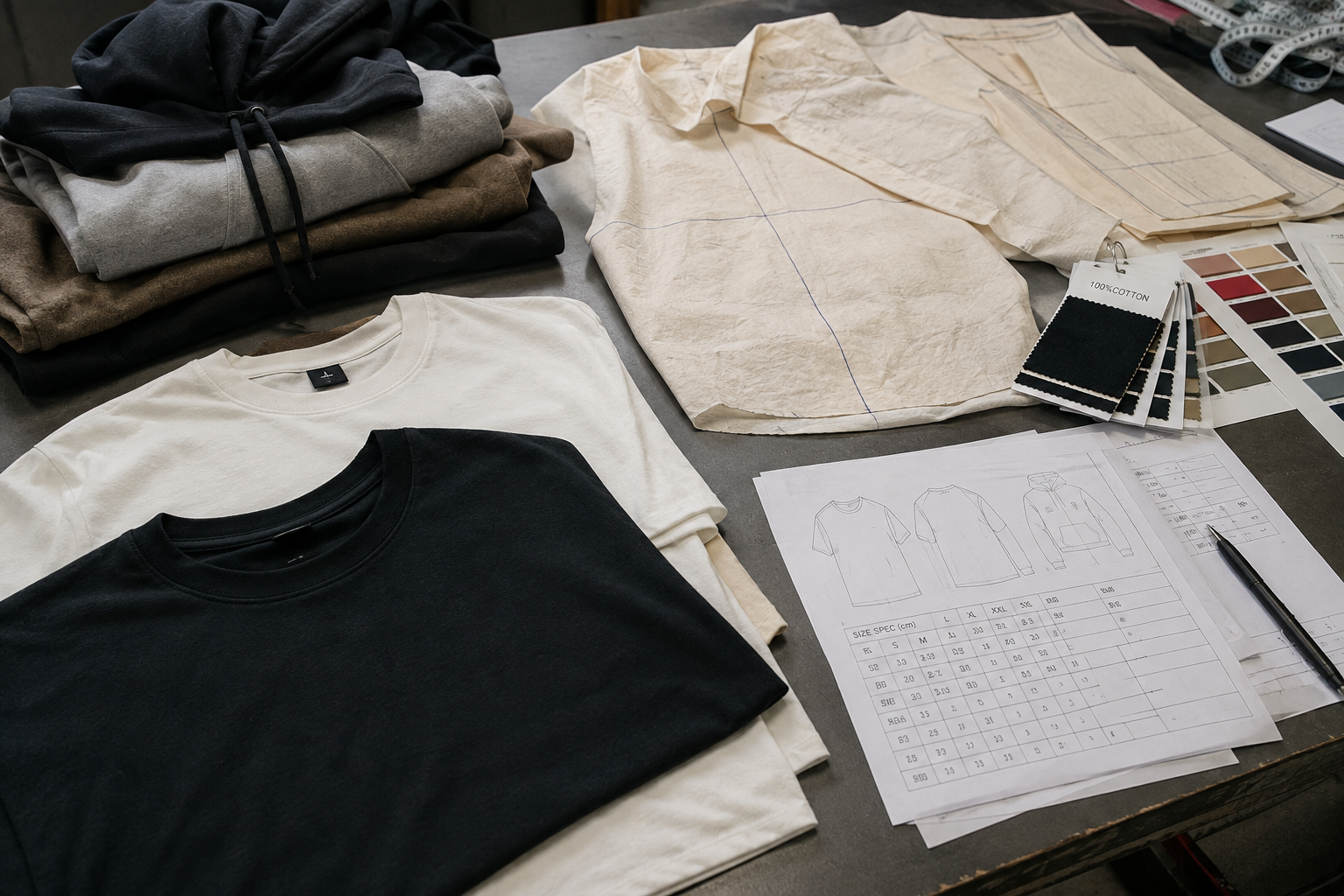
For brands, the useful data is not just “shrinkage rate.” You should check body length, chest width, sleeve length, shoulder width, neck opening, hem width, hoodie cuff, waistband, and rib recovery after washing. These details decide whether the garment still fits like the approved sample.
Why Shrinkage Matters More Than Brands Expect
Most customers do not talk about shrinkage in percentages. They say the shirt became short. They say the hoodie feels tighter. They say the fit is not like the photo anymore.
That is why shrinkage is not only a lab number. It is directly connected to the look of the garment. A T-shirt can shrink 2 cm in length and suddenly lose the oversized shape. A hoodie sleeve can shrink slightly and make the cuff feel uncomfortable. A neck rib can pull in after washing and make the garment feel cheaper.
For streetwear products, proportion is everything. If the brand approved a wide, relaxed, slightly boxy fit, the after-wash measurement should still support that shape. Otherwise the sample approval does not mean much.
Factory Note: When we check a T-shirt or hoodie sample, we do not only look at the fresh sample. We also care about what happens after washing, because that is what the final customer will experience.
How Shrinkage Is Calculated
The calculation is simple. Measure the garment before washing. Wash it under the agreed condition. Measure it again after washing and drying.
| Formula | Example | Result |
|---|---|---|
| Shrinkage % = (Before Wash - After Wash) / Before Wash × 100 | Body length before wash: 74 cm Body length after wash: 72 cm |
(74 - 72) / 74 × 100 = 2.7% shrinkage |
| Width Change % = (Before Wash - After Wash) / Before Wash × 100 | Chest width before wash: 60 cm Chest width after wash: 59 cm |
(60 - 59) / 60 × 100 = 1.7% shrinkage |
The important part is that length and width do not always shrink the same way. Some cotton jersey fabrics lose more length than width. Hoodie rib may recover differently from the body fabric. Garment-dyed pieces may feel softer but also need more careful measurement after wash.
Shrinkage Data Brands Should Track
When a brand asks, “Will it shrink?” the honest answer is usually: yes, some change is possible. The better question is, “How much will it change, where will it change, and is that still inside the agreed tolerance?”
Here are the points we think brands should track before approving T-shirts or hoodies for bulk production.
| Control Area | What to Check | Why It Matters |
|---|---|---|
| Body Length | Before-wash and after-wash length | Length shrinkage changes oversized, boxy, cropped, and relaxed silhouettes. |
| Chest Width | Before-wash and after-wash width | Width shrinkage affects comfort, drape, and size grading. |
| Shoulder Width | Shoulder seam to shoulder seam | Important for dropped-shoulder and boxy T-shirts. |
| Sleeve Length | Short sleeve or long sleeve change after wash | Small sleeve changes can affect the whole look of a streetwear fit. |
| Neck Opening | Neck rib recovery and opening size | A neck that becomes too tight or too loose changes wearing comfort and product quality. |
| Hem and Rib | Hem width, hoodie cuff, waistband recovery | Hoodies and sweatshirts depend heavily on rib quality and recovery. |
| Fabric GSM | Actual fabric weight before production | Fabric weight affects shrinkage, drape, warmth, and hand feel. |
| Washing Method | Temperature, drying method, wash cycle | Different washing conditions can produce different shrinkage results. |
| Garment Type | T-shirt, hoodie, sweatshirt, jogger, washed item | Different garments shrink differently because of construction and fabric weight. |
For many custom T-shirts, brands may use a low single-digit shrinkage target as an internal expectation, but the final acceptable range depends on fabric, construction, washing method, and buyer requirement. Hoodies, fleece items, and washed garments need more specific checking because they have more parts and heavier fabric.
Factory Note: A useful shrinkage report should show before-wash and after-wash measurements. One general shrinkage number is not enough for custom apparel.
Fabric and Yarn Structure
Fabric is usually the first reason a garment shrinks. Cotton fibers, yarn twist, knit density, finishing, and compaction all affect how the fabric behaves after washing.
Two fabrics can both be called 240 GSM cotton jersey, but they may not shrink the same way. One fabric may be compacted better. One may have looser knitting. One may feel softer but shrink more. Another may feel firmer and stay more stable.
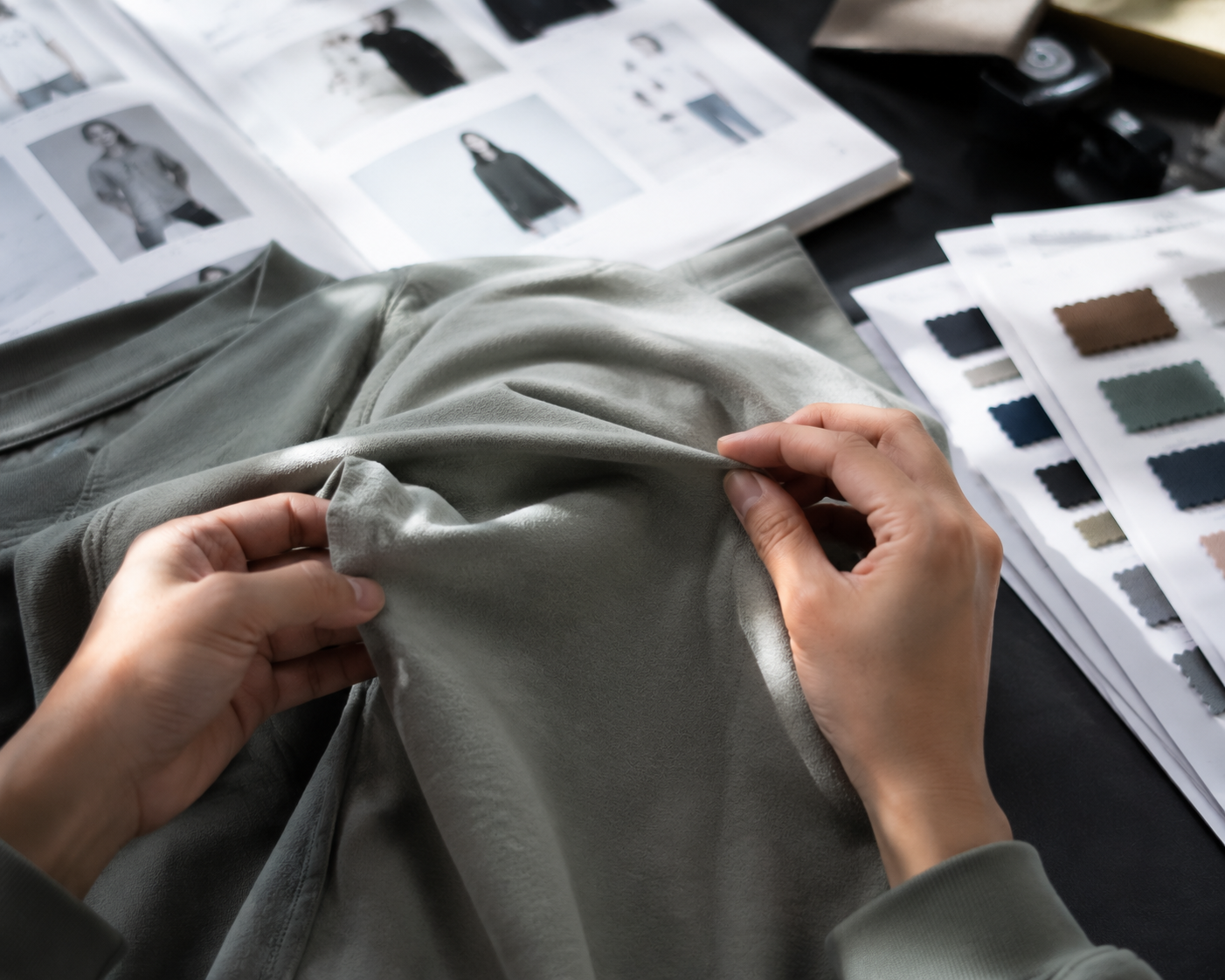
This is why brands should not approve fabric only by touching one sample. If the bulk fabric is newly knitted or dyed, it should be checked again before cutting.
In real production, a small change in fabric can change the final fit more than people expect. This is why fabric approval and shrinkage testing should happen before bulk cutting, not after sewing is finished.
T-Shirt Shrinkage
T-shirts usually show shrinkage most clearly in body length, chest width, sleeve length, and neck opening.
A regular T-shirt can often absorb a small change without looking too different. A boxy or oversized T-shirt is less forgiving. If the body becomes shorter, the whole fit changes. If the chest width shrinks, the garment can lose the relaxed shape. If the neck rib twists or tightens, the customer will notice it immediately.
For heavyweight T-shirts, shrinkage control is even more important because the fabric already has more structure. A few centimeters can change the balance between “premium oversized” and “awkward fit.”
Measure the garment before wash and after wash. Then check whether the after-wash shape still matches the fit your brand wants.
Hoodie Shrinkage
Hoodies are more complicated than T-shirts. There is the body fabric, rib cuff, waistband, hood, pocket, drawcord area, and sometimes hood lining. These parts do not always behave the same after washing.
A hoodie may lose body length. The sleeves may feel shorter. The cuff may tighten. The waistband may pull in. The hood may feel smaller or lose shape. Sometimes the body looks fine, but the rib gives the garment a cheap feeling after washing.
For heavyweight hoodies, shrinkage should be discussed during sample development. Brushed fleece, French terry, rib quality, washing method, and drying method can all change the final hand feel and size.
Washing and Drying Conditions
Washing temperature and drying method matter. A garment washed cold and line dried may behave differently from a garment washed warm and tumble dried.
This sounds obvious, but it is often missed. A brand may wash the sample one way, while the factory tested it another way. Then both sides talk about “shrinkage,” but they are not using the same condition.
AATCC TM135 is used to determine dimensional changes in length and width after home laundering. ISO 6330 specifies domestic washing and drying procedures for textile testing. These methods help make shrinkage testing more consistent instead of relying only on casual washing.
Not every order needs a full lab report, but every brand should know how the test was done. Otherwise, the shrinkage number is not very useful.
Washed and Garment-Dyed Styles
Washed garments are popular because they look more natural and less “fresh from the factory.” But they also need more control.
Acid wash, enzyme wash, vintage wash, garment dye, and snow wash can all change color, hand feel, and size. A washed sample might look great, but the bulk order needs a clear standard. The wash effect should be approved as a range, not one perfect photo.
Factory Note: Washed garments should be approved by shade range and measurement tolerance. If the buyer expects every piece to look identical, the expectation needs to be corrected before production.
Measurement Tolerance After Wash
Every garment production needs tolerance. Without tolerance, even normal production variation can become an argument.
For many custom T-shirts, a factory may work with around ±1–2 cm tolerance depending on the measurement point, size, fabric, washing method, and buyer requirement. Hoodies and washed garments may need more detailed discussion because the fabric is heavier and the construction is more complex.
| Measurement Point | Why It Can Change | What to Confirm |
|---|---|---|
| Body Length | Fabric shrinkage, washing, drying, sewing tension | Before-wash and after-wash length standard |
| Chest Width | Fabric relaxation, side seam, washing | Acceptable width tolerance by size |
| Shoulder Width | Cutting layers, sewing tension, shrinkage | Shoulder tolerance, especially for oversized fit |
| Sleeve Length | Cutting, sewing, washing, rib attachment | Short sleeve or long sleeve tolerance |
| Neck Opening | Rib quality, sewing tension, washing | Neck stretch and recovery after wash |
| Hoodie Cuff / Hem | Rib composition, tension, drying | Cuff and hem recovery standard |
The goal is not to avoid every millimeter of difference. The goal is to agree on what is acceptable before production starts, then inspect the bulk order against that standard.
How a Factory Should Control Shrinkage
A good factory should not wait until packing to think about shrinkage. By then, the garment has already gone through fabric, cutting, sewing, washing, and finishing.
Shrinkage control starts earlier. It starts with fabric checking, sample measurement, washing test, pre-production sample, size tolerance, and inline QC.
| Control Step | What It Prevents |
|---|---|
| Fabric shrinkage test | Prevents unstable fabric from entering bulk cutting. |
| Pre-production sample | Confirms real bulk fabric, construction, print, washing, and size. |
| Before-wash measurement | Creates a baseline before garment washing or customer laundering. |
| After-wash measurement | Shows how the garment actually fits after washing. |
| Size tolerance chart | Defines what is acceptable before QC starts. |
| Inline QC | Finds size and construction issues before the full order is finished. |
| Final QC and AQL inspection | Controls defects before shipment according to agreed inspection level. |
AQL inspection is often used in apparel quality control to define acceptable defect levels in a sampled batch. This does not replace shrinkage testing, but it helps control the final shipment quality before goods leave the factory.
UNIT-100 can help review fabric, GSM, shrinkage, fit, wash effect, size tolerance, printing, labels, packaging, and bulk QC before production starts.
Talk to UNIT-100Final QC and Packing After Shrinkage Checks
After the garment has been washed, measured, and approved, final QC and packing still matter. A garment can pass the size check but look poor if it is folded badly, packed too tightly, or mixed by size and color incorrectly.
For private label brands, packing is part of the product experience. If the garment arrives wrinkled, compressed, or poorly sorted, the brand may feel the production was not controlled well, even if the sewing itself is acceptable.
This is why final packing should also have a standard: folding method, poly bag, size label, carton quantity, carton marking, and shipment preparation.
Brand Checklist Before Bulk Production
Before approving bulk production, make sure shrinkage is not left as a vague risk.
- Confirm whether the size chart is before wash or after wash.
- Check fabric composition and GSM.
- Ask whether fabric has been compacted or pre-shrunk.
- Measure the sample before wash and after wash.
- Check body length, chest width, sleeve, shoulder, hem, and neck opening.
- Confirm the washing method used for shrinkage testing.
- Set acceptable measurement tolerance before production.
- For hoodies, check cuff, waistband, hood, and rib recovery.
- For washed garments, approve both shade range and after-wash size.
- Keep one approved sample as the production reference.
Best Practice: Do not approve a sample only because it fits before washing. For cotton T-shirts, hoodies, and washed garments, after-wash measurement is the real test.
Frequently Asked Questions
Why do custom T-shirts shrink after washing?
Custom T-shirts can shrink because cotton fibers, knit structure, fabric finishing, washing temperature, and drying method affect the final size. Length and width may shrink at different rates.
Do hoodies shrink more than T-shirts?
Hoodies do not always shrink more, but they shrink differently. They have heavier fabric, cuffs, waistband, hood, pocket, and rib parts, so more areas need to be checked after washing.
How do you calculate shrinkage percentage?
Shrinkage percentage is calculated by subtracting the after-wash measurement from the before-wash measurement, dividing by the before-wash measurement, and multiplying by 100.
What is an acceptable shrinkage rate for custom T-shirts?
There is no single number for every T-shirt. The acceptable range depends on fabric, garment construction, wash method, and buyer requirement. Many brands prefer low single-digit shrinkage, but the standard should be confirmed before production.
How can brands reduce shrinkage risk before production?
Brands can reduce risk by testing fabric, checking after-wash measurements, approving pre-production samples, confirming size tolerance, using compacted or pre-shrunk fabric when needed, and keeping one approved sample as the production reference.
Sources and References
Conclusion
Shrinkage is not only a technical issue. It decides whether the garment still fits correctly after the customer washes it.
The safe way is simple: confirm fabric, test shrinkage, measure before wash and after wash, set tolerance, approve the production sample, and keep QC standards clear before bulk production starts.
If your brand is developing custom T-shirts, heavyweight tees, hoodies, washed garments, or streetwear sets, UNIT-100 can help you review fabric, shrinkage, fit, washing, size tolerance, labels, packaging, and bulk production before your order starts.
Related Articles
Your garment should still fit after washing.
Talk with UNIT-100 about fabric shrinkage, after-wash measurements, washing standards, size tolerance, QC, and bulk production planning for your next custom apparel order.
Start Your Custom Apparel Project



 You Can Find Us Here