

Screen Printing on Tees and Hoodies: Inks, Puff and High-Density
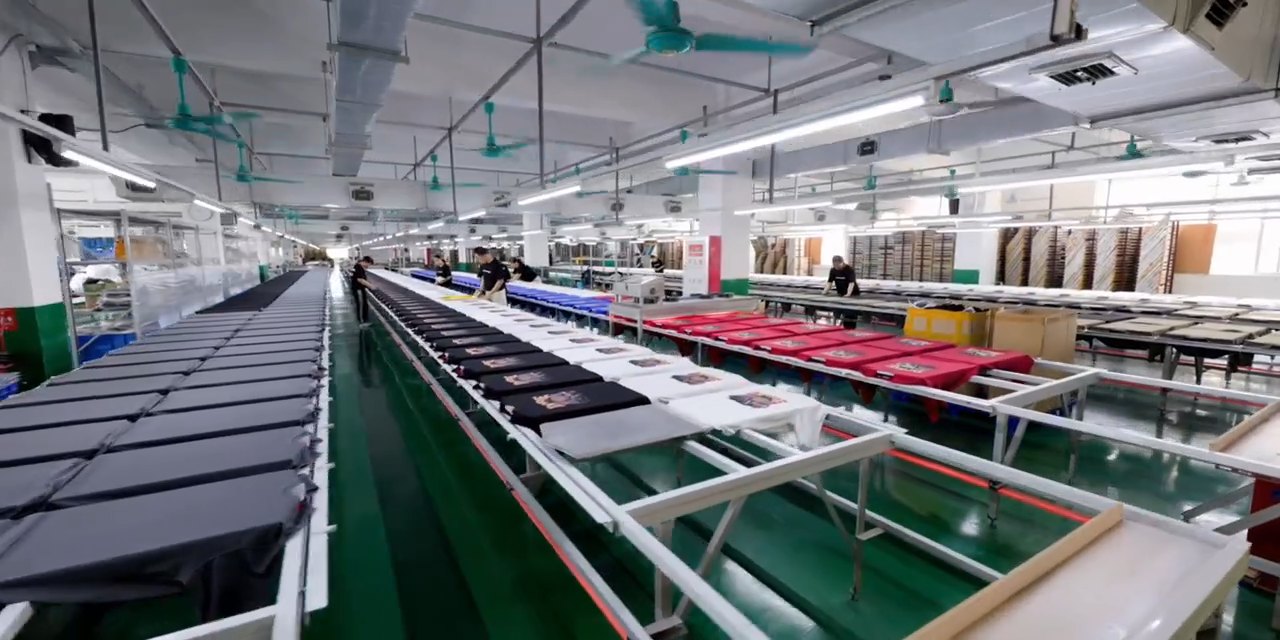
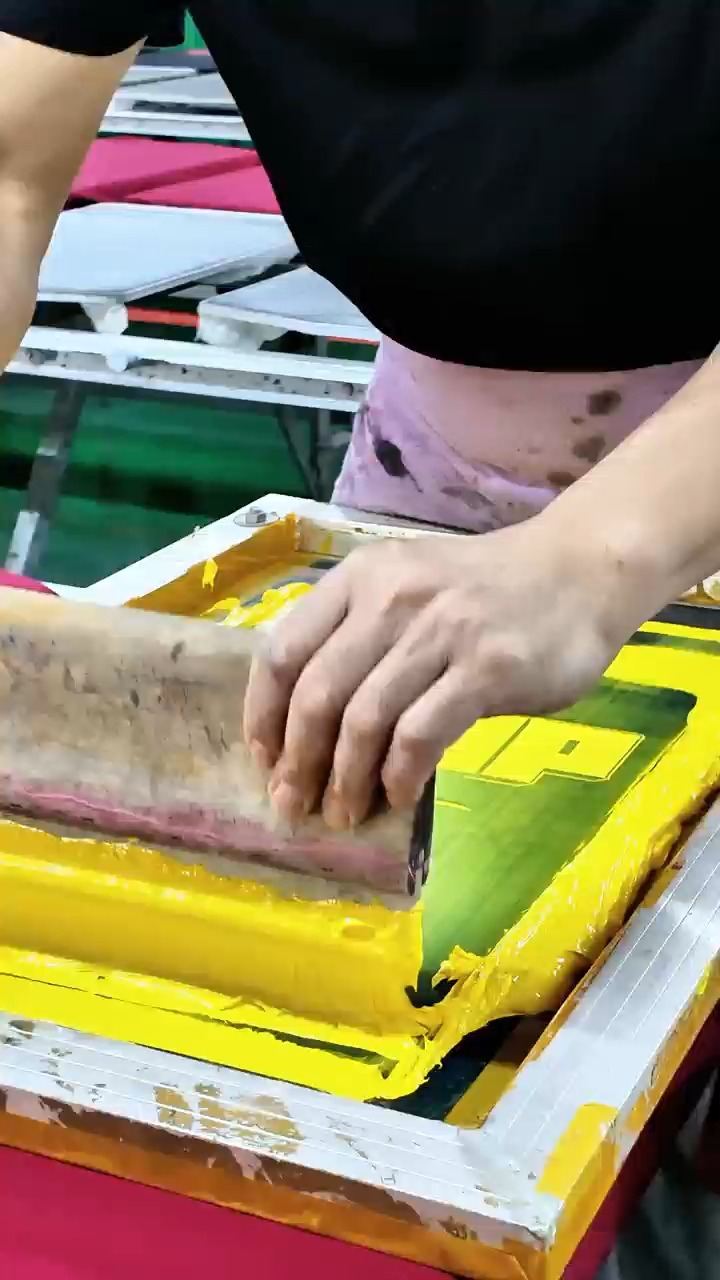
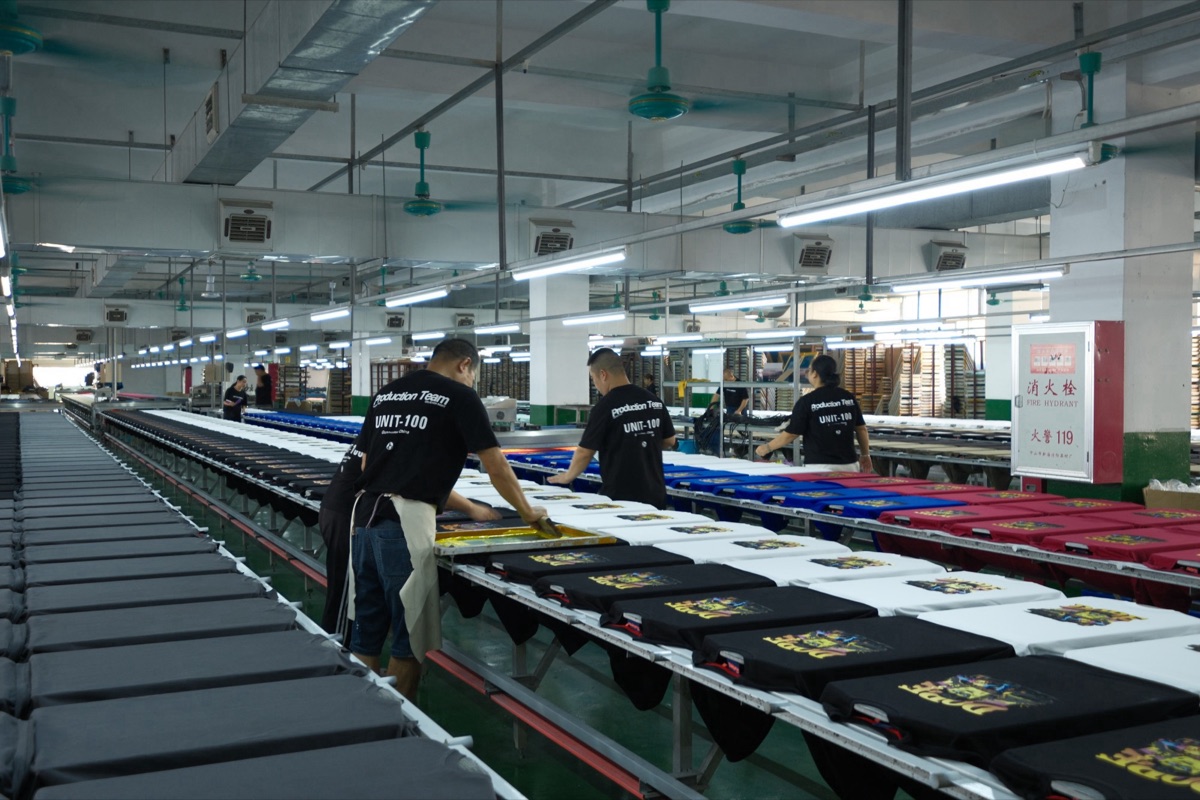
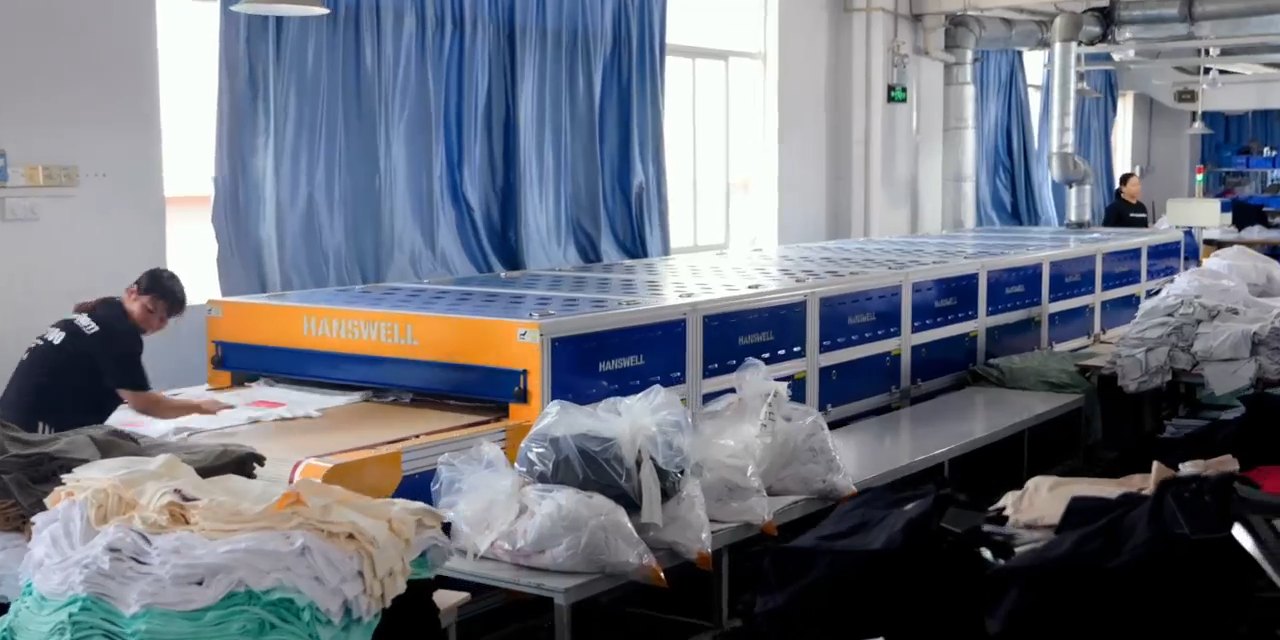
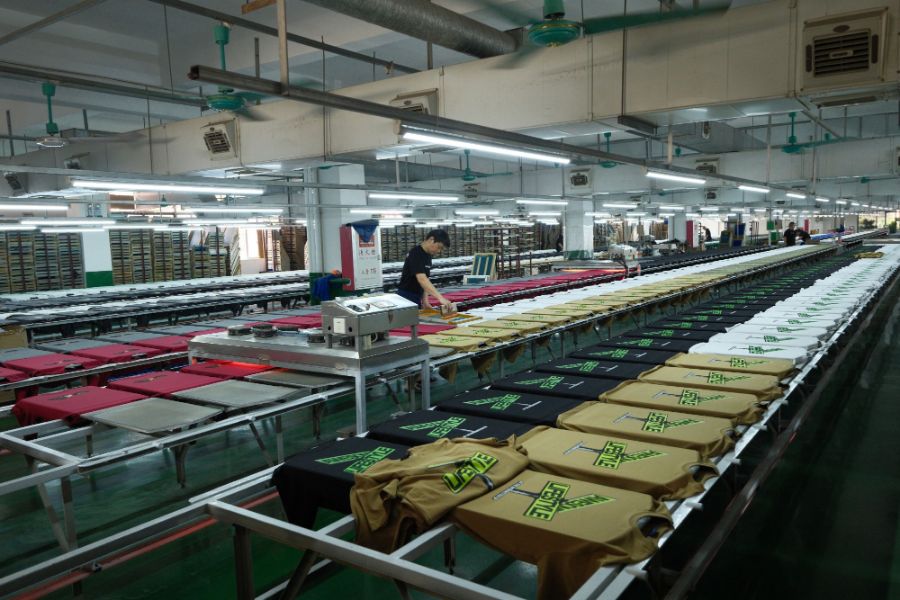
UNIT-100 screen prints tees, hoodies and sweatshirts in Henglan Town, Zhongshan. Our print shop there has 40+ staff. Each color in a design gets its own screen. The printer pushes the ink through it with a squeegee, a rubber blade, and the print is then cured: set with heat in a dryer. The ink decides how the print feels and how it shows on a dark garment.
Our printing page compares screen print with DTF and DTG. Full custom starts at 100 pieces per style and per color. Expect a sample with one print in about 10 days.
- Print shop
- 40+ people in our own shop in Henglan Town, Zhongshan
- Screens
- one per color plus one for the white base on a dark garment
- Ink test
- 30 washes then a wet and dry rub test, on each new batch
- Sample
- about 10 days with one print
Our print shop's figures, as of October 2026.
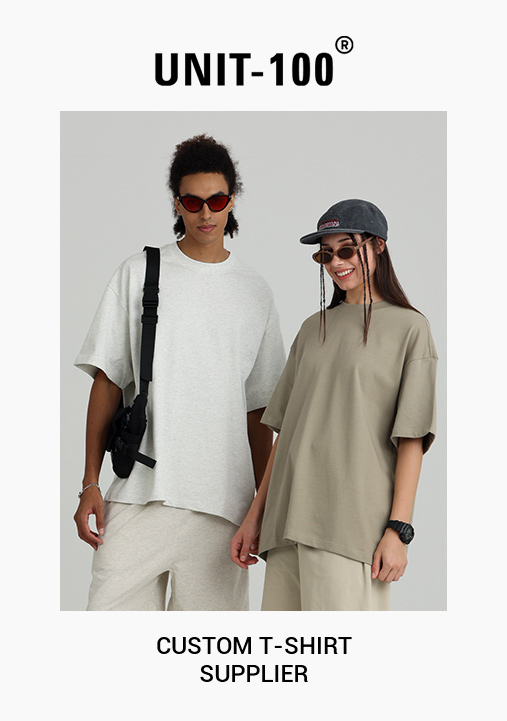
Tees we have screen printed
Four 100% cotton tees from our catalog, each screen printed. Pick one to start from, or bring your own design.
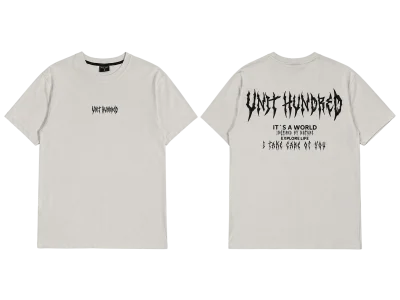
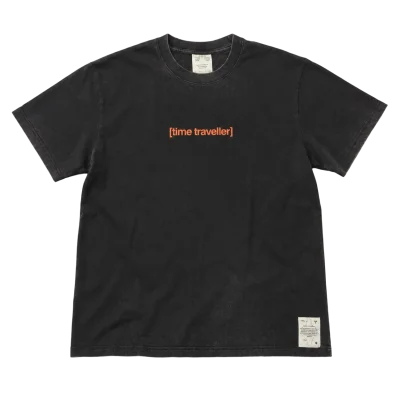
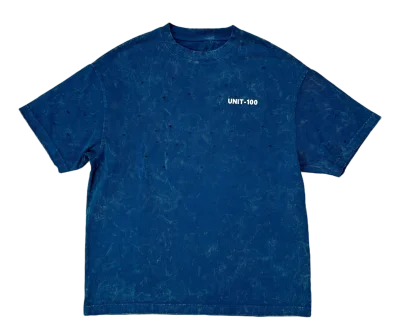
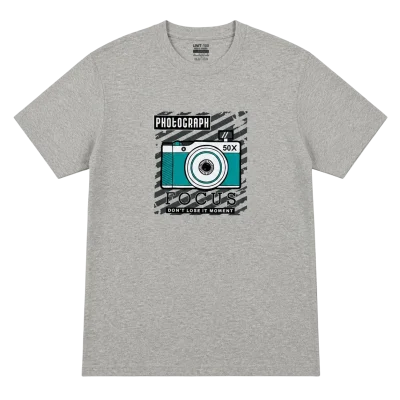
Which screen print ink should I choose?
On a light cotton tee, choose water-based ink: it soaks into the fabric and you barely feel it. On a dark garment, choose high-solid water-based for a soft print, or plastisol for the brightest colors. Discharge takes the dye out of dark cotton instead of covering it, which leaves no ink on top to feel. Test it on your fabric first.
| Ink | How it feels | On a dark garment | Best for | Limits |
|---|---|---|---|---|
| Water-based | The lightest: the ink soaks into the cotton | Doesn't cover; the garment color shows through | Light cotton tees, large prints, a soft vintage look | No bright white and no raised prints |
| High-solid water-based | Soft, even on a large print | Covers, and can print the white base | Dark cotton tees, large prints that should stay soft | A large solid white still has some feel |
| Rubber paste | A thin rubbery film | Covers | Logos, text and solid colors in small and medium sizes | A large solid area feels stiff and doesn't breathe |
| Plastisol | A film on top of the fabric | Covers, with the brightest white and colors | Bright spot colors, layered designs, puff and high-density | You can feel the film, and a thick layer turns stiff |
| Discharge | Nothing: there is no ink layer on top | Lifts the dye out of dark cotton | Dark cotton, a soft vintage print | Black may turn beige, orange or gray instead of white |
What is the difference between puff, high-density and silicone prints?
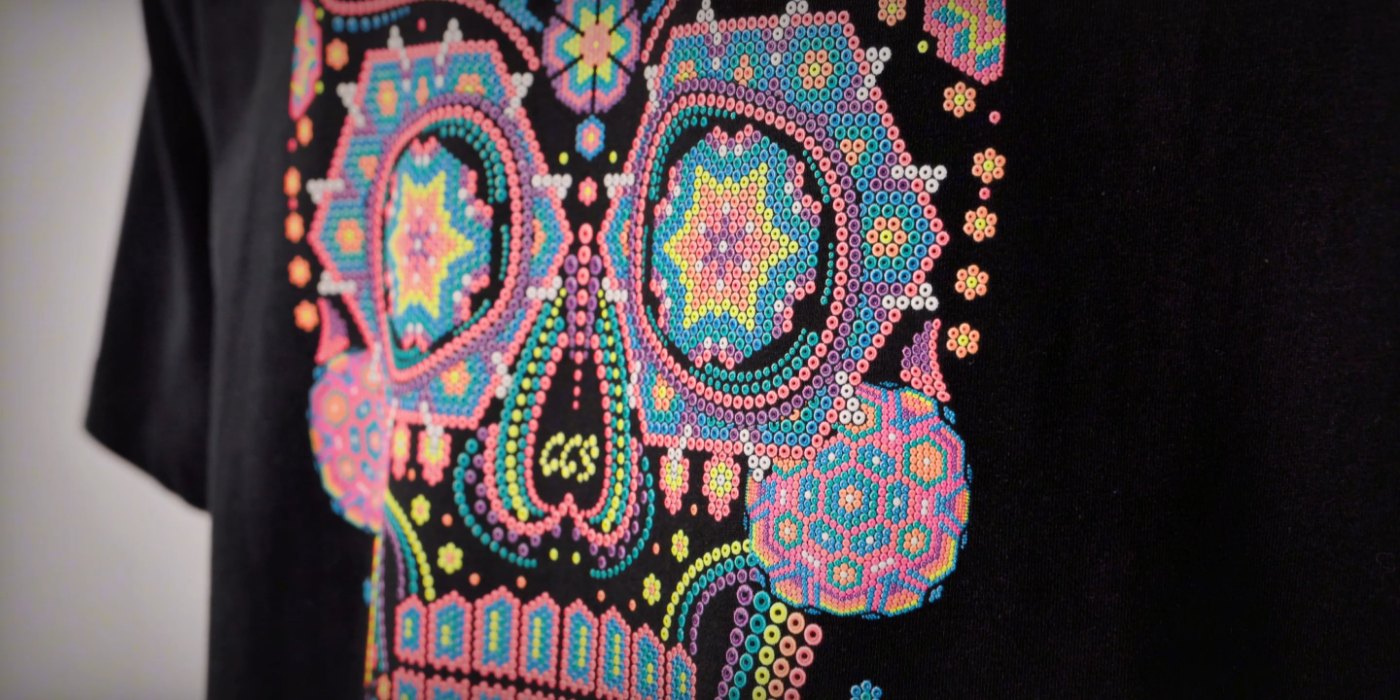
Puff swells in the dryer into soft, round edges. High-density is built up in layers into sharp, square edges. Silicone stretches, holds fine detail and costs more. One design can mix them with flat colors. Puff and high-density suit French terry hoodies and heavy tees from about 260 GSM (260 grams of fabric per square meter), and they have limits on brushed fleece and thin tees.
- Puff print
- A foaming agent in the ink does the swelling. Puff suits big letters and thick-lined logos. Thin lines and small text can close up and disappear, and the height varies a little from piece to piece.
- High-density print
- Printed through a thick screen, pass after pass. It suits small chest logos, letters and simple shapes. It prints slowly.
- Silicone print
- A silicone rubber ink, printed in layers. Sportswear brands use it for small logos.
- On brushed fleece
- We don't print puff or high-density on it. The soft pile won't hold still on the print table, so the layers shift and the print distorts.
- On a thin tee
- We don't print a large high-density design on a tee of about 180 GSM: the tee turns stiff, wrinkles and sags.
Why does a high-density print crack?
When our high-density prints have cracked, the cause was the dryer temperature or the squeegee pressure. Each time, we threw out the whole cut panel.
- The dryer temperature
- A thick layer can be hot on top and still not cured underneath.
- The squeegee pressure
- The pressure, the angle and the speed decide how thick the layer is, and a layer that is too thick cracks. Getting it right takes a practiced hand.
One order, 20 prints, 20 sets of screens
One order came in with 20 styles, and no two shared a print. Each print needed its own screens, one per color. Making that many took our print shop a lot of extra work and squeezed the schedule. We still got the order out in time.
Cut, sewn and printed in Zhongshan
We cut, sew and pack in our own factory in Shaxi Town, Zhongshan, and print in our own print shop in Henglan Town, Zhongshan: 70+ people work in the garment factory and 40+ in the print shop. Washing, garment dyeing, embroidery and sublimation printing are done at partner factories, and so is part of the sewing when our own lines are full.
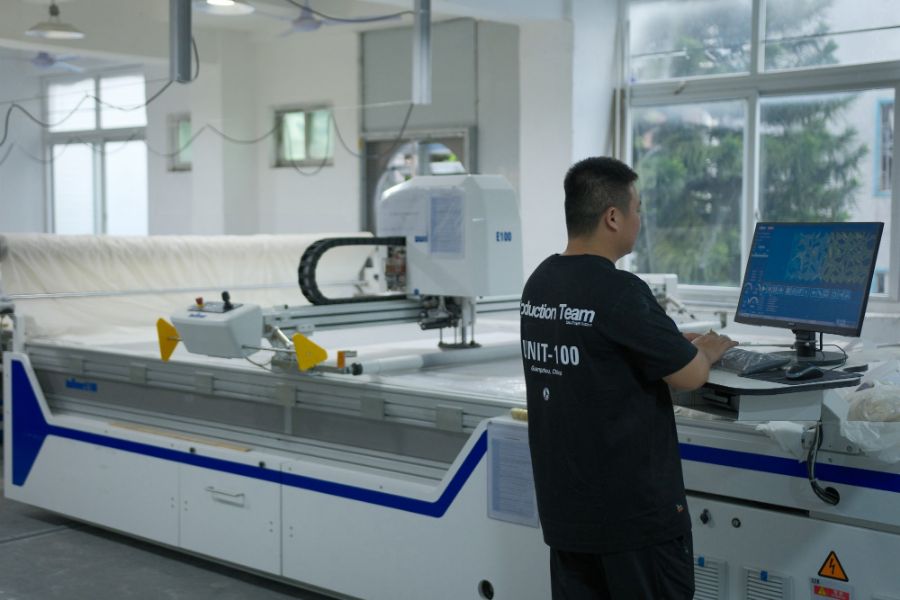
Our sample room has two pattern makers. From a photo or a garment, a pattern takes about 3 days, and our pattern makers grade the sizes too. Before every bulk run we make a pre-production sample, and our QC team checks before production starts, during it and at the end.
UNIT-100 has made clothes since 2001, when our owner's father founded the company. We make about 2 million garments a year; a typical order is 300 to 400 pieces, and about 38% of our customers order again. The factory figures on this page come from Kenneth, our owner, who is the second generation of the family and has worked in the business for 8 years. Meet him, Yunus, quality director at our factory, and Eric, our design director, on our About page.
How much does screen printing cost?
It depends on the number of colors, the garment color, the print size and the quantity. Each color needs its own screen, and a dark garment needs one more for the white base, so a one-color logo costs less to set up than a six-color design. For about 100 pieces, DTF usually costs less, and above about 10 colors we suggest DTG. A hot tumble dryer can crack DTF, so it is a poor choice where buyers tumble-dry.
Do you keep my screens for a reorder?
Yes, for 6 months. Reorder the same design within that time and we print from the screens we already made.
How do you test that a print survives washing?
With 30 washes and a rub test on a printed swatch. We test each new batch of ink, not every production batch. Every month, when our new ink comes in, we print a swatch of fabric with our usual number of squeegee passes, such as 4 for one color. After 30 washes, a test machine rubs the print wet and dry. If it hasn't broken, cracked or worn through, the ink passes. If it fails, we send that ink back to the supplier.
What is a white underbase, and do I need one?
On a dark garment, yes, unless the print is discharge. The underbase is a layer of white printed first, so the colors on top stay bright instead of taking on the garment color. It is flash-dried, a short burst of heat, before the next color goes on, so the layers don't mix. Too thin and the garment shows through; too thick and the print turns stiff and can crack.
How many colors can a screen print have?
For most designs, up to about 10: each color needs its own screen, so above that we usually suggest DTG. Photos and gradients can still be screen printed with fine dots: four-color process on light garments, simulated process on dark ones. Both need more screens and more sampling, so they cost more and take longer on a small order.
What should I know before my first discharge print?
Test it on your own fabric first. Discharge doesn't cover the color; it takes the dye out of the garment. Black can come out beige, orange or gray instead of white, so we can't promise a color, or a Pantone match, before a sample. A "100% cotton" label doesn't tell you whether a fabric will discharge: that depends on the dye. On a cotton-poly blend only the cotton loses its color, so the print looks patchy. Two lots of the same black can also come out differently, so we sample on the fabric lot your bulk will use, and you approve the color first.
Can you print puff over a seam or a pocket?
Usually not. A raised print can't lie flat over a zip, a pocket edge or a thick seam, so it cracks or comes out incomplete there. If your design has to cross one, our print technicians work out how to print it. You see the result on the sample. If you go ahead, you accept that the print may not come out whole there. Where a print sits also decides when it is printed. A small print in a set place, like a chest logo, goes on the cut panel before sewing. A large flat print that runs over a seam, the collar or the hem goes on the sewn garment.
What is the best fabric to screen print on?
Cotton. Every ink on this page is made for cotton, and heavy tees and French terry hoodies take puff and high-density too. Plastisol takes unevenly on a piqué polo's textured knit, and looks out of place there. For a polo logo, we suggest small embroidery instead.
We never put a white print on dark polyester. With heat, the fabric's dye moves into the print and turns it pink, blue or gray. That can show only after storage, shipping or a wash. Printers call this dye migration. A partner factory prints polyester for us, as our printing page explains.
How a screen print order works
Your artwork turns into a printed sample in about 10 days; after your sign-off and deposit, we print the bulk order in 7–20 working days and ship it.
Over the past year, 90% of our orders shipped within 2–3 days of the date we promised, early or late.
Send a photo or a tech pack
We reply with a price and the questions we need answered.
Sample
About 3–7 days plain, about 10 with one print or embroidery, 12–13 with both, and 14–18 days or more with a wash.
Approve and pay the deposit
You check the fit, weight and print on the sample, then pay a 30–50% deposit to start bulk.
Bulk
7–20 working days after you approve the sample. Before shipping, every batch gets an AQL 2.5 inspection: random pieces checked against the agreed tolerances. A piece outside them is reworked if it can be. If not, it is remade, or you are compensated.
Ship
Before you pay the balance, we send photos or a video of your goods. To the US it takes about 7 days by air, about $400 for 100 tees, or about 20 days by sea.
You can pay by bank transfer or PayPal, or order through Alibaba or Made-in-China. You are welcome to send your own inspector. Sizes can be mixed inside each 100. Fabric is cut in whole rolls, so for some fabrics the quote may suggest a larger run per color to use a full roll. Fewer than 100 pieces? Our stock blanks start at 50 per style, with colors and sizes mixed.
Send us your design
 Find Us in Guangzhou
Rooms 511–512, Block A, Wantong International Square, 135 Huanshi West Road, Liwan District, Guangzhou, China
Quick Links
Services

Founded in 2001, UNIT-100 is a cut-and-sew garment factory in Zhongshan, with its office in Guangzhou, making T-shirts, hoodies, sweatshirts and pants for clothing brands.