

Custom Clothing Manufacturer in China: What Every Brand Owner Should Know
Launching or scaling a clothing line is easier than it used to be, but choosing the right manufacturer is still one of the biggest decisions a brand owner will make. The factory you work with can influence your product quality, lead times, cost structure, and long-term growth.
Not long ago, launching a clothing brand meant hopping on flights, touring factories, and getting stuck with high minimum orders. That is no longer the only path. Today, sourcing platforms, agencies, and direct factory communication make it possible to find a custom clothing manufacturer in China without ever leaving your desk.
That convenience comes with real risk. If you are building a clothing line, the question is not whether you can source overseas. The real question is how to find a custom apparel manufacturer you can trust, one that will not hurt your budget with bad quality control, missed deadlines, or unclear production terms.
This guide explains what to look for in a manufacturer in 2026, which factory models fit different brand types, and how to reduce risk before placing an order.
Why Brands Are Choosing a Clothing Manufacturer in China
China is not the default choice simply because it can offer lower T-shirt production costs. Its real strength is the depth and completeness of its supply chain. A custom apparel manufacturer can source fabrics and trims, develop samples, manage production, and arrange shipment through a well-established manufacturing network.
Other countries, including Vietnam, Bangladesh, and Turkey, have strong positions in apparel manufacturing. Even so, China still stands out for its integrated supply chain, broad supplier network, production capability, and sourcing flexibility. For new and mid-sized brands, that infrastructure creates several practical advantages.
- Lower minimum order quantities. Many factories now accept MOQs of 50–300 pieces per style.
- Faster sampling cycles. A first sample can often be completed in 7–14 days when the base fabric is already in stock.
- Access to specialized capability. Technical outerwear, activewear fabrics, heavyweight streetwear fleece, and intricate embroidery all have dedicated manufacturing clusters.
The key point is simple: China is not one factory. It is a huge production network made up of vertically integrated factories, specialized workshops, and trading companies that coordinate through partner facilities. Understanding that difference helps you choose the right supplier and use your sourcing budget more effectively.
What Separates a Reliable Manufacturer From a Risky One
Sourcing platforms and trade shows can make almost every supplier look reliable online. The real differences appear in how a factory handles compliance, communication, documentation, and quality control before an order ships.
Verified Production Capability
A legitimate custom apparel manufacturer should be able to show its real production environment, not just a showroom. Ask for factory audit reports, machinery lists, or client references. If a supplier cannot answer basic questions about cutting, sewing, or finishing, it may be acting as a middleman rather than a real factory.
IP and Design Protection
Once you send a design file, it exists on someone else’s system. Reliable manufacturers are more willing to sign non-disclosure and non-manufacture agreements. This matters more than ever as design leaks and copycat products have become a growing concern for independent apparel brands.
Quality Control Standards
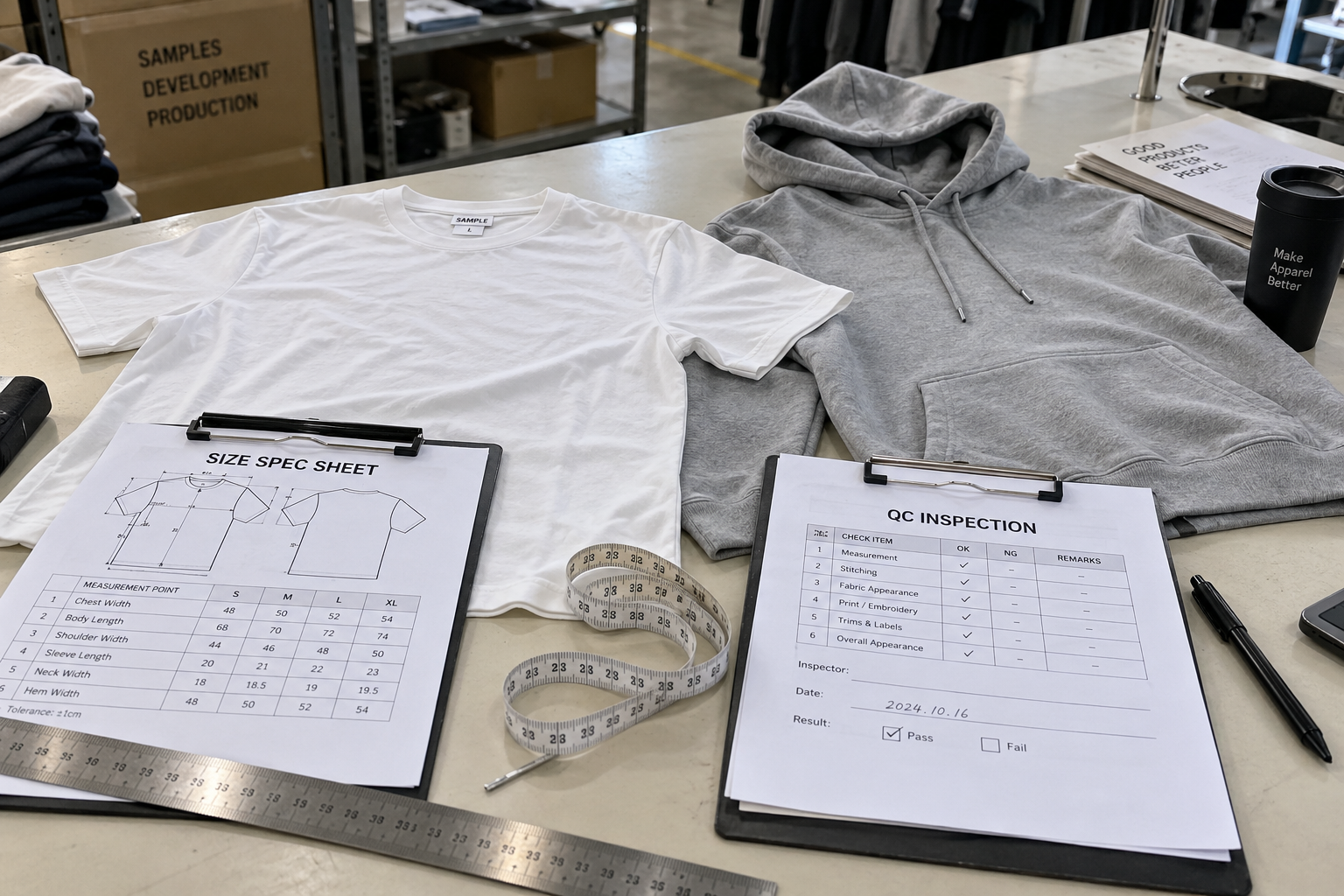
Look for manufacturers that run AQL inspections at multiple stages: pre-production, during production, and pre-shipment. A factory that only checks the order after packing is more likely to ship mistakes that should have been caught earlier.
Compliance Certifications
Depending on your target market, you may need documentation such as OEKO-TEX for fabric safety, BSCI or WRAP for labor compliance, and REACH compliance for EU shipments. Overlooking compliance can create customs issues and delay delivery.
How Brands Make Money Working With a Custom Apparel Manufacturer
There is no single business model that fits every brand. The right manufacturing setup depends on what you are building and how you plan to sell it. Several common models keep showing up among brands sourcing from China.
Private Label and Branded Collections
This is the most common model for independent brands. You build the product concept, choose fabric and trims, and the manufacturer produces under your brand name. The factory handles sourcing and production while you focus on branding, pricing, marketing, and customer relationships.
Print-on-Demand and Small-Batch Drops
Streetwear and niche brands often run small, frequent drops rather than large seasonal programs. When you find custom clothing manufacturers with low MOQs, you can test a design with 50–100 units before committing to a larger run.
Wholesale and B2B Supply
Some businesses produce clothing for boutiques, gyms, uniforms, or other resellers instead of selling directly to consumers. In this model, consistency is critical because repeat buyers depend on reliable quality and lead times.
White-Label Manufacturing for Other Brands
Some businesses build enough sourcing knowledge that they begin managing production for other small brands. In that case, manufacturing know-how becomes part of the service they sell, not just part of their internal supply chain.
Manufacturer Risk Levels: From Safest to Riskiest
Not every sourcing route carries the same level of risk. Understanding how different supplier types compare can save you a great deal of time and money.
Safest: Verified Direct Factories With Written Contracts
This is usually the strongest setup. A verified factory should have documented certifications, a real production facility, and a clear contract covering IP ownership, defect liability, and delivery timelines.
Moderate Risk: Sourcing Agents and Vetted Platforms
Agents and sourcing platforms can be a practical middle ground, especially for first-time brands. The risk depends on how seriously the agent vets its network and how much process visibility they provide.
High Risk: Unverified Trading Companies With No Samples
Any supplier that refuses to provide physical samples, cannot share verifiable factory details, or asks for full payment upfront without milestone structure should be treated as a red flag. This is where many sourcing problems begin.
How to Source Custom Apparel With Unithundred
Vetting factories takes time, especially when you are trying to evaluate production capability, reliability, and quality standards from a distance. Unit-100 helps brands simplify that process by connecting them with suitable manufacturing partners and supporting production more directly.
Features
- A network of custom apparel manufacturers across major production hubs in China.
- Low minimum orders that work for emerging as well as growing brands.
- Sampling, tech pack review, and quality inspection built into the production timeline.
Step-by-Step Workflow
Choosing a custom clothing manufacturer is not a small decision hidden inside a larger launch plan. It is one of the decisions the launch depends on. China remains a strong sourcing option because the mix of cost, specialization, and export experience is still difficult to match elsewhere at the same level.
Here is a simple sourcing workflow for brands looking to develop custom apparel in China with Unit Hundred:
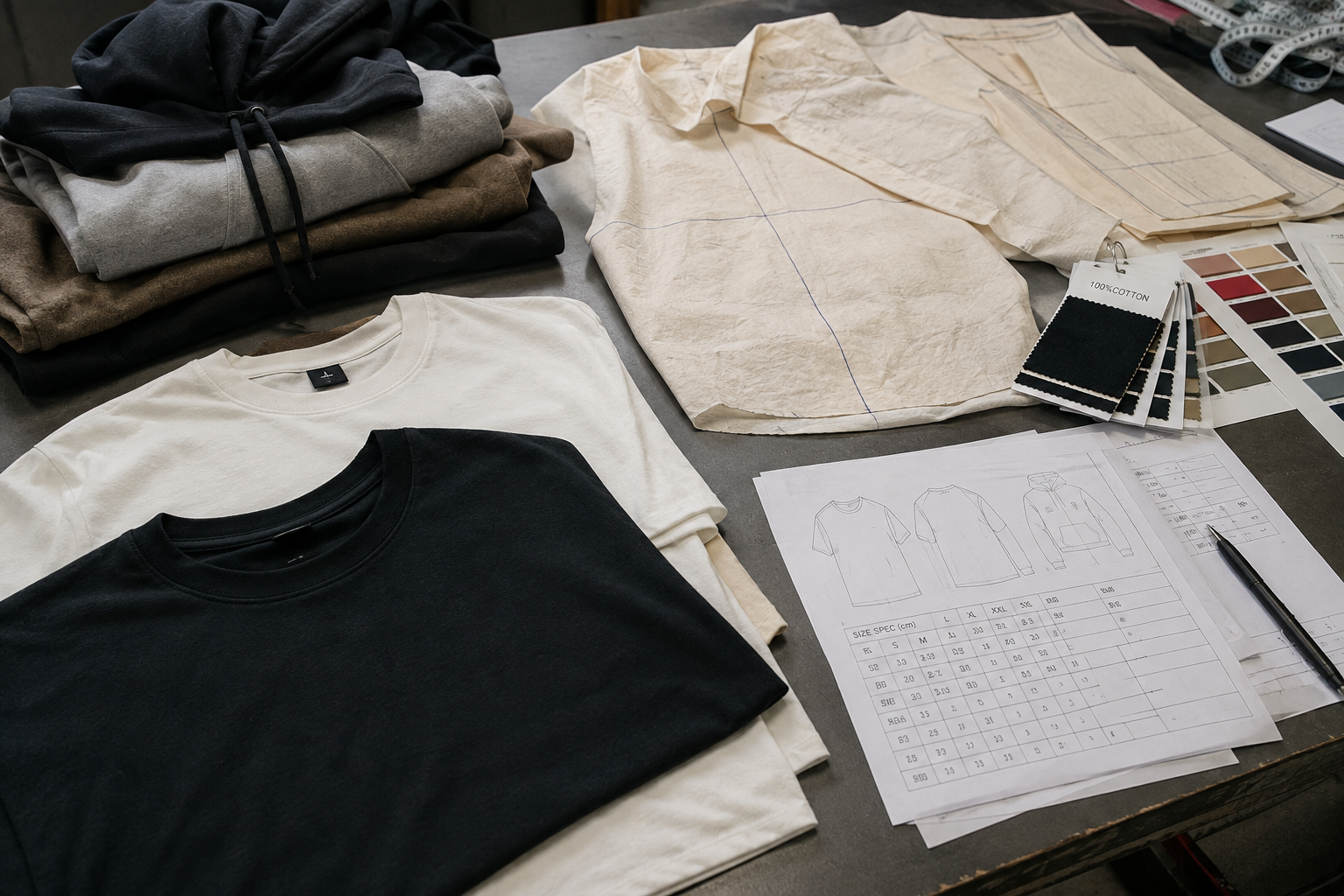
Step 1: Define Your Product Requirements. Before asking for a quote, confirm the garment type, fabric weight, and finishing details such as embroidery, printing, or custom trims.
Step 2: Send Over Your Design. Share your design files, size specifications, and reference garments through the Unithundred sourcing request process.
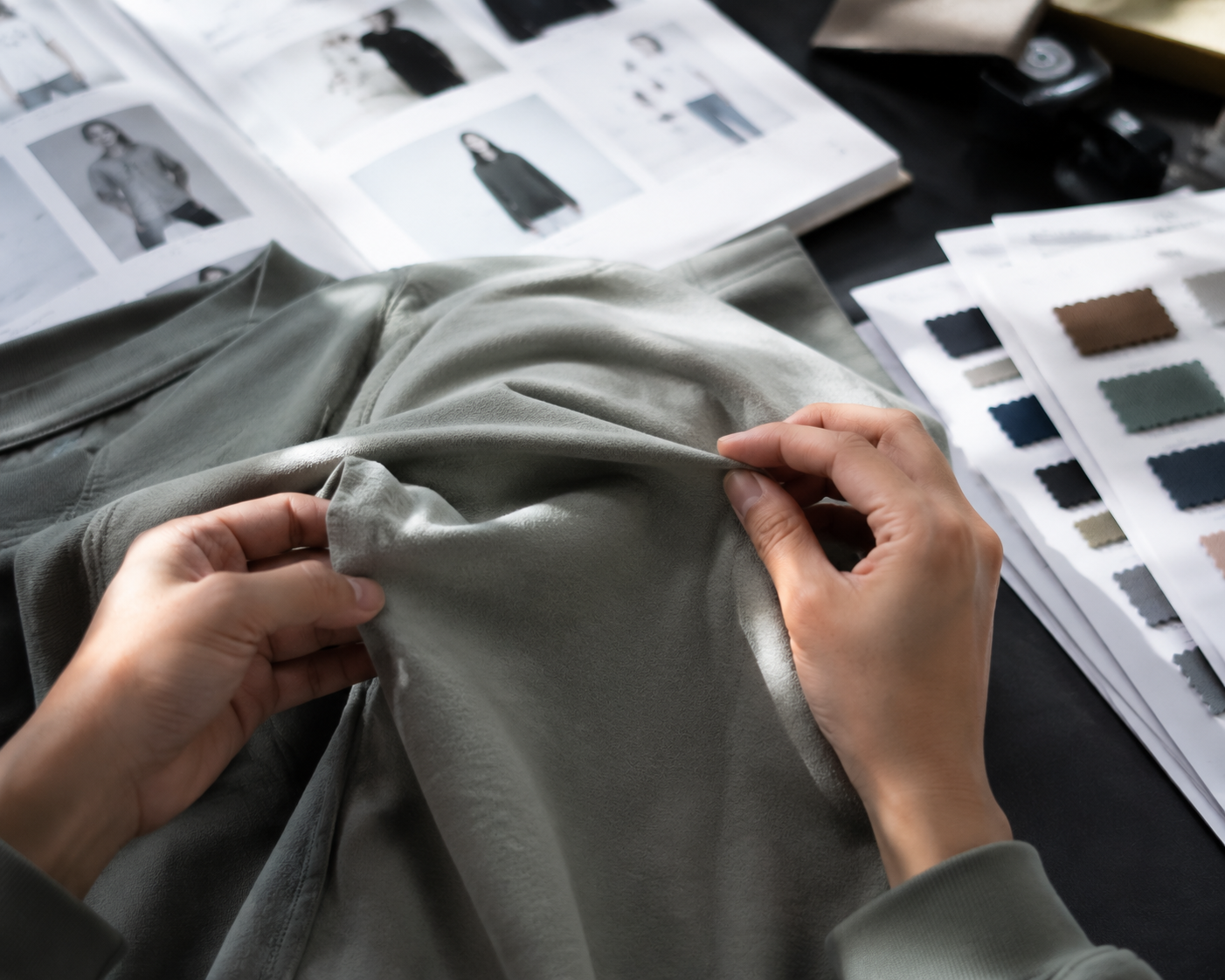
Step 3: Review Factory Samples. Compare manufacturer options based on MOQ, lead time, and certifications, then order a physical sample before bulk production.
Step 4: Approve Production and Track Quality. Once the sample is approved, production begins with staged quality inspections and update checkpoints through shipment.
A Few Things Worth Remembering Before You Start
Get everything in writing. Even a short message confirming that a sample was approved can save you problems later. Keep a folder for every tech pack version as well, because details can easily shift between sample rounds.
If you cannot visit the factory in person, ask for a live video call and a walkthrough of the production floor. A short visual check can reveal much more than a long chain of emails.
Conclusion
Finding the right custom clothing manufacturer in China is not about luck. It is about asking the right questions and knowing how to separate a dependable production partner from a risky one.
Verified capability matters more than the lowest quote. Proper contracts and IP protection help keep your designs secure. Staged quality control helps protect your customer experience after the goods arrive.
If you would rather avoid the guesswork of vetting factories on your own, Unit-100 offers a faster, lower-risk way to connect with a reliable custom apparel manufacturer and turn your designs into products built to sell.



 You Can Find Us Here