

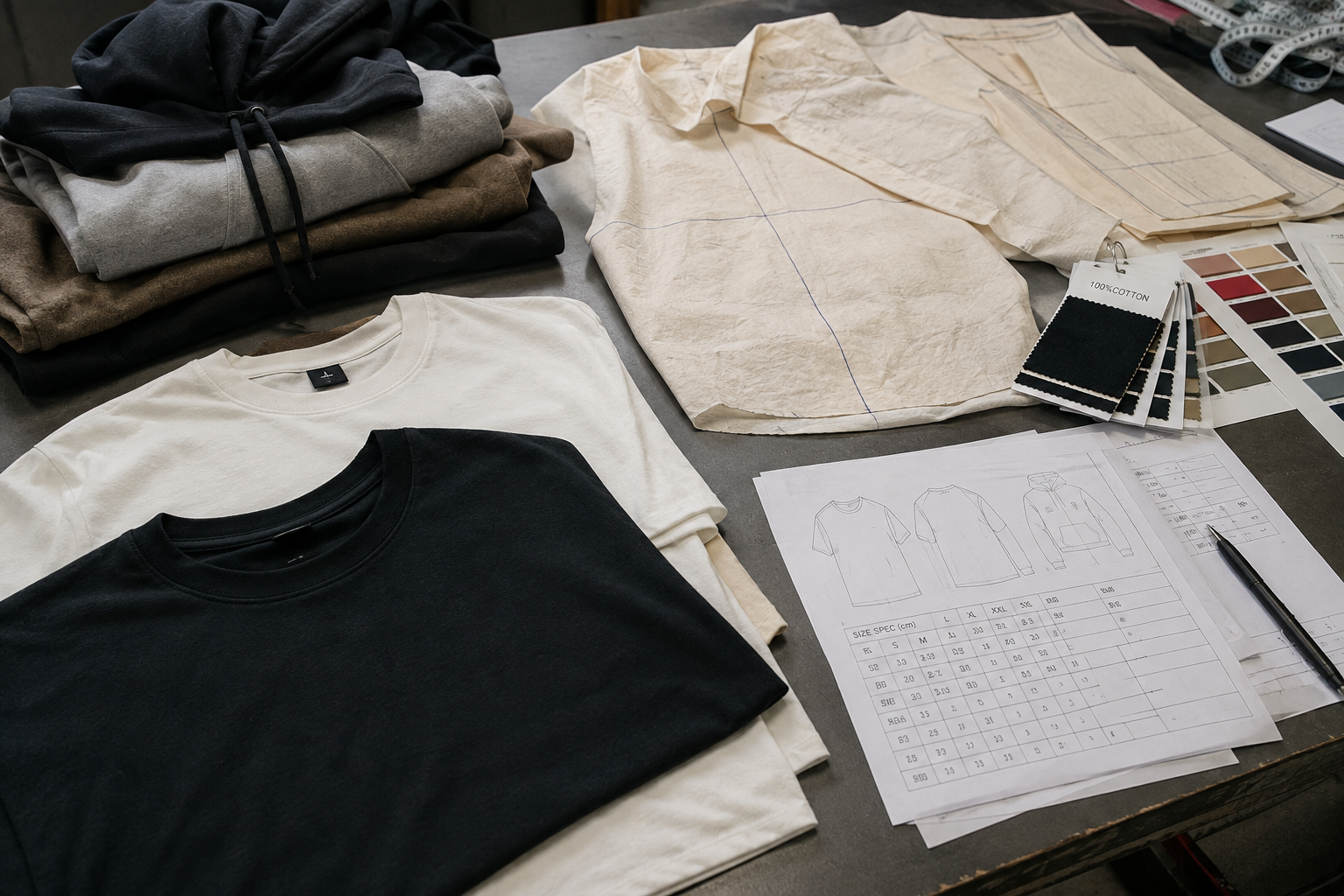
A size spec sheet looks simple, but it controls one of the biggest risks in custom apparel production: fit. Many brands can explain the design clearly, but the measurement details are missing. They send “oversized fit,” “regular fit,” or “same as this sample,” but the factory still needs numbers.
For custom T-shirts and hoodies, a good size spec sheet tells the factory how the garment should measure in each size. It also tells the factory where to measure, what tolerance is acceptable, whether the garment is measured before or after wash, and what sample should be used as the final approval standard.
Without this information, the first sample may look close but not fit correctly. Bulk production may also drift, especially when the order includes multiple sizes, heavy fabric, washing, garment dye, rib details, or oversized patterns.
Quick Answer
A size spec sheet should include garment measurements by size, clear measurement points, grading between sizes, tolerance, fit direction, sample comments, and whether the measurements are before wash or after wash. For custom T-shirts and hoodies, this document helps the factory make better samples and check bulk production more consistently.
Brands should track at least 10 size spec details before production: body length, chest width, shoulder width, sleeve length, hem width, neck or hood measurement, cuff width, grading, tolerance, and shrinkage result.
A size spec does not need to be complicated, but it must be clear enough that the factory and brand are measuring the same garment in the same way.
Why Size Specs Matter Before Production
Fit problems are hard to solve late. Once fabric is cut, most measurement mistakes cannot be fixed without remaking the garment. This is why size specs should be discussed before sampling, not after bulk production starts.
For a T-shirt, one or two centimeters can change the whole feeling of the product. A slightly longer body may make the fit look relaxed. A wider chest may make it oversized. A shoulder that drops too far may look streetwear, but it can also look sloppy if the sleeve and body length are not balanced.
For a hoodie, the risk is bigger because there are more parts: body, sleeves, hood, rib cuff, hem, pocket, drawcord, and sometimes lining or washing. A hoodie can measure correctly in chest width but still feel wrong if the hood is too flat, the rib is too loose, or the sleeve length is not balanced with the dropped shoulder.
Factory Note: “Oversized” is not a size spec. It is a fit direction. The factory still needs actual measurements and tolerance.
Size Spec Data Brands Should Track
A useful size spec sheet turns fit into numbers. It does not replace a physical sample, but it gives the factory a measurable target.
| Data Point | What to Record | Why It Matters |
|---|---|---|
| Sample Size | Usually M, L, or the brand’s base size | The base size becomes the main reference for development. |
| Body Length | High shoulder point to hem, or agreed measuring point | Controls whether the garment feels cropped, regular, or long. |
| Chest Width | Flat measurement across the chest | One of the most important measurements for fit and comfort. |
| Shoulder Width | Shoulder seam to shoulder seam | Controls regular fit, dropped shoulder, and oversized shape. |
| Sleeve Length | From shoulder seam or center back, depending on spec method | Important for both T-shirts and hoodies, especially dropped-shoulder styles. |
| Hem Width | Bottom opening width | Affects boxy shape, relaxed fit, and how the garment sits on the body. |
| Neck / Hood Measurement | Neck width for T-shirts, hood height and width for hoodies | Controls comfort, appearance, and product balance. |
| Cuff / Sleeve Opening | Sleeve opening for T-shirts, cuff width for hoodies | Affects wearing comfort and sleeve shape. |
| Grading | Measurement difference between sizes | Helps the size range grow consistently from S to XXL. |
| Tolerance | Allowed difference, such as ±1 cm or ±2 cm | Helps both brand and factory judge whether bulk goods are acceptable. |
| Before / After Wash | Whether the spec is measured before wash or after wash | Important for washed garments, shrinkage control, and customer fit. |
| Revision Notes | Sample comments and approved changes | Prevents old sample comments from being lost before bulk production. |
The more custom the garment is, the more important the size spec becomes. A basic blank may only need decoration approval, but cut-and-sew custom apparel needs a clear measurement standard.
What a Size Spec Sheet Should Include
A size spec sheet should not only list S, M, L, and XL. It should show exactly what each size means. It should also say how the garment is measured.
| Spec Sheet Area | What to Include |
|---|---|
| Product Name | Heavyweight T-shirt, oversized hoodie, zip hoodie, sweatshirt, etc. |
| Base Size | The main sample size used for development. |
| Size Range | XS–XXL, S–XL, or custom size range. |
| Measurement Points | Body length, chest, shoulder, sleeve, hem, cuff, hood, pocket. |
| Measurement Method | Flat measurement, garment relaxed, measured before or after wash. |
| Tolerance | Acceptable production difference by measurement point. |
| Revision Notes | Comments from sample fitting and approval. |
| Approval Status | Approved, revise, or pending confirmation. |
Factory Note: Measurement method matters. Two people can get different numbers from the same garment if they do not measure from the same points.
T-Shirt Measurement Points
T-shirt size specs are often simpler than hoodie specs, but the details still matter. The same chest width can feel different depending on body length, shoulder width, sleeve shape, and fabric drape.
| T-Shirt Point | Why It Matters |
|---|---|
| Body Length | Controls whether the T-shirt looks cropped, standard, long, or oversized. |
| Chest Width | Controls fit comfort and overall body volume. |
| Shoulder Width | Controls regular shoulder, relaxed shoulder, or dropped shoulder. |
| Sleeve Length | Affects sleeve coverage and streetwear proportion. |
| Sleeve Opening | Affects arm comfort and sleeve shape. |
| Neck Width | Affects collar comfort and visual balance. |
| Hem Width | Affects body shape and how the T-shirt hangs. |
For oversized T-shirts, shoulder width, sleeve length, and chest width should be checked together. A wider shoulder without the right sleeve length can make the garment look unbalanced.
Hoodie Measurement Points
Hoodies need more measurement points because they have more construction details. The body fit is only one part of the garment. Hood shape, cuff recovery, rib hem, pocket placement, and sleeve balance can all affect how the hoodie feels.
| Hoodie Point | Why It Matters |
|---|---|
| Body Length | Controls cropped, regular, relaxed, or oversized proportion. |
| Chest Width | Controls body volume and wearing comfort. |
| Shoulder Width | Important for dropped-shoulder and oversized hoodies. |
| Sleeve Length | Should be checked together with shoulder width. |
| Cuff Width | Affects sleeve ending and rib recovery. |
| Hem Width | Affects how the hoodie sits at the waist or hip. |
| Hood Height / Width | Controls hood shape, comfort, and premium look. |
| Pocket Size / Position | Affects function, comfort, and visual balance. |
| Rib Height | Affects cuff, hem, and overall construction quality. |
Factory Note: Hoodie sleeve length should not be checked alone. It should be reviewed with shoulder width because dropped shoulder changes how the sleeve sits on the body.
Size Grading from S to XXL
Grading means how measurements change from one size to the next. For example, the chest width may increase by 2 cm per size, while body length increases by 1.5 cm. The exact grading depends on the garment style and target market.
Many fit problems happen because only one sample size is checked. The size M looks good, but XXL becomes too long, or size S becomes too narrow. This is why size grading should be reviewed before bulk production.
| Grading Area | Common Risk |
|---|---|
| Chest Width | Too much grade can make large sizes too wide; too little can make them tight. |
| Body Length | Large sizes may become too long if length grading is not controlled. |
| Shoulder Width | Dropped-shoulder styles need careful balance across sizes. |
| Sleeve Length | Must match shoulder change and fit direction. |
| Hem Width | Can change the boxy or relaxed shape across sizes. |
| Hood Size | Large sizes should not have a hood that looks too small. |
Measurement Tolerance
Garment production is not like printing a number on paper. Fabric relaxes, stretches, shrinks, and moves during cutting, sewing, washing, finishing, and pressing. This is why size specs need tolerance.
Tolerance tells the brand and factory what small difference is acceptable in bulk production. For example, some points may allow ±1 cm, while others may allow ±2 cm depending on garment type, fabric, and measurement area.
| Measurement Point | Common Tolerance Direction | Why It Matters |
|---|---|---|
| Body Length | Usually tighter | Length differences are easy for customers to notice. |
| Chest Width | Usually moderate | Strongly affects comfort and fit. |
| Shoulder Width | Depends on fit | Very visible on oversized or dropped-shoulder styles. |
| Sleeve Length | Usually tighter | Long or short sleeves are easy to notice. |
| Hem Width | Moderate | Affects silhouette and wearing comfort. |
| Hood / Pocket | Depends on design | Visible detail points should be controlled carefully. |
Factory Note: Tolerance should be agreed before bulk QC. It should not be invented after the goods are finished.
Shrinkage and After-Wash Measurements
Shrinkage can change the final fit. A T-shirt may look perfect before washing but become shorter after laundering. A hoodie may shrink in body length, sleeve length, cuff, or hem. Washed garments and garment-dyed products need even more attention because the washing process can change both color and measurement.
AATCC TM135 is used to determine dimensional changes of fabrics after home laundering, and ISO 6330 specifies domestic washing and drying procedures for textile testing. These references are useful because size approval should define the wash condition, not only the fresh measurement.
| Shrinkage Data | What to Record |
|---|---|
| Before-Wash Measurement | Measure the garment before washing or garment finishing. |
| Wash Method | Record washing and drying conditions. |
| After-Wash Measurement | Measure the same points again after washing. |
| Shrinkage Rate | Record percentage change for key measurement points. |
| Fit Change | Check whether the garment still matches the approved fit direction. |
| Bulk Standard | Decide whether production spec is based on before-wash or after-wash size. |
Sample Approval and Revision Notes
The sample is where the size spec becomes real. A sample may match the measurement table but still look wrong on body. Or it may look good on body but need measurement adjustment before grading.
Brands should approve the sample with both visual comments and measurement comments. “Looks good” is not enough if the factory needs to repeat the garment in bulk.
| Sample Comment | Better Production Note |
|---|---|
| Make it shorter | Reduce body length by 2 cm in all sizes, or only from base size. |
| Make it more oversized | Increase chest width by 3 cm and shoulder width by 2 cm. |
| Sleeve too long | Reduce sleeve length by 1.5 cm; recheck with shoulder change. |
| Hood too flat | Increase hood height or change hood pattern structure. |
| Hem too tight | Increase hem width or adjust rib recovery. |
Factory Note: Revision comments should become numbers. Clear numbers are easier to repeat than style comments alone.
Bulk QC Measurement Control
Bulk QC checks whether production follows the approved spec. The factory should measure sampled garments from different sizes and colors, then compare them against the size spec and tolerance.
AQL inspection can help define sampling logic and acceptable defect levels, but it works best when the approved measurement standard is already clear.
| Bulk QC Area | What to Check |
|---|---|
| Sample Size | Measure selected pieces from different sizes and colors. |
| Measurement Points | Use the same points listed in the approved spec sheet. |
| Tolerance | Check whether each point is within the approved tolerance. |
| Washing Result | For washed goods, confirm after-wash measurement and shape. |
| Fit Balance | Check whether garment proportions still match the approved sample. |
| QC Record | Keep measurement records for shipment and reorders. |
Reorder Size Spec Records
A good size spec is also useful after the first order. For reorders, the factory should not rely only on memory or old messages. It should keep an approved record.
The reorder record should include the final size spec, approved sample, measurement tolerance, fabric swatch, shrinkage notes, revision comments, and QC records from the previous bulk order.
| Reorder Record | Why It Helps |
|---|---|
| Approved size spec | Prevents using an old or unapproved measurement table. |
| Approved garment sample | Shows real fit, not only numbers. |
| Measurement tolerance | Defines what is acceptable during bulk QC. |
| Shrinkage record | Helps repeat before-wash and after-wash sizing. |
| Revision comments | Shows what was changed after sampling. |
| Bulk QC notes | Records what should be watched next time. |
UNIT-100 can help review size charts, measurement points, grading, tolerance, sample approval, shrinkage, bulk QC, and reorder records for custom T-shirts, hoodies, sweatshirts, sweatpants, and tracksuits.
Talk to UNIT-100Brand Checklist Before Sampling
Before starting a custom T-shirt or hoodie sample, brands should prepare a simple but clear size spec sheet.
- Confirm the base sample size.
- List the full size range, such as S–XXL.
- Confirm body length, chest width, shoulder width, sleeve length, and hem width.
- For T-shirts, add sleeve opening and neck width where needed.
- For hoodies, add cuff width, hood size, hem rib, and pocket measurements.
- Define whether measurements are before wash or after wash.
- Set measurement tolerance before bulk production.
- Review grading between sizes.
- Measure and approve the pre-production sample.
- Turn sample comments into numeric revision notes.
- Use the approved size spec for bulk QC.
- Keep final size spec, sample, shrinkage notes, and QC records for reorders.
Best Practice: The factory should not have to guess the fit from photos. A good size spec turns the fit into numbers that can be sampled, checked, and repeated.
Frequently Asked Questions
Do I need a size spec sheet for a first custom T-shirt order?
Yes, especially for cut-and-sew custom production. Even a simple size spec helps the factory understand the target fit and reduces sampling mistakes.
Can the factory create the size spec for me?
A factory can help build a size spec based on a reference sample, target fit, product type, and size range. But the brand should still approve the measurements before bulk production.
What is the difference between a size chart and a size spec?
A customer-facing size chart is usually simplified for buyers. A production size spec is more detailed and includes measurement points, tolerance, grading, sample comments, and QC references.
Should size specs be measured before or after wash?
It depends on the product. For washed, garment-dyed, or shrinkage-sensitive garments, brands should define whether the approved spec is before wash or after wash.
Why does the bulk order not match the sample exactly?
Bulk measurements can vary because fabric relaxes, shrinks, stretches, and moves during cutting, sewing, washing, finishing, and pressing. That is why tolerance, QC measurement, and approved samples are important.
Sources and References
Conclusion
A size spec sheet is not just a table. It is the bridge between design idea, sample development, bulk QC, and reorder consistency.
For custom T-shirts and hoodies, brands should confirm measurement points, size range, grading, tolerance, shrinkage, sample comments, and approval standard before production starts. The clearer the size spec, the less the factory needs to guess.
If your brand is developing custom T-shirts, hoodies, sweatshirts, sweatpants, or tracksuits, UNIT-100 can help review size specs, samples, measurements, shrinkage, QC, and reorder records before bulk production.
Related Articles
Better size specs make better samples.
Talk with UNIT-100 about custom T-shirt and hoodie size specs, measurement points, grading, tolerance, shrinkage, sample approval, bulk QC, and repeat production.
Review Your Size Spec




 You Can Find Us Here