

French Terry Hoodies: A Buyer's Sourcing Guide
French Terry hoodies are a popular choice because they offer warmth, breathability, and everyday comfort. However, quality varies by manufacturer. Factors such as fabric weight, stitching, construction, and finishing can all affect how a hoodie looks, feels, and performs over time. A well-controlled production process helps ensure these details meet the expected standard.
For a bulk order, buyers need to know how to judge French Terry quality and what to ask a supplier before committing.
Let's look at the most important factors that affect final product quality, and remember them while purchasing.
Why More Brands Are Choosing This Fabric
Streetwear labels, athleisure lines, and plain basics brands are all leaning into French Terry for similar reasons. It works across pretty much every casual category without feeling out of place.
It breathes, so nobody's sweating through it during a walk or light activity. It softens with every wash instead of thinning out, and it drapes closer to the body, which can also photograph better for an online store.
None of this means fleece is done for. Heavy winter hoodies still lean on brushed fleece because it's simply warmer. But for anything meant to be worn year-round, French Terry wins on comfort and how often it actually gets picked out of the closet.
A Buyer's Sourcing Guide to French Terry Hoodies
Sourcing this fabric well comes down to a handful of checks, not one magic question you ask a supplier. Go through these before committing to anything, and the rest of the process gets a lot easier.
Fabric Quality
The quality of the fabric is an important factor to consider because French Terry comes in a variety of weights, fabrications, softness, extensibility, and durability. Some hoodies look different in style in pictures but feel entirely different in actuality.
You can ask the supplier for the GSM and make-up of the fabric as a sample before placing an order. When requesting a specific mix or cotton type, color, weight, or finish, ensure those requirements are specified and reproduced in the production sample. This allows you to compare it with when the bulk order is made.
GSM: The Number That Actually Matters
For a bulk order, start with GSM (grams per square metre). Around 240–280 GSM can suit warmer climates and lighter layering; 300–340 GSM is a common midweight range. Above 350 GSM, the hoodie feels heavier and more structured. Confirm the target weight with a swatch or lab report before approving production.
Do not rely on a supplier’s stated GSM alone. Request a swatch to weigh or a lab report, and compare the production fabric with the approved sample before cutting and sewing.
Stitching and Construction Checks
Good fabric means little if the hoodie is poorly made. Before approving a sample, check the areas that take the most wear:
- Cuffs and hems should keep their shape after washing.
- Seams should sit flat without rough or loose edges.
- Stitching should be even, with no loose threads or skipped areas.
Request a Pre-Production Sample
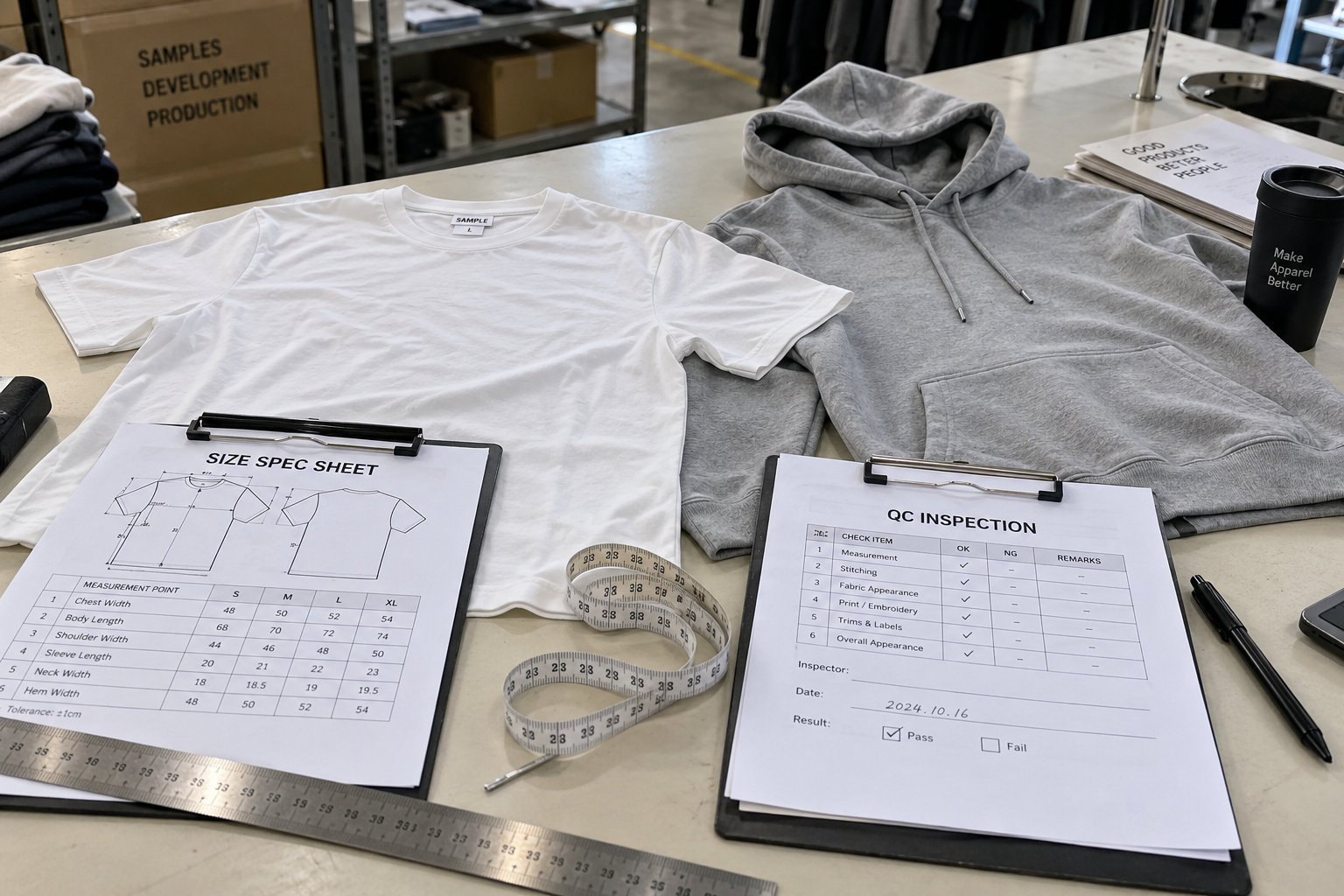
Before approving for bulk production, always review a completed sample. It allows you to discover issues prior to them becoming too serious to manage.
- Check weight, color, fit and stitching of the fabric.
- Wash the sample at least twice.
- Look for shrinking, fading or color bleeding.
- Ensure that the cuffs, hem and form remain intact.
If you can test a sample for a few extra days, it will save you from having an entire order of issues.
Finding a Reliable French Terry Hoodie Supplier
A good French Terry hoodie supplier should offer more than a low price. Before placing an order, check:
- Where the French Terry fabric is sourced or produced.
- Whether fabric certifications are available when needed.
- Sample costs and turnaround times.
- Minimum order quantities for new styles.
- Whether specifications and payment terms are provided in writing.
Clear answers are a good sign. If a supplier avoids samples, changes agreed specifications, or pushes for a bulk order too quickly, it is worth looking elsewhere.
Lead Times and MOQs to Expect
This part trips up many first-time buyers. A standard bulk run usually takes three to six weeks once the sample's approved, longer during peak season when factories are backed up. Get this timeline in writing, not a rough guess over chat. MOQs vary depending on whether you're customising fabric or just the label.
Blank or lightly branded runs often sit around 100 to 300 units per colorway. Custom fabric or dye-to-match colors push that number higher, since the mill needs a minimum yardage to justify the run. Tight on budget? Ask if colorways can be combined under one MOQ instead of hitting the minimum on each.
Customisation Options Worth Asking About
There's more flexibility here than buyers assume going in. The cotton-to-polyester blend ratio is worth discussing first, since 100% cotton feels softer, while a blend holds shape better against shrinkage.
Brushed-back French Terry adds warmth without switching to actual fleece. Custom colorways through dye-to-match and private labelling with woven labels or custom packaging both come up more than expected once buyers ask.
Fabric Certifications and Safety Checks
For skin contact products, ask whether the fabric has a relevant OEKO-TEX STANDARD 100 certificate. This certification tests textiles against specified limits for harmful substances; verify that the certificate is current and covers the material used in your order.
Request the certificate number and scope, and confirm that it applies to the relevant fabric or product rather than relying on a general supplier claim.
French Terry Hoodies From Unit-100
If you're comparing suppliers for this fabric, it's worth a look at what Unit-100 offers directly. Fabric weight, blend ratio, and private labelling are all handled in-house, which cuts out the need for a separate sourcing agent in between.
A few reasons buyers keep coming back:
- Certified fabric, tested and documented before it ships
- Flexible MOQs for buyers testing a new style
- Fast sample turnaround, usually within a week
- Full private label support, from woven tags to custom packaging
- Direct factory pricing, no middleman markup
Some of the more interesting items currently available:
Peach 300 GSM Cotton Blended Hooded T-Shirt
Soft mid-weight cotton blend hoodie with sunburst embroidery and a waffle-lined hood, designed for comfortable everyday wear.
- 300 GSM cotton blend fabric
- Soft and comfortable feel
- Front sunburst embroidery detail
- Waffle-lined hood for added texture
- Suitable for casual and daily wear
Oversized 520 GSM Cotton Hoodie with Embroidery (HD036)
Heavyweight oversized hoodie with embroidered string details and a relaxed streetwear fit, ideal for modern casual collections.
- 520 GSM heavyweight cotton fabric
- Oversized streetwear silhouette
- Embroidered string detailing
- Front pocket for practicality
- Suitable for private label and urban apparel brands
Oversized 520 GSM Cotton Hoodie Graphic Print (HD034)
Relaxed oversized cotton hoodie with a heavyweight feel and a large surface area for custom graphic designs.
- 520 GSM cotton fabric
- Oversized relaxed fit
- Suitable for custom graphic prints
- Functional front pocket design
- Ideal for streetwear and private label collections
Oversized 550 GSM Acid Wash Cotton Hoodie (HD032)
Premium heavyweight hoodie featuring acid wash finishing and appliqué embroidery for a distinctive high-end streetwear look.
- 550 GSM heavyweight cotton fabric
- Oversized comfortable fit
- Acid wash effect
- Appliqué embroidery detailing
- Suitable for premium and limited-edition collections
FAQs
What is GSM best for French Terry hoodies?
Most people end up around 300 to 340 GSM for everyday wear. Going somewhere warmer? Closer to 250 makes more sense. After that, a heavier, premium feel instead? Push past 350.
Are French Terry hoodies warmer than fleece?
No, fleece wins there, mostly because of the brushed inner layer. French Terry trades some of that warmth for better airflow, which works out better for mild weather or wearing something all year round.
How do I know if a supplier's fabric quality is actually good?
Get your hands on a swatch or sample first, always. Wash it twice, then check for shrinkage, pilling, and color fade. Big order on the line? A lab test report is worth asking for too.
Can French Terry hoodies be customised with private labels?
Major manufacturing companies provide woven labels, personalized tags, branded packages and more. Double-check the MOQ of the private label alone (but higher than a blank order).
Final Thoughts
French Terry hoodies are just right: comfortable enough for everyday wear, versatile enough to be part of your wardrobe all year long, rather than just for the cold winter season. If the weight is wrong, the stitching is bad, or a mistake has been made by the supplier somewhere, there's nothing that works.
Check the GSM yourself, get an actual sample in hand, and don't skip the wash test before signing off on anything bigger.
Reach out to a French terry hoodie supplier who'll walk you through fabric choices, MOQs, and product options before you place the order, not after.
Discuss Your French Terry Hoodie Project
Share your target GSM, fit, quantity, and branding requirements with UNIT-100 to review suitable options and request a sample.
Contact UNIT-100


 You Can Find Us Here