

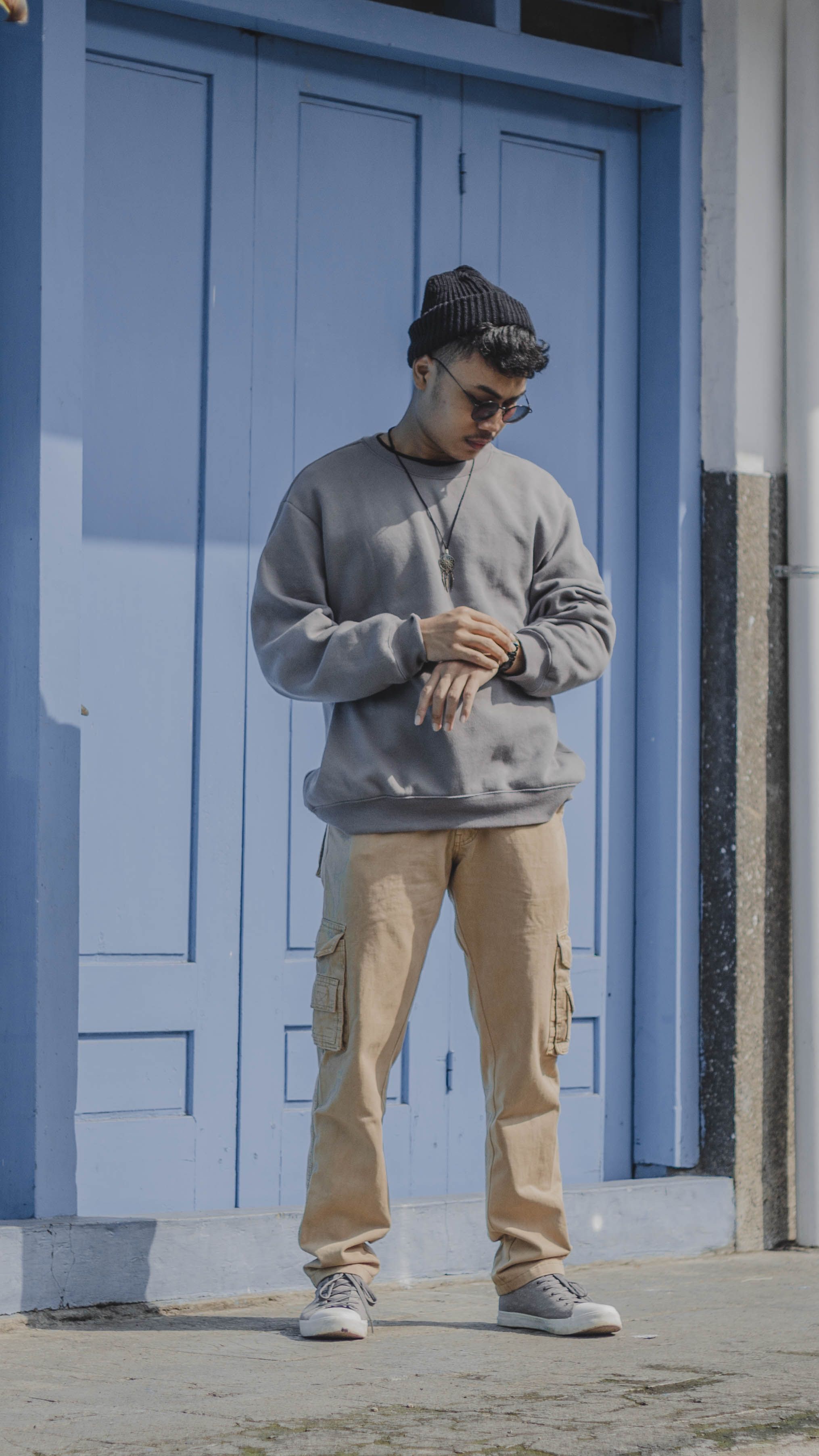
A crewneck uses less fabric and has fewer parts than a hoodie, but the neck rib becomes more visible. Set the weight for your climate, the rib height and width, and the sleeve shape before sampling. Ask for a shrinkage result on the exact fabric and discuss prewashing if the care routine includes tumble drying.
Why choose a crewneck over a hoodie?
Choose a crewneck when you want a sweatshirt that layers under a jacket or over a shirt collar, without a hood. It can use fleece or French terry. Our current crewneck catalog includes styles from 225 to 550 GSM, so compare actual fabrics rather than choosing by a single weight label.
It has fewer parts than a hoodie, but the neckline, cuff and hem still need their own measurements and a washed sample check.
Which fabric weight?
About 380 GSM is a common weight in our hoodie orders and a useful crewneck sample to compare with lighter and heavier options. Choose the crewneck weight from the fit and climate rather than applying one threshold to every sweatshirt.
- 300–350 GSM: an everyday crewneck, good for layering and mild climates.
- 380–450 GSM: a structured, heavy sweatshirt that holds a boxy shape.
- 450 GSM and up: very heavy; check whether your buyers want that weight. We have seen a heavy style sell poorly in a hot market despite an attractive unit price.
Fleece (brushed inside) is warmer; French terry (loops inside) feels drier and lighter.
The neck rib: where a crewneck is judged
With no hood, the neck is the first thing people look at. Three things to decide:
- Rib height. A taller rib looks heavier and more vintage; a short one looks cleaner. Give the height in centimeters.
- Rib firmness. The rib must spring back after being pulled over the head, wash after wash. A rib that is too soft flares and waves after a few washes.
- The V insert. Many vintage-style crewnecks have a small triangle of rib below the front neck. Say if you want it.
Measure the neck width straight across between the two neck-shoulder points, including the rib. For more on what makes a rib last, see why neck rib quality matters.
Set-in or raglan sleeves?
- Set-in sleeve: sewn into an armhole at the shoulder, like a T-shirt. A classic, tailored look. With a dropped shoulder, it becomes the relaxed streetwear shape.
- Raglan sleeve: runs in one piece from the neck to the cuff. More room to move and a sporty, vintage look.
A raglan uses more fabric than a set-in sleeve, and contrast-color raglan sleeves cost more because the sleeve fabric is cut separately. The minimum stays the same: a two-color pair counts as one color. If you choose raglan, write where the sleeve is measured from (the top of the sleeve at the neck), because there's no shoulder seam to measure from.
Shrinkage: wash the fabric first
Shrinkage is the biggest problem we see on sweatshirts. US and European customers wash and tumble-dry, and fleece that wasn't prepared shrinks a lot. The cuffs and hem rib tighten, and the body shortens.
When shrinkage matters, ask us to test the chosen fabric and quote prewashing if needed. Some prewashed fabrics have tested at about 1% afterwards; confirm the result for your fabric and care routine.
Prints and embroidery on a crewneck
A crewneck gives a wide, uninterrupted chest for a print. We print by screen print, DTG or DTF in our own print shop, up to about 46 × 46 cm. Print cost depends on the artwork, size, colors and method; ask for the decoration price with your crewneck quote. DTF doesn't suit garments that go into a hot tumble dryer: the heat can crack or peel it.
Embroidery is done at a partner factory. On heavy fleece it holds well; keep it from being too big or too dense.
What should the sample approval cover?
Measure the neck width with the rib included, then check the rib height and recovery after trying the sweatshirt on. Raise both arms and check whether the body rides up or the cuffs pull uncomfortably. Compare the sleeve shape with the approved sketch, especially if you chose a raglan.
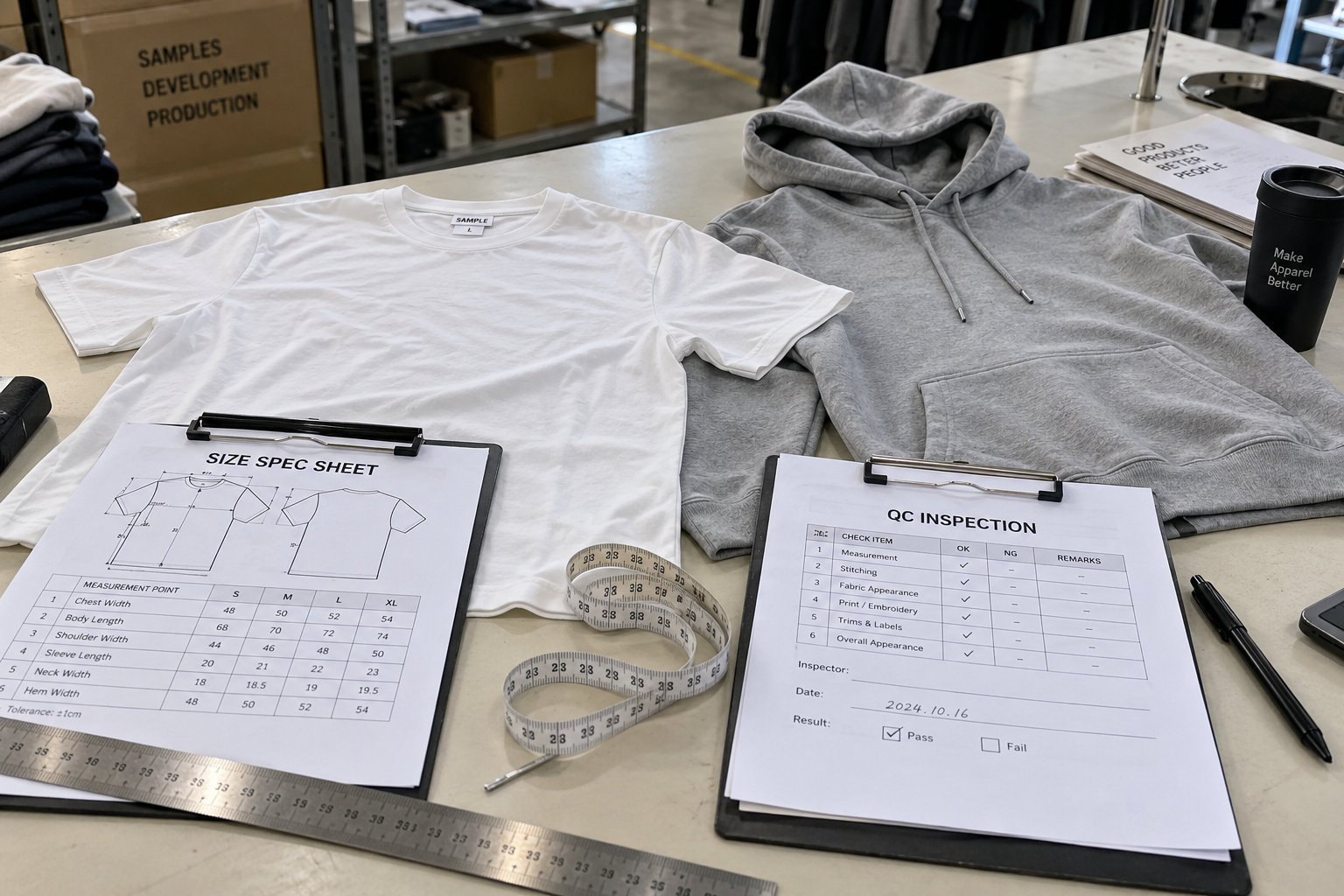
Wash and dry the sample according to the care instructions you plan to give buyers. Record body length, sleeve length, hem width and neck width before and after. If any point changes more than the agreed allowance, adjust the fabric preparation, pattern or care instructions before approving bulk.
How many pieces, how long?
Full custom starts at 100 pieces per style and per color, sizes split inside. A plain sample takes about 3 to 7 days; with a print, about 10. Bulk is 7 to 20 working days after you approve the sample (as of November 2026).
For a smaller run, our stock blank crewnecks start at 50 pieces per style, with colors and sizes mixed. Check that page or ask us for the current price and color availability.
FAQ
Can a crewneck match a pair of sweatpants?
Yes. We ask the mill for one fabric lot for the set and ship tops and bottoms in matched pairs.
Can I have a washed crewneck?
Yes, done at a partner wash house. Acid and snow washes work best on 100% cotton.
Do crewnecks need drawcord holes or eyelets?
No, which is one reason they cost less than hoodies.
Next step
Send a crewneck you like with its size, or your size M measurements, plus the weight and neck rib you want. See our styles on the custom crewneck sweatshirt page or start a sweatshirt tech pack.



 You Can Find Us Here