

A custom tie-dye T-shirt order takes longer than a printed one: about 12 days to 2 weeks for the sample, and 20 to 30 days for bulk (as of November 2026). No two pieces come out identical, because every shirt is tied and dyed by hand. The biggest risk is not the pattern but the color: dark and bright dyes can bleed, so we test color fastness before the goods ship.
Here is what a first-time buyer should expect, and the order where that test mattered.
Why does tie-dye take longer than a print?
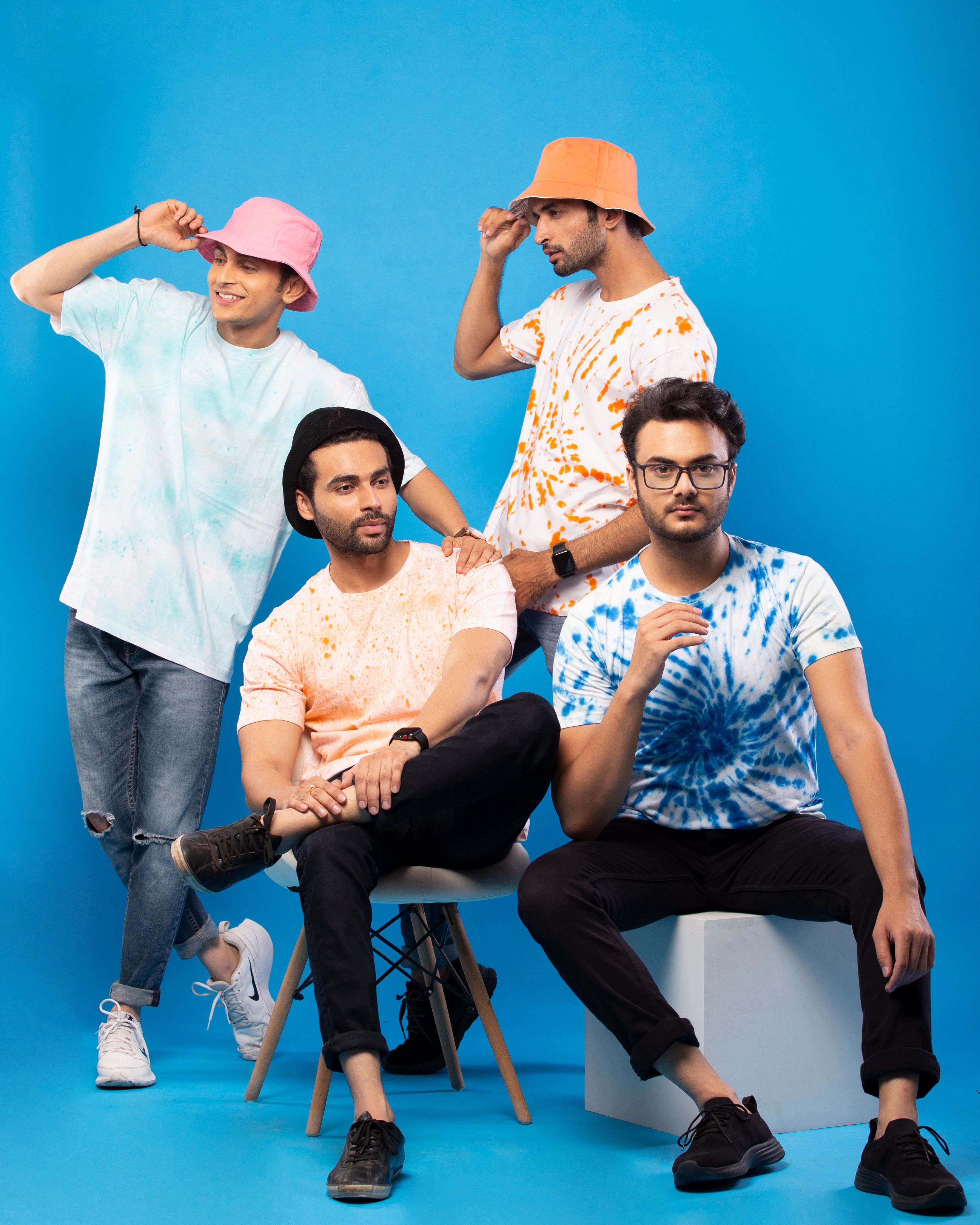
Tie-dye takes longer because each tee is dyed after it is sewn, one by one, then washed out and dried. A print goes onto cut panels in our print shop in a few passes. A tie-dye goes through binding, dyeing, fixing, rinsing and drying, and every step is done by hand.
| Step | Time (as of November 2026) |
|---|---|
| Tie-dye sample | about 12 days to 2 weeks |
| Plain sample, for comparison | about 3–7 days |
| Tie-dye bulk | about 20–30 days |
| Plain or printed bulk, for comparison | 7–20 working days after sample approval |
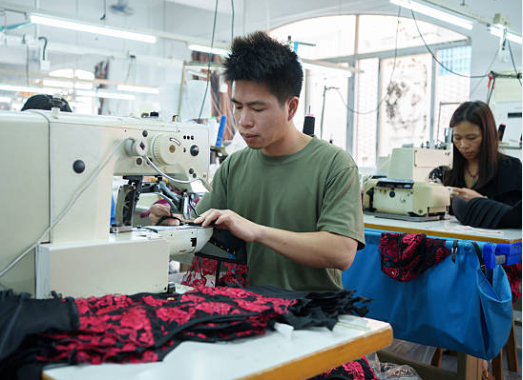
Tie-dye is done at a partner dye house. We sew the tees in Zhongshan, send them out for dyeing, then check, fold and pack them ourselves.
If you have a launch date, count back from it with the tie-dye times, not the print times. Shipping and customs clearance come on top; ask for a route-specific delivery estimate before fixing the launch date.
Will every tee in my order look the same?
Every tee will follow the same pattern and colors, but no two will be identical. That is the nature of hand dyeing. The fold, the tension of the string and how the dye soaks in all vary a little from shirt to shirt.
What you can control:
- The pattern type. Spiral, fold, clamp, bind-string, dip-dye and ice dye are all in our catalog. Some vary more than others: a dip-dye with one clean line is more even than a scattered ice dye.
- The colors. Give us Pantone codes, and approve them on the sample.
- How much variation is acceptable. Tell us before bulk. If you sell online with one product photo, say so, and we keep the pattern tighter.
What no one can promise is a hundred copies of the same shirt. If that is what you need, a printed tie-dye look is the route, not real dyeing.
The order where the color test mattered
One order was 300 tie-dye tees in two colorways: blue with black, and green with black. The pattern and the colors matched the sample.
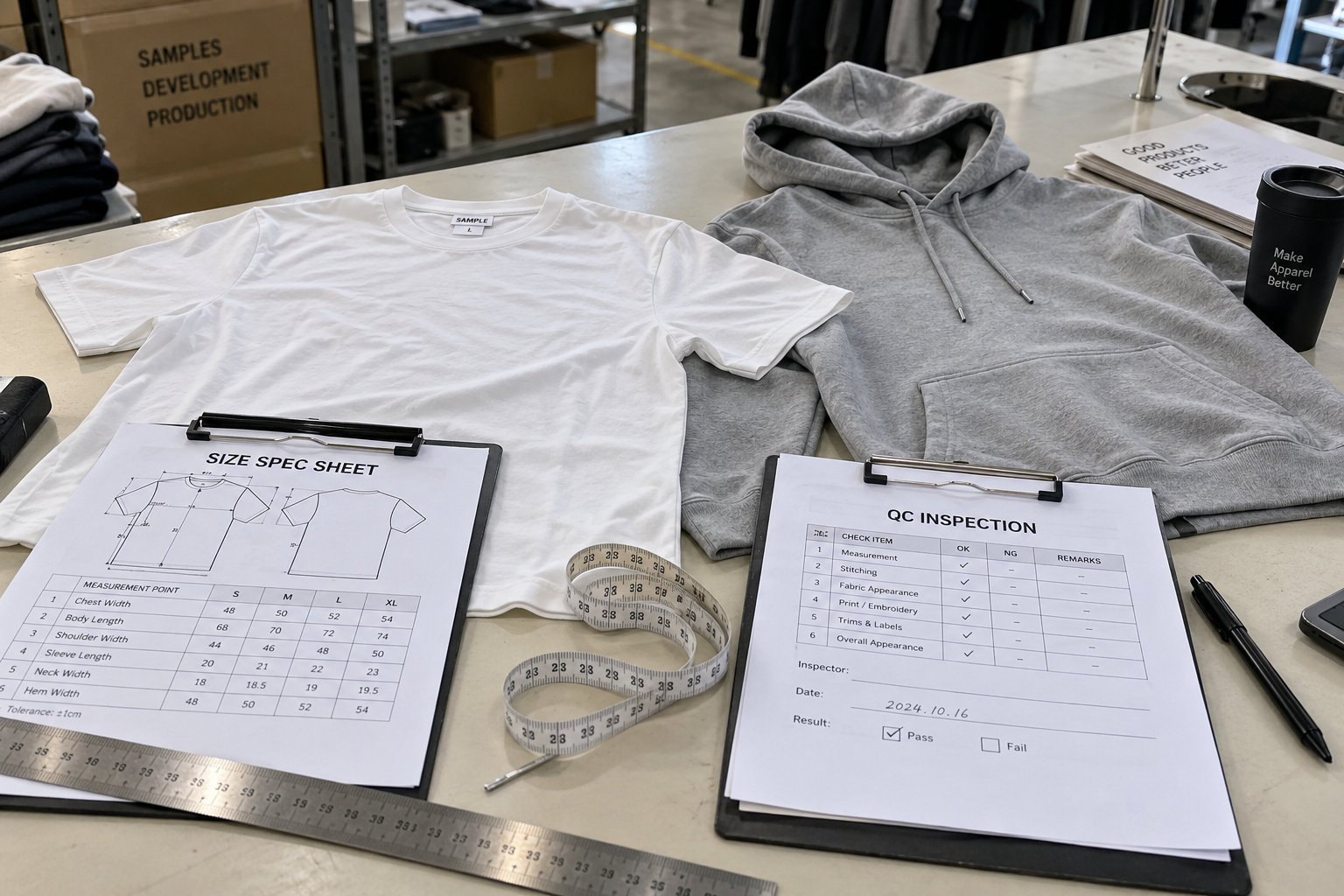
Before shipping, we tested color fastness. Color fastness is how well a dye stays in the fabric when it is washed or rubbed. Those two combinations turned out sensitive: the dye bled. A customer would have washed the tee once and found the black running into the blue and green.
We took the tees back, fixed the color and tested again. They shipped only once they met the standard. As our owner put it afterwards, luckily we test before shipping.
The lesson for a buyer: on tie-dye, and on any dark color next to a light one, the pre-shipment color test is not a formality. Ask your factory whether they run it and what grade they accept. We test in our own factory, and our fabrics are normally grade 4 or above on a 1 to 5 scale. Sensitive colors such as royal blue and bright red get tested before we cut; if one tests low, we change the fabric or add a fixing treatment before anything ships.
Which fabric takes tie-dye best?
Cotton takes tie-dye best. Our tie-dye tees are mostly 100% cotton or organic cotton, from 240 to 350 GSM. One long-sleeve style is in viscose.
The result depends on both the fiber blend and the dye process. If you want a cotton-polyester or stretch tie-dye, ask us to test that exact fabric and color on a sample before you commit to bulk.
Weight changes the look too. A heavier tee, such as 300 GSM, holds more dye in its thicker yarns and the colors look deeper. A lighter one, around 240 GSM, gives a softer, faded effect.
Can I add a print or embroidery?
You can add a logo by print or embroidery. Where it goes in the order of steps depends on the design. A large print and a dye bath can affect each other, so we decide the order with you when we see the artwork. A small chest logo is usually the simplest to add.
Pick a logo color that stands out from every color in the dye. A white logo on a white-and-blue spiral can disappear in places.
How does tie-dye hold up in the wash?
A well-fixed tie-dye fades slowly, like any dyed cotton. The first wash at home may release a little loose dye, so tell your customers to wash it cold and on its own the first time. Put that on your care label.
Shrinkage depends on the exact fabric and the wash process. The dye process includes washing and drying, but that does not replace a measurement check on the finished sample. Compare its dimensions before and after the care routine you will put on the label.
How many pieces, and what does it cost?
Full custom starts at 100 pieces per style and per color, with sizes split inside. For multiple tie-dye colorways, tell us the quantity of each and we will confirm the minimum for each in the quote.
The tee is priced first. At 100 pieces, a blank custom tee runs $5.50 to $11.70 a piece, depending on the fabric (prices as of November 2026; they can move with the exchange rate). A long-sleeve tie-dye shirt starts from our long-sleeve blank: $8.60 to $10.70 a piece at 100 pieces in 235 GSM combed cotton, as of November 2026. The dyeing is quoted on top from your pattern and colors, because a two-color spiral and a four-color ice dye are different work.
FAQ
Can you match a tie-dye tee I already have?
Send it. We use it as the reference for the pattern and colors. The result will be close, not a copy, for the reasons above.
Can I get a tie-dye hoodie too?
Ask us with your hoodie fabric and wash reference; we will confirm whether that dye process suits the garment and quote its timing.
Is tie-dye safe for kids' clothing?
Kids' and baby clothing must meet the rules of the market where it is sold. Tell us the age group and destination before sampling so the required fabric and dye tests can be agreed.
Do you have tie-dye in stock?
No. Tie-dye is made to order.
Next step
Send us a photo of the pattern you want, your colors as Pantone codes, the fabric weight and the quantity per colorway. See our catalog styles on the custom tie-dye T-shirt page, or start a T-shirt tech pack.



 You Can Find Us Here