

For a first embroidered T-shirt order, keep the logo smaller and lighter than you think. The workable size depends on the fabric, stitch type and density; a dense design can pull or damage jersey. Confirm the dimensions on an embroidered sample before bulk. An embroidered sample takes about 10 days, or about 12 to 13 days if the tee also has a print. Bulk follows in 7 to 20 working days after you approve the sample (as of November 2026).
This guide covers the choices that decide how an embroidered tee comes out: the stitch type, the size, the density, the fabric under it, and the timing.
Who does the embroidery?
The embroidery on our tees is done at a partner embroidery factory, not in our own building. We cut, sew and print in Zhongshan ourselves; embroidery, washing and dyeing go to partners we work with on every order. We say this up front because a buyer should know where each step happens before choosing a supplier.
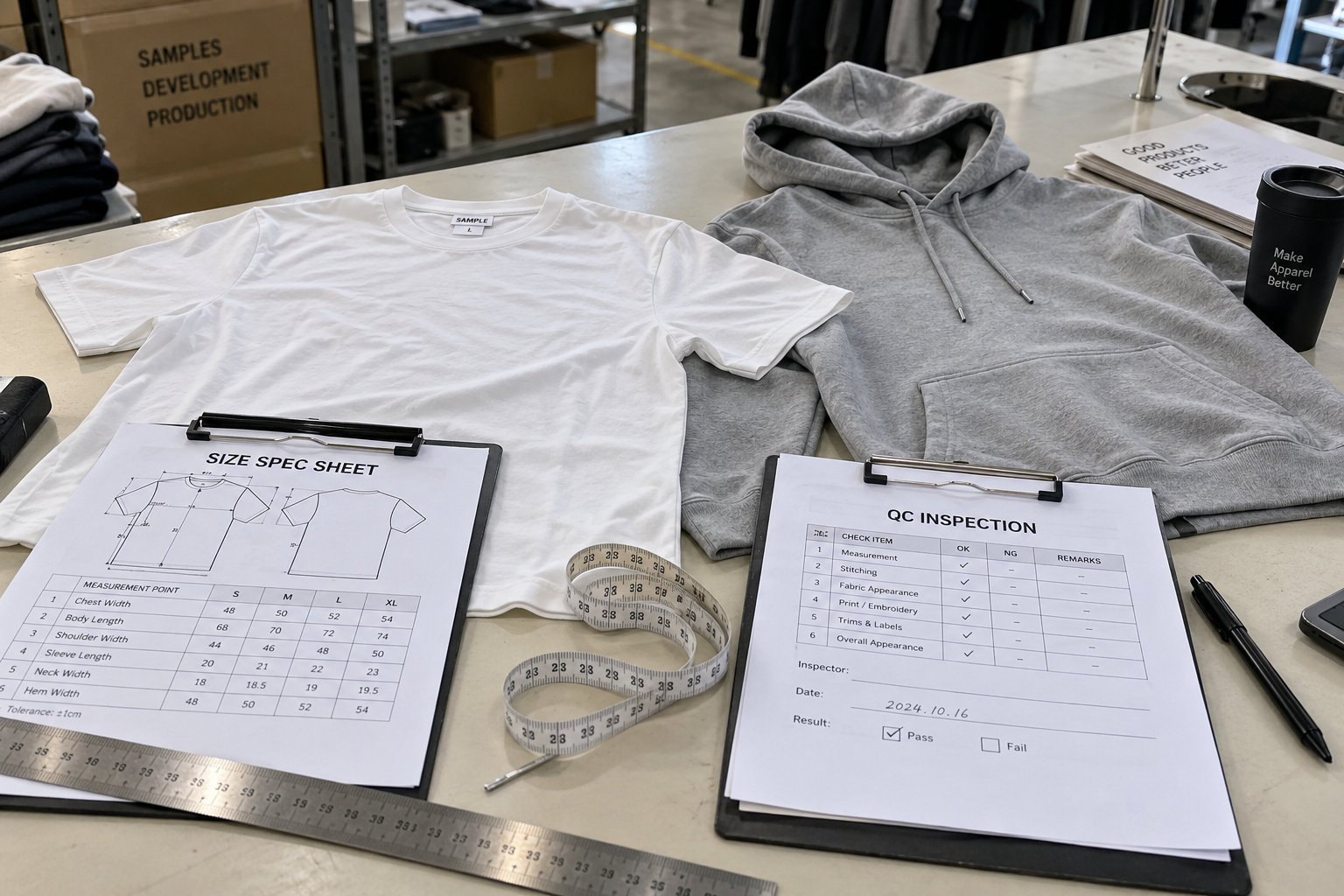
What stays with us: the pattern and production coordination, our cutting and sewing when the order runs on our own lines, and the checks before and after embroidery. When our sewing lines are full, part of the sewing may be placed with partner factories; we remain responsible for inspection.
Which embroidery type fits your design?
Pick the stitch by what the design has to do. We offer four:
- Flat embroidery. Stitches lie flat on the fabric. It suits small chest logos and text.
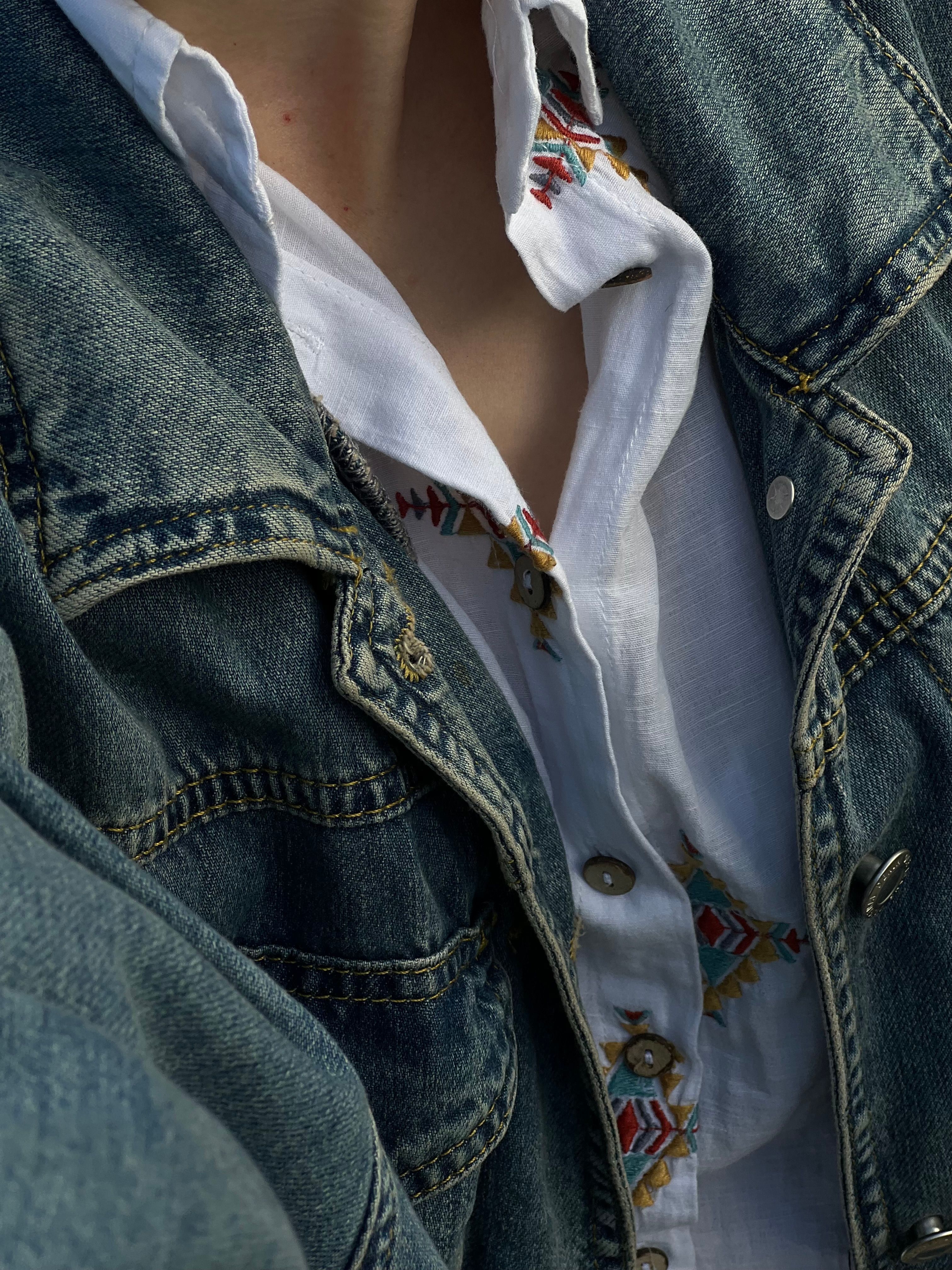
- Appliqué. A piece of fabric is stitched onto the tee, with a satin edge around it. It suits large shapes, because the fabric fills the area instead of thousands of stitches.
- 3D puff. Stitches go over a foam layer, so the design stands up. It suits bold, simple letters.
- Chenille. Looped, towel-like stitches, the look of a varsity patch.
Many embroidery styles can be adapted for a T-shirt, but fine details and large dense fills need to be checked against the fabric on a sample.
Why bigger and denser is not better
The commonest mistake we see from new brands is thinking a bigger, denser design looks more expensive. It doesn't. A design packed with stitches turns stiff, and on jersey it can break or pucker the fabric around it.
What we do instead:
- We look at your budget first.
- We show you how the design will really come out, stitch by stitch.
- We point out which parts would work better as a print. A large background or a fine gradient is often cleaner printed, with embroidery kept for the logo on top.
A tee can carry both. Our print shop does the print, the partner factory does the embroidery, and the sample takes about 12 to 13 days for the two together.
How small can embroidered text be?
Small text is where embroidery fails first, especially in 3D puff. Letters a few millimeters high close up and blur, because the stitches can't turn tight enough corners over the foam.
The fix is in the digitizing. Digitizing means turning your artwork into a stitch file: where each stitch starts, how long it is, which way it runs. When 3D puff text came out blurred, we went back and checked whether the digitizing was fine enough. This is caught at the sample stage and rarely reaches bulk. That is the reason we won't skip the sample on an embroidered order.
If your logo has fine text, send the vector file and tell us the smallest letter height. We tell you before sampling whether it will hold in flat stitch, and whether puff is realistic.
What fabric weight works under embroidery?
Embroidery holds better on a tee with some weight. Our most-ordered tee weights are 210 to 230 GSM, and the embroidered tees in our catalog run from 195 GSM (an appliqué tee) up to 360 GSM (a 3D-embroidered crewneck tee). A 270 GSM bead-embroidered tee and a 275 GSM organic cotton chenille tee sit in between.
GSM is grams per square meter of fabric: the higher the number, the thicker the tee. The lighter the jersey, the more a dense design will pull it. A small flat logo is fine on a light tee. A large chenille or appliqué piece wants a heavier body, usually 240 GSM or more, which we call heavyweight for T-shirts.
Check it on the sample: wash it the way your customers will, then look at the fabric around the stitching. If it ripples, we lower the density or move up a weight.
How long does an embroidered order take?
Plan on about 10 days for the sample and 7 to 20 working days for bulk after you approve it (as of November 2026).
| Step | Time |
|---|---|
| Embroidered sample | about 10 days |
| Sample with embroidery and a print | about 12–13 days |
| Bulk after sample approval | 7–20 working days |
| Logo embroidery on our stock blanks | adds 7–10 days to the about 7 days for plain blanks |
One delay we see often: the strike-off. Before bulk, the embroidery factory stitches a first piece for you to approve. The thread is already on the machine, so approve it within a day. If the answer comes two days late, the machine setup has to be redone, which adds two to three more days.
How many pieces do I need?
Full custom starts at 100 pieces per style and per color, and you can split sizes inside the 100. If you want embroidery on a ready-made tee, our stock blanks start at 50 pieces per style, with colors and sizes mixed.
You can also send us garments you already own. We can embroider them, with more limits than on our own blanks: a design that is too big or too dense for that fabric can break, and we will say so before we start.
What does an embroidered tee cost?
The blank tee is priced first, and the embroidery is quoted on top from your design. At 100 pieces, a blank custom tee runs $5.50 to $11.70 a piece, depending on the fabric (prices as of November 2026; they can move with the exchange rate). The embroidery price depends on the stitch count, the size and the type, so we quote it from your file rather than from a list.
To lower it: make the design smaller, cut stitch-heavy fills, or turn a large area into a print.
FAQ
Can I have embroidery on the back of a tee?
Yes. A large back design is usually better as appliqué or as a print with a small embroidered detail, for the same density reason.
Will the back of the embroidery scratch?
The reverse side of a dense design is stiff. Ask to see the inside of the sample and discuss backing and stitch density if the tee will be worn next to the skin all day.
Can you match my thread colors to Pantone?
Send the Pantone codes with the artwork. You approve the colors on the sample.
Can you embroider on a washed tee?
Yes, but the wash comes first. Ask us about the order of steps for your design, since a wash after embroidery can change how the thread looks.
Next step
Send us the logo as a vector file, the size in centimeters, where it goes on the tee, and the fabric weight you have in mind. See the styles and options on our custom embroidery T-shirt page, or start from a T-shirt tech pack. For hoodies, caps and other garments, see custom embroidery.



 You Can Find Us Here