

A gym T-shirt needs fabric that keeps its shape after dozens of washes, not just fabric that feels light on day one. That may mean a cotton blend or a polyester fabric, depending on the fit and how the tee will be used. A light 100% cotton style can work, but one Saudi gym-and-casual order showed us that 180 GSM cotton was too thin for that customer's intended shape.
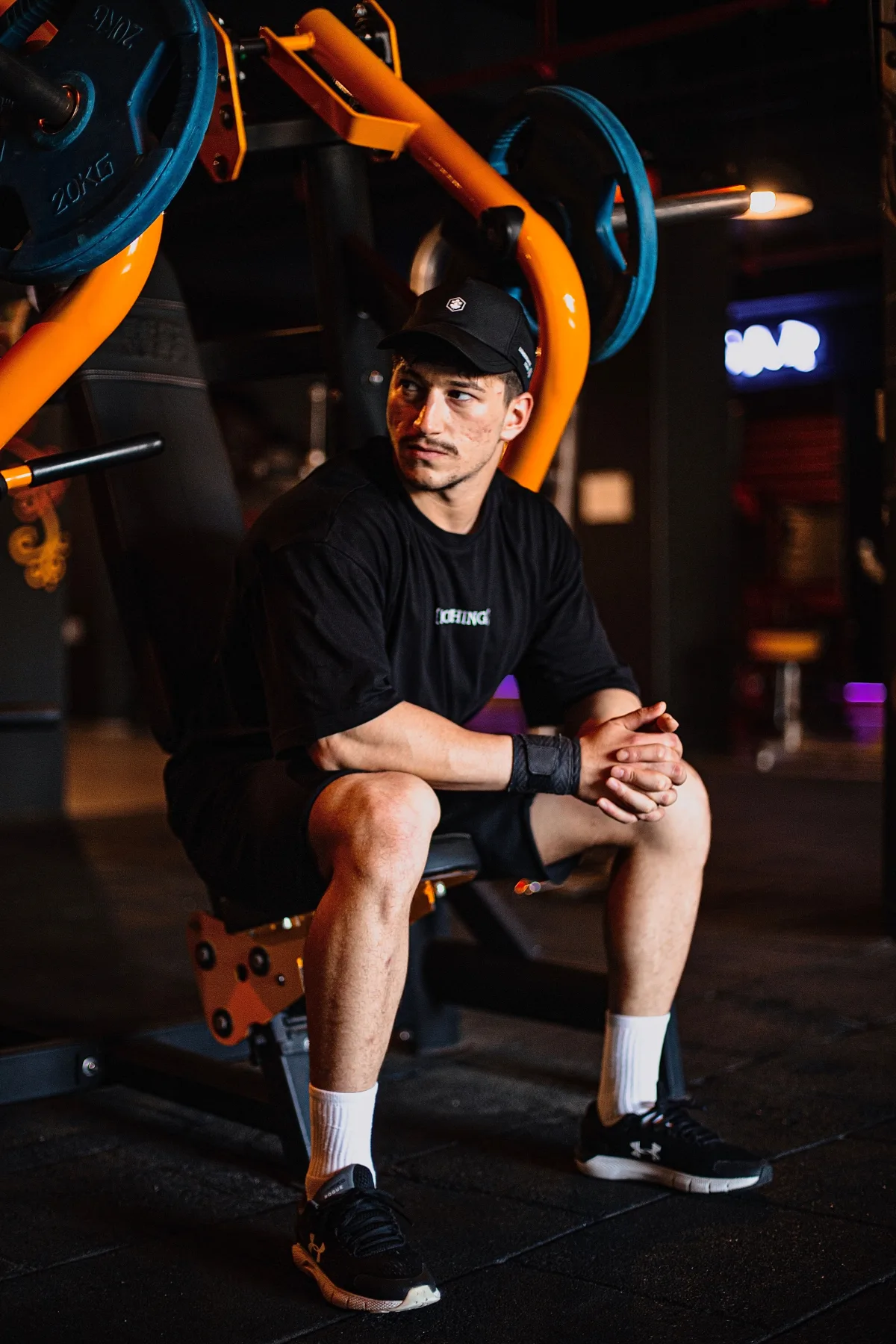
Is a light 100% cotton tee good for a gym brand?
Usually not on its own. A large gym-and-casual brand in Saudi Arabia started with very light fabric for the heat: 100% cotton around 180 GSM, about 1,000 pieces a style. Their customers said the fabric was too thin and had no shape. And thin cotton loses its shape faster after many washes, which gym clothing gets.
We suggested a little more weight and a technical polyester fiber blended in, one that keeps its shape through washing. That solved it.
What we took from it: in a hot climate, the answer is not the thinnest fabric. It is a fabric that breathes and recovers. GSM is grams per square meter; a gym tee with a blend usually works best somewhere between a light and a mid weight. We'll suggest a fabric for your climate and how your customers train.
Stretch: how much spandex?
A fitted gym tee needs stretch, so it moves with the body and springs back. That spring-back is called recovery. Spandex (also sold as elastane or Lycra) gives it.
In our catalog, some slim and fitted styles carry between about 3.5% and 10% spandex. The percentage is only one input: the knit, pattern and finished measurements decide how close the tee feels. A loose, oversized gym tee may not need spandex.
One thing to know: if you specify a brand-name fiber such as Lycra, it isn't in stock everywhere. We ask the mill's minimum first, and that can change the order size.
Will the print crack when the tee stretches?
A print on stretch fabric has to stretch too, or it cracks. Plan the print method with the fabric:
- Screen print: for a stretch fabric, ask us to test the chosen ink and print on a stretched sample before bulk.
- DTF is a printed film pressed on with heat and glue. It costs the least on small runs, but it doesn't suit garments that go into a hot tumble dryer: the heat can crack or peel a DTF print, and that can't be avoided. If your customers use a hot dryer, discuss another print method or test DTF with that care routine.
- Sublimation dyes polyester fibers and leaves no surface ink layer to crack. It works best on white or light polyester; test the result on the exact fabric.
Our print inks are wash-tested up to 30 washes: every time a new batch of ink arrives, we print a swatch, wash it 30 times and run dry and wet rub tests. Two batches have failed so far, and we stopped buying from that ink supplier.
Which colors hide sweat?
Dark colors, black and navy above all, and busy patterns hide sweat best. Mid gray and light colors show it most. Heather fabrics, with mixed-color yarn, hide it better than a solid of the same shade.
If your brand color is light, consider it for the print and use a dark body.
Staff tees for a gym
Gyms often want staff tees with the logo front and "STAFF" or "COACH" on the back. These are a straightforward order: full custom starts at 100 pieces per style and per color, sizes split inside. For fewer pieces, our stock blanks start at 50 per style, with colors and sizes mixed, and you add your logo by print or embroidery.
How long does it take?
A plain sample takes about 3 to 7 days; with a print, about 10 days. Bulk is 7 to 20 working days after you approve the sample (as of November 2026). For printed stock blanks, ask us to confirm the ship date after checking color availability, artwork and quantity.
At 100 pieces, a blank custom tee runs $5.50 to $11.70 a piece, depending on the fabric (prices as of November 2026; they can move with the exchange rate).
FAQ
Do you make full-sleeve gym tees?
Yes, in the same fabrics. Long sleeves on a fitted tee need the sleeve and cuff measurements in the tech pack.
Can you add reflective prints?
Ask us with your design. We tell you what our print shop can do and test it on the sample.
Anti-odor or moisture-wicking fabric?
Some technical fabrics are sold with these claims. We can source them, but the claim belongs to the mill; ask for its test report before you print it on a hangtag.
What size range should a gym brand offer?
Start with the size range your customers actually buy. We can grade from your approved base size in our pattern room.
Next step
Tell us your climate, how your customers train, and whether the fit is loose or fitted. We'll suggest two or three fabrics to sample. See our styles on the custom gym T-shirt page, compare cotton-poly blends and polyester tees, or start a T-shirt tech pack.

 You Can Find Us Here