

A regular fit T-shirt size chart needs three things: the measurements of one base size, the grade rule that sets how each size grows, and a tolerance beside each measurement. On our chart, size M is 54 cm across the chest laid flat and 71 cm long, each size adds 5 cm to the half chest, and the half chest may be 1.3 cm over or under. Agree the tolerances before bulk, because they are what every finished tee is checked against.
What goes into a regular fit size chart?
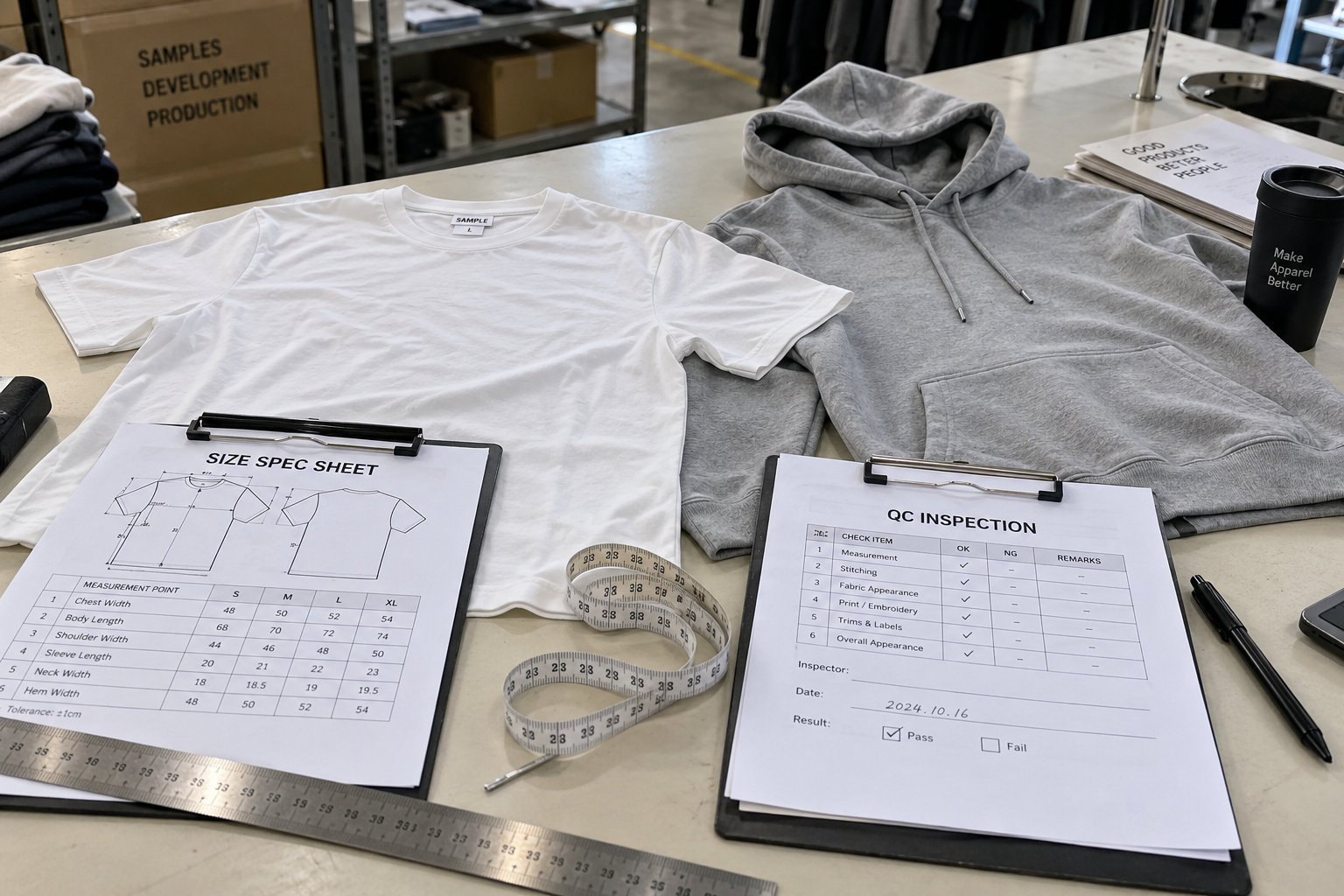
A size chart lists each point of measure for each size. For a regular tee the main points are:
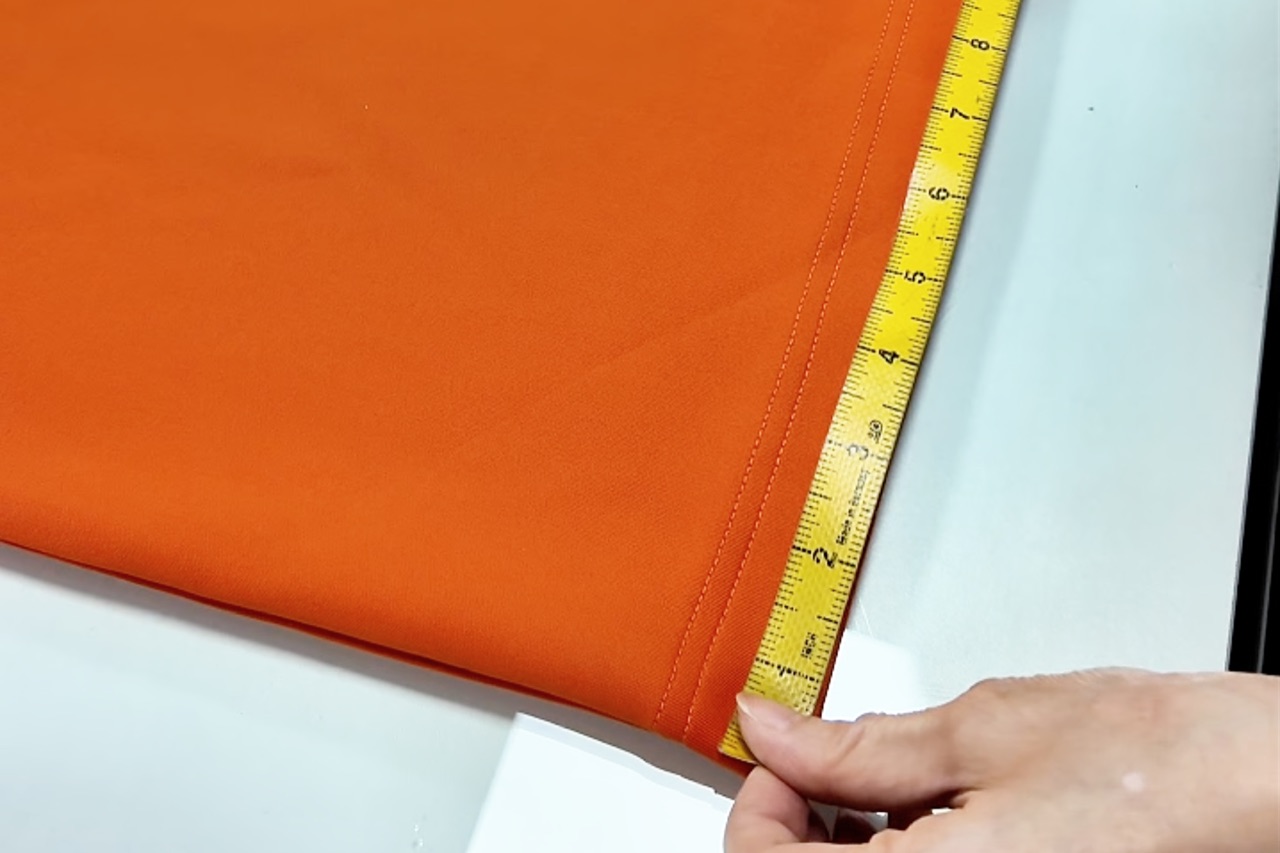
- Chest, laid flat, measured straight across below the armholes.
- Body length, from the high point of the shoulder (where the neck meets the shoulder) down to the hem.
- Shoulder width, seam to seam.
- Sleeve length, from the shoulder point.
- Sleeve opening, hem width and neck width. We measure neck width straight across between the two neck-shoulder points, including the rib.
Our regular size M: 54 cm chest (108 cm around the body), 71 cm long, 47 cm shoulder, 21 cm sleeve.
How do sizes grow? The grade rule
The grade rule is the step between one size and the next. Ours, for a regular tee:
| Point | Step per size |
|---|---|
| Half chest | 5 cm (4 cm from XS to S) |
| Body length | 2.5 cm |
| Sleeve length | 1 cm |
| Shoulder | 2 cm up to XL, then 2.5 cm |
You can use ours, or your brand's own if you already sell tees. We grade sizes ourselves in our pattern room. A pattern from a photo or a garment takes our two pattern makers about 3 days.
Sizes run XS to 3XL on our chart. Inside the 100 pieces per style and color, you can split the sizes however your sales need, for example mostly M and L.
What is a tolerance, and how tight should it be?
A tolerance is how far a finished measurement may be from the number on the chart and still pass. Knit fabric moves; no factory sews every tee to the millimeter. On our regular chart, the half chest may be 1.3 cm over or under.
Before shipping, every batch gets an AQL 2.5 random-sample inspection against the agreed tolerances. AQL is a standard way to decide how many pieces to measure and how many faults a batch may carry.
Some of our Japanese customers ask for a tolerance of 1.5 cm or tighter. We agree which measurement points and fabric process that applies to before production.
Tighter is not always better. A tolerance has to suit the process. When a tee goes through a garment wash, the fabric moves more, and a tight number can't be held.
A real case: 1.5 cm agreed, 1.8 cm delivered
On one order the customer's spec allowed 1.5 cm, and the finished tees came out at 1.8 cm. The 1.8 cm result was outside the agreed 1.5 cm range. We use this case to agree measurement points and realistic tolerances before bulk, especially when a garment wash is planned.
What we did, and what we do for any order outside tolerance:
- Talk it through with the customer. Sometimes 3 mm doesn't affect the fit, and the customer accepts.
- Assess rework. If suitable, we discuss whether a controlled wash can bring the measurement in without moving other points outside tolerance.
- Remake. If that fails, we remake the order. If we cause a delay, we pay the extra freight.
The important point is to agree how an out-of-tolerance result will be handled before production, while there is still time to correct the pattern or process.
When the fabric moves after cutting
Sometimes the problem is not the sewing but the fabric. A US brand with five shops ordered kids' and adult tees, 200 of each. The fabric turned out unstable: the sleeves shrank 1.5 cm, and length and chest were outside tolerance. The customer could wait, so we remade the order rather than refund it.
The lesson: the chart is only as good as the fabric's shrinkage. The fabrics we use vary, so ask for the result on the exact fabric you choose. If your sizes are tight, discuss testing or prewashing before cutting.
Which size chart should a new brand use?
If you have no chart yet, start from ours and change only what you know your customers want, such as a longer body. If you already sell a tee that fits well, send it: we use it as the sample and you tell us its size.
Then sample one size, wear it, wash it, measure it again, and only then fix the chart.
FAQ
Do you measure flat or around the body?
Flat. A flat chest of 54 cm is 108 cm around.
Can I have a bigger tolerance to make it cheaper?
Tolerance decides what passes inspection. If you need an unusually tight tolerance, agree it with the factory before the quote and bulk approval.
Are your charts for washed or unwashed garments?
Our charts are unwashed. Where a chart says "washed", it means the tolerance after the fabric has been washed.
Can you add 4XL or 5XL?
Send the measurements you want; we tell you in the quote.
Next step
Send your size chart, or a tee you like with its size, plus the fabric weight. See the full chart on the regular fit T-shirt page, the measuring points in how to measure, or start a T-shirt tech pack.



 You Can Find Us Here